Organizing a Club Ride on Forest Ground
A club ride on Wyoming National Forest land takes more than picking a trailhead and sharing a start time. The group needs to confirm that its routes are open, that the ride does not require event authorization, and that each machine has the required Wyoming permit. A few calls and a clear plan before the ride can prevent a last-minute cancellation or a messy day on the trail.
First, find out whether the ride needs Forest Service authorization
An informal group outing and an organized event can look similar to riders but may be treated differently by the land manager. A club should not assume that calling a ride “recreational” means no authorization is needed. The Forest Service evaluates proposed activities based on their details and possible effects on public land, other visitors, and Forest operations.
Before advertising the ride or collecting money, contact the Forest Service ranger district responsible for the area. Explain what the club has in mind, including the approximate number of riders, machines, route, dates, meeting point, and whether the outing is open to the public. Be clear about whether the club will charge a fee, solicit donations, provide guides, set up signs or equipment, or reserve any space. These details can affect what the agency asks the organizer to do.
A small group of friends following an open route may not raise the same issues as a public rally with a check-in station, scheduled start groups, support vehicles, or organized promotion. But there is no useful one-size-fits-all answer from the word “club” alone. Ask the district whether the specific ride needs a special use authorization or another approval, and what information it needs to make that determination. For a broader look at event authorization, see A Federal Permit for a Wyoming Event and How Early to Apply for an Event Permit.
| Ride feature | Why the organizer should mention it |
|---|---|
| Group size and number of machines | A large group may affect trail traffic, parking, and other visitors |
| Public advertising or open registration | The outing may function more like a public event than a private gathering |
| Entry fees, donations, or sponsorship | Money or commercial involvement can change the authorization discussion |
| Signs, tents, staging, or reserved space | Setting up or occupying an area can require separate approval |
| Support vehicles or staff | These may use roads or locations differently from ordinary trail riders |
| Planned route and timing | The district can check closures, seasonal restrictions, and conflicts |
Ask the district what authorization, if any, is required and how to apply. If it says the ride does not need event approval, keep a note of the contact, date, and guidance. That record is useful if questions arise later or the event plan changes. It is not a substitute for checking current route conditions or following rules that apply to every rider.
If the club is using a commercial guide, operating a paid tour, or selling access to the ride, describe that plainly. A group outing organized by a club is not automatically the same as a commercial operation, but the agency needs accurate information to classify the proposal. Insurance may also be part of the discussion for an authorized event or commercial activity. Do not assume that a club’s general liability policy satisfies an agency requirement; ask the district what coverage and documentation it requires. See Insurance an Outfitter Needs if a paid operator is involved.
Choose routes that are open to your machines and group
A route shown on an old map, a ride-sharing app, or a past trip report is not automatically open today. Forest roads and trails can have seasonal closures, temporary restrictions, machine-width limits, or other conditions. The organizer should check current information from the responsible Forest Service office and use the applicable travel management map. Wyoming Rules for Riding a National Forest explains why land-manager rules and route status matter, while Carrying a Travel Management Map in Wyoming covers using the map to confirm where riding is allowed.
Do not plan a route based only on a line that appears on a general-purpose map. Check whether the route is designated for motorized use, whether the designation applies to the type and width of machine in the group, and whether the route is open for the planned date. A trail that works for ATVs may not suit a wider UTV. If the group includes different machines, plan for the most restrictive route requirements rather than assuming everyone can follow the same track.
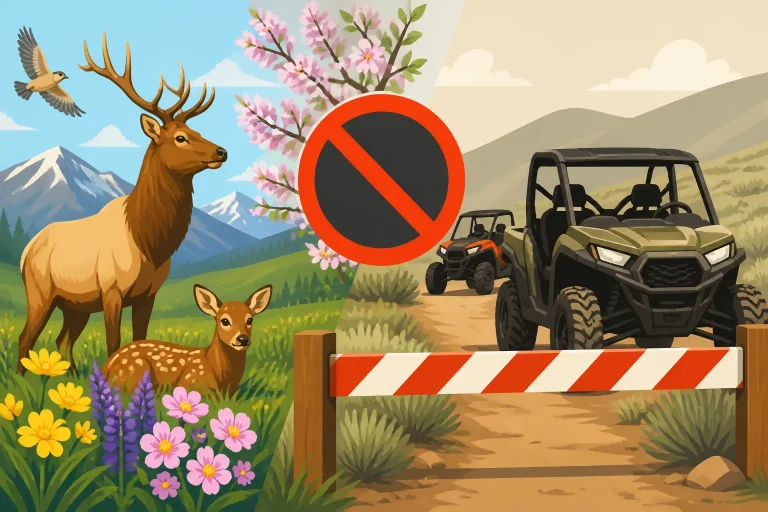
When asking the ranger district for guidance, provide the route names or a clear map description. Ask about any current closure or restriction that affects the proposed date, and check again close to the ride. Conditions can change because of weather, fire activity, maintenance, wildlife concerns, or other management needs. If the route is closed, do not treat a detour onto an unmarked road or cross-country travel as an acceptable workaround. Choose another route that is open to the machines.
Build a conservative itinerary. A route that looks short on a map may take much longer with a large group, varied riding speeds, mechanical trouble, or stops at gates and intersections. Avoid setting a schedule that pressures riders to continue when weather or trail conditions turn poor. For a large group, use a designated leader and a sweep rider, agree on regrouping locations, and make sure riders know how to handle a separation from the group.
Before the event, share the route and the rules with participants. State clearly that riders must stay on routes open to their machine and follow signs and closures on the ground. If a map and a sign appear to conflict, stop and ask the responsible land manager rather than guessing. A planned ride does not give the club permission to use a closed route.
Make sure each machine and rider is ready
Event approval and individual riding requirements are separate matters. A Forest Service authorization, if required, does not replace Wyoming’s off-road vehicle permit requirements. Wyoming does not generally treat another state’s registration or sticker as a substitute for the Wyoming decal on public riding routes. Check Wyoming ORV Permits Explained and Wyoming ORV Reciprocity Rules when planning a ride that includes visitors from outside Wyoming.
Ask every participant to confirm that their machine has the required Wyoming permit before the ride. Do not rely on one club decal or one member’s paperwork to cover a group. If a participant is riding a borrowed or rented machine, confirm who is responsible for the machine’s permit and whether it is already equipped with the required decal. The club can avoid confusion by including permit readiness in its pre-ride checklist rather than trying to resolve it at the trailhead.
Each rider should also be able to identify the machine they are bringing, understand the planned route, and carry any required documents or information. For a mixed group, check that machine widths suit the route, that riders understand the controls on their own equipment, and that passengers are properly seated and equipped. If youth riders are attending, plan supervision and make sure the proposed route and machines are suitable for them. A club event does not waive age, equipment, or land-use rules.
A practical pre-ride checklist might include:
- Confirm the event’s authorization status with the Forest Service district.
- Verify that every planned route is open to the machines using it.
- Check current Forest notices and conditions shortly before departure.
- Confirm each machine has its own required Wyoming permit.
- Share the route, meeting point, schedule, and emergency plan with participants.
- Identify the ride leader, sweep rider, and a contact person who is not on the trail.
- Ask riders to arrive with enough fuel, water, appropriate clothing, and basic repair supplies.
- Set a clear plan for what happens if the group encounters a closure, injury, or breakdown.
Be specific when telling participants what to bring. Wyoming weather and elevation can make a comfortable morning turn into a cold, wet, or tiring ride. A phone may not have service in remote areas, so the club should not make a phone the only emergency communication plan. Consider how the group will contact help, where it can regroup, and who will stay with an injured or stranded rider while the rest of the group gets assistance.
Run the ride with a plan for people and place
A well-organized ride protects the experience of other Forest users as well as the club. Keep the gathering area orderly, avoid blocking roads or trail access, and do not occupy a site with signs, tents, or equipment unless the district has approved that setup. If the club expects more vehicles than the trailhead can handle, ask the land manager about appropriate parking and staging options before announcing the location.
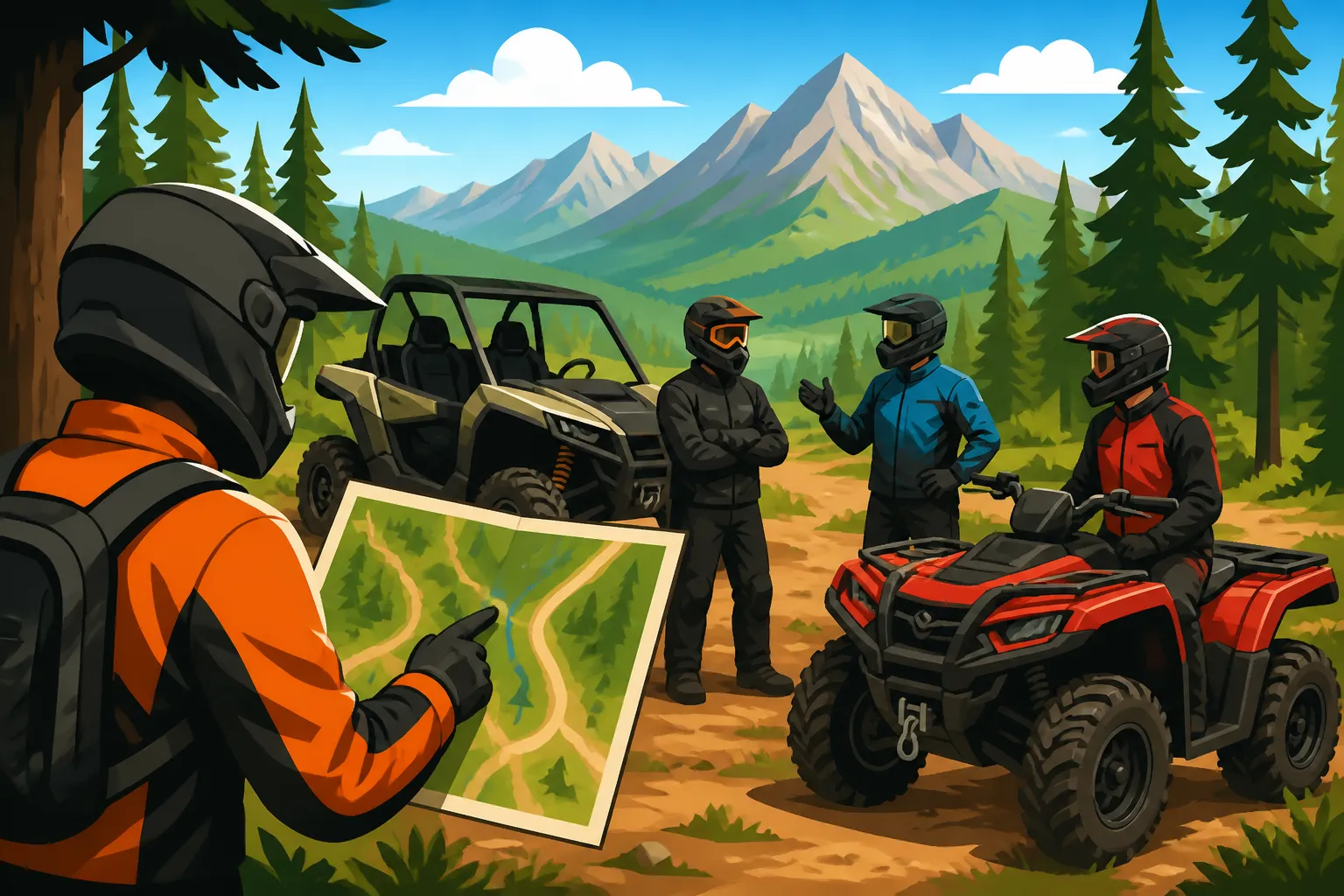
At the trailhead, give a short briefing rather than assuming everyone has read the event notice. Cover the route, expected pace, regrouping points, known hazards, and what to do if someone falls behind. Remind riders to yield appropriately, respect other users, obey closures, and leave gates as they find them unless the sign or land manager directs otherwise. Keep the group together where practical, but do not let the ride leader’s schedule push riders into unsafe speeds or risky decisions.
Set a reasonable cap on participation based on the location, parking, route conditions, and the land manager’s direction. If the district authorizes a particular number of participants or a defined operating plan, follow those terms. Do not treat authorization for one date, route, or event format as permission to repeat or expand the ride without checking whether the approval still applies.
Have a simple response plan for common problems. Decide where the group will stop if weather worsens, who will accompany a rider with a mechanical failure, and how the club will account for everyone at the end. Encourage riders to tell the leader about a concern early, before it becomes an emergency. If a fire restriction, closure, or other agency instruction changes during the ride, follow it and adjust or end the outing.
Afterward, leave the staging area clean and report any significant incident or damage through the appropriate channel. If the club plans to make the ride a recurring event, contact the district again before the next outing. A change in attendance, route, timing, equipment, or public access can alter what approval is needed. Keep a copy of the agency’s instructions and the event plan so the next organizer can start with accurate information instead of relying on old assumptions.
The safest approach is to treat a club ride as two related checks: ask the land manager whether the organized event needs authorization, and make sure each rider follows the rules that apply to ordinary use of Forest routes. Route status, permits, and event approvals solve different problems. Confirming all three before the group arrives is the simplest way to keep the ride lawful, considerate, and predictable.
Disclaimer
This article is for general informational purposes only and does not constitute professional advice. Laws, prices and regulations vary by location and change over time. Consult a qualified professional for guidance on your specific situation.