Wyoming Rules for a Passenger Under 18
A passenger under 18 riding an ATV or UTV in Wyoming has a clear helmet requirement, but that is only one part of a safe, lawful ride. The machine must be designed to carry a passenger, and the route and permit rules matter too. Here’s how to check the seat, understand the helmet rule, and avoid confusing passenger requirements with rules for the driver.
Wyoming’s helmet rule for passengers under 18
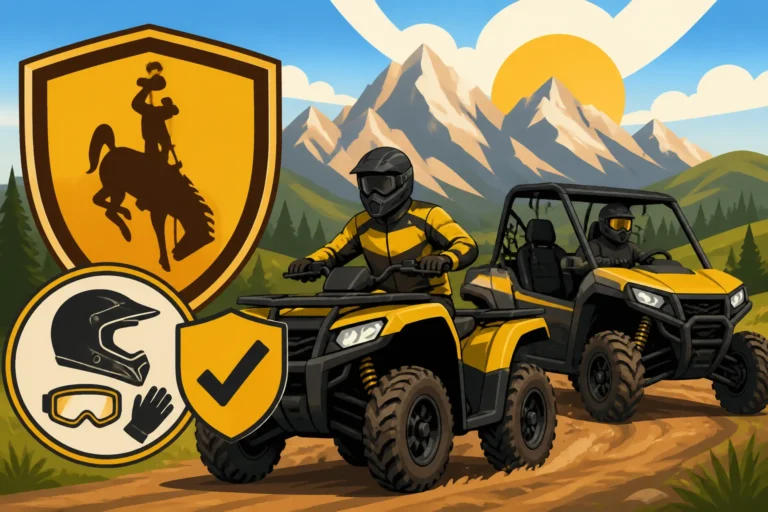
Wyoming requires ORV operators and passengers under 18 to wear an approved helmet, according to Wyoming State Parks, Historic Sites, & Trails. The rule applies whether the young person is driving or riding as a passenger. A passenger does not avoid the helmet requirement simply because an adult is operating the machine.
The helmet rule is a legal minimum, not a complete safety plan. A helmet should fit securely and stay in place, and the passenger should be able to hold on and sit in the position intended by the machine’s manufacturer. Clothing and eye protection can also help with dust, wind, branches, and changing weather. Check the machine’s manual and the land manager’s rules before setting out.
When buying a helmet, including through Amazon, check that the product is suitable for off-road riding, fits the passenger properly, and meets the applicable approval requirements. A listing’s general claim that a helmet is safe is not a substitute for checking its markings and instructions. A helmet that is too large, damaged, or difficult to fasten properly may not provide reliable protection.
The rule is specific about the age group covered: riders under 18 need an approved helmet. It does not, by itself, establish that every child may ride as a passenger on every ATV or UTV. Wyoming State Parks, Historic Sites, & Trails notes that most ORVs are not intended to carry passengers unless a second seat is specifically provided. Check the vehicle manual and any route-specific rules rather than treating the helmet requirement as permission to add a passenger.
If the passenger is also considering driving, do not apply the passenger rule as though it were an operator rule. Wyoming’s operator requirements depend on where the machine is being ridden and whether the operator has a driver’s license or permit. For the separate rules applying to young operators, see Wyoming Rules for Riders Under 16 on a Trail and Wyoming Minimum Age to Ride Public Land.
Check the seat before carrying a young passenger
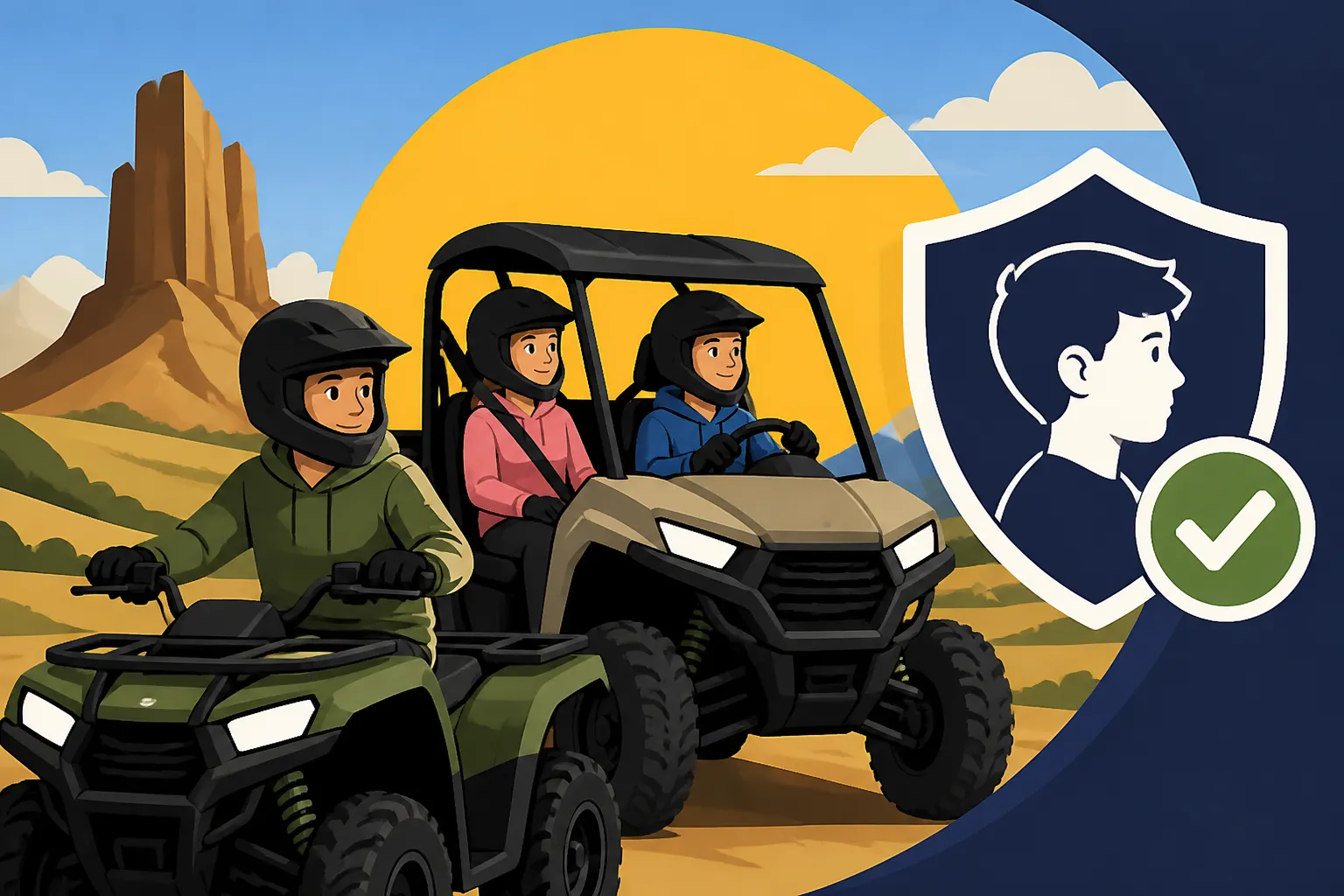
The first practical question is not the passenger’s age but whether the machine is designed to carry another person. Look for a manufacturer-provided passenger seat and the handholds, footrests, restraints, or other features specified for that model. Do not assume that a wide seat, a rear cargo area, or room to sit behind the driver makes a machine suitable for two riders.
A passenger who cannot sit securely may shift the machine’s balance, especially on uneven ground, while turning, or when climbing or descending. A child may also have trouble reaching the handholds or keeping their feet in the intended position. If the passenger cannot ride as the manufacturer specifies, choose a machine designed for passengers or leave the passenger behind.
Before leaving, walk through these checks:
- Confirm the machine is built for a passenger. Check the manual or manufacturer information, rather than relying on the number of people who can physically fit.
- Check the passenger’s position. Make sure the passenger can sit in the intended seat and use the provided handholds and footrests.
- Fit the helmet. Use an approved helmet that fits securely and can be fastened properly.
- Explain how to ride. The passenger should know to hold on, keep hands and feet in the designated positions, and follow the driver’s instructions.
- Choose a suitable route and pace. A passenger who is new to riding may be more comfortable on an appropriate, less demanding route. Check current access rules before riding.
- Stop if the passenger is uncomfortable or cannot stay secure. Do not continue simply because the trip is underway.
These checks are especially important when borrowing or renting a machine. Ask whether the specific model has a passenger seat and what the manufacturer allows. A rental listing or a verbal assurance that a machine “fits two” is not a replacement for checking the actual vehicle and its instructions. For related rental questions, see Riding a Rented Quad on Wyoming Public Land.
| Situation | What to check | Key point |
|---|---|---|
| Passenger under 18 | Approved helmet and a proper fit | Wyoming requires passengers under 18 to wear an approved helmet, according to Wyoming State Parks, Historic Sites, & Trails. |
| ATV or UTV with a passenger | Manufacturer-provided second seat and passenger features | Most ORVs are not intended to carry passengers unless a second seat is specifically provided, according to Wyoming State Parks, Historic Sites, & Trails. |
| Designated ORV trail | Permit, open status, and route rules | Confirm the route is enrolled and open before riding. |
| Roadway designated for ORV travel | Operator credentials and roadway requirements | Requirements for the driver are separate from the passenger helmet rule. |
| Road not enrolled for ORV travel | Street legality and applicable road requirements | An ORV permit alone does not authorize riding on every road. |
Permits and route rules still apply
A passenger’s helmet does not make an otherwise unauthorized ride legal. Wyoming requires an ORV permit on enrolled roads, routes, and trails of 50 inches or less designated for ORV use, according to Wyoming State Parks, Historic Sites, & Trails. The program applies to residents and non-residents alike, and Wyoming does not recognize an out-of-state ORV registration as a substitute for its permit.
All ORVs must display the Wyoming permit while operating on public lands and other designated roads, trails, or areas, according to Wyoming State Parks, Historic Sites, & Trails. A street-legal vehicle still needs the state permit on a designated trail enrolled in the ORV program. For the permit basics, see Wyoming ORV Permits Explained and Wyoming ORV Reciprocity Rules.
The permit is not a general authorization to ride wherever a machine can go. Wyoming State Parks, Historic Sites, & Trails says ORVs may be operated only on roads, trails, or areas designated as open by the appropriate land manager. The Forest Service and BLM manage routes on federal land, and route status can differ across an area. Check the current map and signs for the exact road or trail you plan to use. On the Bighorn National Forest, the Forest Service advises visitors to obtain a Motorized Vehicle Use Map to identify open routes. Wyoming Trail Maps and MVUMs explains why checking the map matters.
The driver’s credentials are a separate issue from the passenger’s helmet. According to Wyoming State Parks, Historic Sites, & Trails, operators without a driver’s license or permit, typically those 15 years old and under, may operate an ORV only on enrolled trails, designated riding areas, and private property with permission. Operators over 15 with a permit or driver’s license may use roads, routes, and trails designated for ORV travel, and may use non-designated roads only if the ORV is street legal. Those rules describe the operator; they do not set a passenger’s age or replace the helmet requirement.
Park roadways can have their own conditions. Wyoming State Parks, Historic Sites, & Trails says operators generally must be at least 16 to operate on park roadways, though youth with a learner’s permit may operate under certain conditions. Confirm the applicable rules for the particular park and roadway before planning a ride with a young driver. For more on where a permit does and does not authorize travel, see Why an ORV Permit Is Not a Road License.
A practical pre-ride check for adults
A responsible adult can make the decision easier by separating the checks into three questions: Is the passenger properly equipped? Is the machine designed for that passenger? Is the route open and allowed for that vehicle?
Start with the passenger. For anyone under 18, Wyoming State Parks, Historic Sites, & Trails requires an approved helmet. Make sure the helmet fits and fastens correctly before the ride begins. If the passenger is uneasy, cannot sit securely, or cannot follow instructions, do not take them along.
Next, check the machine. Confirm that it has a second seat specifically provided for a passenger, as Wyoming State Parks, Historic Sites, & Trails advises. Use the manual to confirm how the passenger should sit and what passenger equipment is intended for that model. Avoid carrying a passenger on a cargo rack or another improvised seat.
Finally, confirm the route. Make sure the machine has the required Wyoming permit for the route, the land manager identifies the route as open, and the vehicle is allowed there. If the trip includes roadways, check the driver’s license or permit requirements and whether the machine must be street legal. If you are visiting Wyoming, an out-of-state sticker or registration does not remove the Wyoming permit requirement.
A short check before starting is easier than sorting out a helmet, seat, or route problem after reaching a trailhead. Keep the passenger’s helmet on for the ride, follow the vehicle’s passenger instructions, and turn back if the route is closed or the passenger cannot ride safely. For more on what officials may look for, see What to Expect at a Trailhead Warden Checkpoint.
Sources
- Wyoming State Parks, Historic Sites, & Trails — Wyoming State Parks, Historic Sites, & Trails – ORV Permits – Trails (checked November 3, 2026)
- Wyoming State Parks, Historic Sites, & Trails — Wyoming State Parks, Historic Sites, & Trails – ORV Rules & Regulations – Trails (checked November 3, 2026)
- Wyoming State Parks, Historic Sites, & Trails — Wyoming State Parks, Historic Sites, & Trails – ORV F.A.Qs (checked November 3, 2026)
- Wyoming State Parks, Historic Sites, & Trails — Wyoming State Parks, Historic Sites, & Trails – ORV Requirements – Trails (checked November 3, 2026)
- Wyoming State Parks, Historic Sites, & Trails — Wyoming State Parks, Historic Sites, & Trails – OHV (Off-Highway Vehicle) Partnership Grants (checked November 3, 2026)
Disclaimer
This article is for general informational purposes only and does not constitute professional advice. Laws, prices and regulations vary by location and change over time. Consult a qualified professional for guidance on your specific situation.