Wyoming Rules for Filming on Public Land
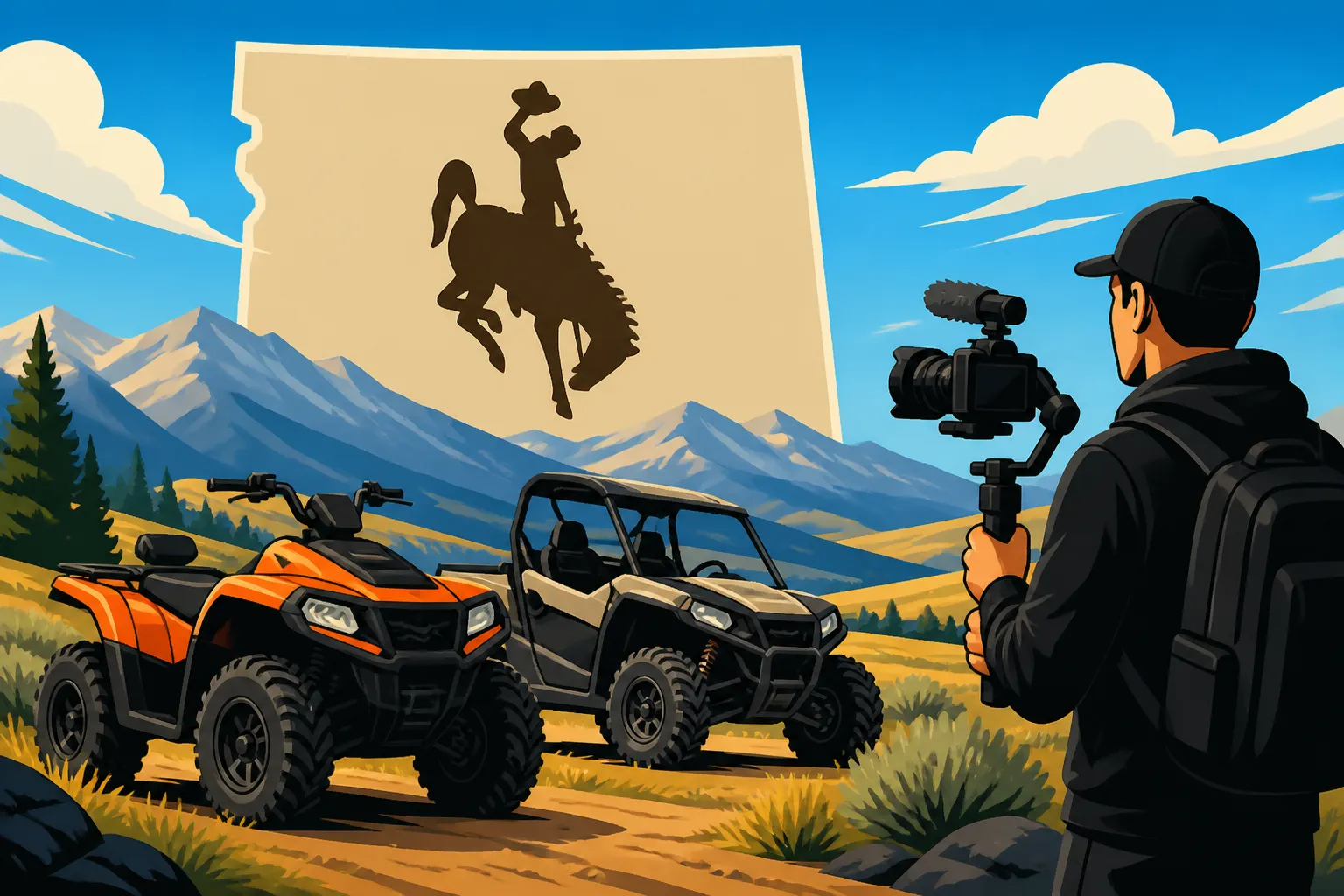
Filming an ATV or UTV ride in Wyoming can look like a simple matter of bringing a camera along, but public land has rules beyond the riding permit. The right steps depend on where you film, whether the footage is personal or part of a production, and what your crew does on site. Here’s how to sort out those questions before you go.
Start by identifying who manages the land
“Public land” is not one set of rules. A route may cross land managed by the Bureau of Land Management (BLM), the U.S. Forest Service, a state agency, or a local authority. It may also pass near private property or state trust land, where separate permission can apply. The agency responsible for a specific location is the place to start when you’re planning a shoot.
A public road or trail may be open to ordinary riders while still having limits on filming activity. For example, a small camera mounted to your own machine is different from a production that brings several vehicles, a crew, lighting, sound equipment, or other gear onto the site. Even if the ride itself is permitted, the scale and effects of the filming may prompt additional review.
Before choosing a location, identify the land manager for the exact route and staging area. A broad location name, such as a national forest or a BLM field office area, may not be enough: land boundaries and route designations can change within a short distance. Check the current land-manager map and ask the relevant office if the boundary or route status is unclear. For riding on federal land, see [Wyoming Rules for Riding a National Forest] and [Wyoming Rules for Riding BLM Land].
It also helps to separate four questions that are easy to mix together:
- Is the route open to the kind of machine you plan to ride?
- Does the machine need a Wyoming ORV permit for that use?
- Does the filming activity need authorization from the land manager?
- Do other rules apply to the crew, equipment, drone, or commercial activity?
A “yes” to one does not answer the others. An ORV decal is not a filming permit, and permission to film does not make a closed route legal to ride.
| Filming situation | What to check first | Why it matters |
|---|---|---|
| Personal footage from a permitted ride | Route status, machine access, and applicable ORV permit | Filming casually does not excuse riding restrictions |
| Monetized video or sponsored content | Land-manager guidance on commercial filming and the planned activity | Revenue, promotion, crew size, and equipment can affect how a shoot is assessed |
| Organized shoot with crew or multiple machines | Advance authorization, staging, parking, and group requirements | A coordinated production can affect other visitors and land operations |
| Drone footage | Land-manager restrictions and applicable aviation rules | Drone operations have rules separate from ground riding and filming |
| Filming near private or trust land | Land ownership and required permission | Public access nearby does not grant access across every parcel |
Treat this table as a planning framework, not a substitute for the current rules at a particular location. If the shoot includes unusual equipment, a large group, or a planned route through multiple jurisdictions, ask the land managers involved before making arrangements.
Personal filming and commercial production are not always treated alike
For a casual ride, recording a few clips with a phone or a small camera usually creates fewer questions than bringing a production crew. But it still does not give a rider permission to leave an authorized route, block traffic, disturb wildlife, or ignore an area closure. The basic access rules continue to apply while the camera is on.
The word “commercial” can be difficult to judge from the rider’s perspective. A video may be posted online, receive advertising revenue, promote a business, or be made for a client. A land manager may consider the purpose of the filming along with its scale, equipment, location, and effects. There is no safe assumption that a shoot is exempt just because it uses a small camera, or that every monetized personal video requires the same authorization as a large production.
Federal filming policies and requirements can depend on the agency, the proposed activity, and current rules. Do not rely on a general statement from a different forest, district, or state as confirmation for a Wyoming location. Contact the office responsible for the site, describe the project plainly, and ask whether authorization is required. If there is an application process, ask about the information needed, review time, insurance or other documentation, and any applicable charges. Costs and terms are set by the relevant provider and can change, so confirm current details directly.
When contacting an office, include practical specifics rather than asking only, “Can I film here?” For example, provide:
- The location, route, and proposed dates
- The number and type of machines
- The number of people in the crew
- Whether the footage is personal, promotional, sponsored, or made for a client
- Whether you will bring tripods, lights, microphones, generators, or other equipment
- Whether you plan to stop, stage, or film in one spot for an extended period
- Whether any drone use is planned
- Whether you need to close, reserve, or temporarily control any space
This lets the land manager assess what you actually intend to do. It may also reveal that a smaller, lower-impact plan can avoid complications, such as filming from an existing pullout rather than setting up equipment beside a narrow trail.
If the office says authorization is needed, ask what the approval covers and what it does not. Permission for a production does not necessarily authorize every vehicle, person, road, or activity in the area. Keep a copy of written approval with the group and follow any location-specific instructions. If a plan changes—for example, the crew size grows or a drone is added—check whether the change needs approval before proceeding.
Riding permission, routes, and ORV permits still apply
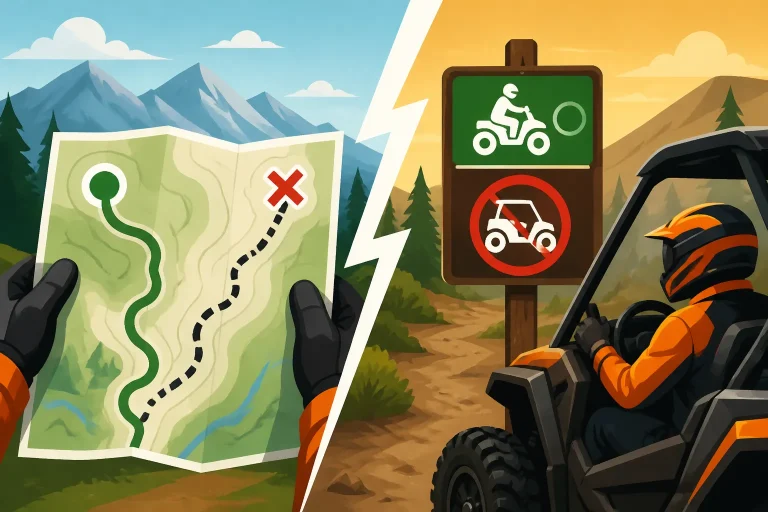
The filming plan does not change where an ATV or UTV can legally travel. Stay on routes open to your machine, obey posted closures, and do not ride cross-country to get a dramatic angle unless the land manager specifically allows that use. A route may be open to one class or width of machine and closed to another. Confirm the route rather than relying on a map pin, a video from a previous season, or an informal claim that “everyone rides here.”
Wyoming’s ORV permit requirements are a separate part of trip planning. A visiting rider should check whether the machine needs a Wyoming permit for the intended public-land use; a permit or registration from another state should not be assumed to replace Wyoming’s requirement. See Wyoming ORV Permit for a Visiting Rider for the permit question, and Why Your Home State Sticker Means Nothing in Wyoming for the reciprocity issue.
The permit does not authorize access to every road or trail. Land managers determine which routes are open, and route designations can be specific. Check the current route information for the area and carry the map or other information required for your ride. Which Travel Map You Must Carry in Wyoming explains why having the right route information matters. If the route status is unclear, ask the managing agency rather than treating uncertainty as permission.
A few filming choices create particular access risks:
- Riding off route for a shot: A short detour can still be unauthorized travel and may damage vegetation or soil.
- Stopping in a narrow trail: A parked machine or tripod can obstruct other users or create a safety hazard.
- Repeated passes for multiple takes: Repeated riding may increase noise, dust, and disturbance, and can affect other visitors.
- Using a scenic overlook as a staging area: A place suitable for a quick stop may not be suitable for a crew or equipment setup.
- Following another rider’s tracks: Tire marks do not prove that a route is open or legal.
Plan shots around places where stopping is safe and allowed. Keep machines out of sensitive areas, avoid blocking gates or trail entrances, and leave room for emergency and land-management vehicles. If filming requires a setup that would interfere with traffic or normal use, ask the land manager before the shoot rather than improvising at the site.
Weather, fire danger, wildlife protection, and seasonal closures can also affect access. A location that was open during a previous visit may be restricted when you return. Check for temporary closures shortly before the trip, including fire-related restrictions; [Wyoming Rules for Riding During Fire Season] is useful background. Do not treat filming as a reason to enter an area that is closed for resource protection or public safety.
Plan crew, equipment, and drones with low impact in mind
A camera mounted securely to a machine is generally easier to manage than gear that needs a crew to carry, place, or retrieve. Whatever the setup, equipment must not interfere with safe control of the vehicle, block the rider’s view, or create a loose object that could fall onto a trail. Follow the equipment manufacturer’s instructions and test mounts before riding. A camera angle is not worth losing control or distracting the driver.
Keep filming equipment within places where it can be used without damaging the ground or disrupting other visitors. Avoid setting tripods, cases, cables, or lighting in the riding line. Do not attach equipment to trees, signs, gates, or other land features unless the land manager has approved it. Pack out batteries, packaging, and all other waste.
Sound is another consideration. A production may add speakers, generators, amplified sound, or repeated engine revving. Those activities can affect other users and wildlife, and may be subject to rules beyond ordinary vehicle operation. Do not modify or operate a machine in a way that violates applicable sound or equipment requirements. For background on riding requirements, see Wyoming Spark Arrester and Sound Rules.
Drones need a separate check. A Wyoming ORV permit does not authorize a drone flight, and permission to film on the ground does not automatically settle whether drone use is allowed. Check both the applicable aviation requirements and the land manager’s rules for the location. Restrictions may be especially important in sensitive areas or places with aircraft operations, wildlife concerns, or special land protections. If the land manager’s guidance is unclear, ask before launching; do not assume that a drone is allowed because other visitors have used one.
A practical shoot plan should account for people who are not part of the production. Consider how the group will let other trail users pass, where equipment will be stored, and what to do if the route becomes busy. If the filming requires a spotter, keep that person in a safe location and out of the travel lane. Brief the crew on the route, closures, communication plan, and what to do if a machine breaks down or someone is injured.
If your shoot involves a group ride rather than a small number of people traveling together, separate event requirements may apply. Check with the relevant land manager before advertising or organizing a large ride. Wyoming Rules for an Organized Ride covers the distinction between an ordinary outing and a coordinated group activity.
Wildlife deserves extra care. Do not pursue animals, block their movement, approach nests or young, or keep making passes to get a closer shot. A filming goal does not override wildlife protections or seasonal closures. Riders heading into bear country should plan for the area’s safety rules and avoid creating attractants or unsafe stops; see [Wyoming Rules for Riding in Grizzly Country].
A practical checklist before the shoot
You can reduce last-minute problems by treating filming as a small project, even when the final plan is only a few riders and cameras. The process below helps confirm that both the ride and the production fit the site.
- Choose the exact location. Identify the route, staging area, and land manager, not just the nearest town or forest name.
- Check access for your machine. Confirm that the route is open and suitable for the ATV or UTV you intend to use.
- Verify the ORV permit question. Check whether Wyoming’s permit applies to your ride and make sure each relevant machine is covered.
- Describe the filming activity to the land manager. Explain whether it is personal or commercial, what equipment you will use, and how many people and machines will be present.
- Ask about authorization and conditions. Confirm whether a filming approval, event approval, or other permission is needed. Ask about current fees, forms, timelines, insurance, and site restrictions rather than relying on old information.
- Check other rules. Ask separately about drones, sound, temporary setups, parking, wildlife, fire restrictions, and sensitive areas.
- Make a low-impact plan. Select safe places to stop, avoid repeated passes where they could disturb others, and keep equipment clear of routes.
- Recheck shortly before departure. Closures and conditions can change. Confirm the route and any approval conditions with the responsible office.
- Carry the relevant information. Bring proof of any required permit and a copy of written authorization or instructions. Make sure the crew knows the route boundaries and who to contact if plans change.
- Stop if conditions differ from the plan. A closure, unsafe traffic, wildlife activity, or changed access condition is a reason to pause and reassess, not to continue for the sake of a shot.
It is also sensible to keep the production modest. A compact camera, a small crew, and stops in established areas generally create fewer logistical demands than a larger setup. That does not guarantee that no authorization is needed, but it makes it easier to explain the project and reduces the chance of interfering with other users.
If you receive conflicting information, ask the agency responsible for the specific site to clarify it. A retailer, rental company, online video, or rider’s recollection may help you identify questions, but it cannot establish that a route is currently open or that a production is approved. Keep the answer you receive, especially if the guidance is tied to particular dates, locations, or equipment.
Frequently Asked Questions
Do I need a permit just to film myself riding?
Not necessarily, but do not assume that every kind of filming is exempt. A small personal recording during a permitted ride differs from a crewed or commercial production. Ask the land manager about your specific activity, and follow all riding, route, and equipment rules either way.
Does a Wyoming ORV permit give me permission to film?
No. The ORV permit question and filming authorization are separate. A permit does not open a closed route or grant permission to set up equipment, run a production, or fly a drone.
Can I ride off the trail to get a better camera angle?
Do not do so unless the land manager has clearly authorized that use. Stay on routes open to your machine and use safe, permitted places to stop.
Do I need separate approval for a drone?
Check before flying. Drone use involves rules that are separate from ground riding and filming, and land-manager restrictions may apply at the location.
Disclaimer
This article is for general informational purposes only and does not constitute professional advice. Laws, prices and regulations vary by location and change over time. Consult a qualified professional for guidance on your specific situation.