Wyoming Rules for Riding a National Forest
Riding an ATV or UTV in a Wyoming national forest takes more than finding a dirt road and turning onto it. You need to know whether your machine is allowed on that route, whether a Wyoming ORV permit applies, and what seasonal or local restrictions are in effect. Here’s how to check those pieces before you unload.
Check that the route is open to your machine
National forests are not open for unrestricted off-road riding. The Forest Service decides which roads and trails are available to motor vehicles, and the rules can vary by route, season, vehicle type and location. A route shown on a map may be open to some machines but not others, or closed temporarily because of snow, wildlife protection, fire conditions or trail damage.
Start with the travel management information for the specific national forest you plan to visit. Look for its Motor Vehicle Use Map, often called an MVUM, and read the map’s legend and notes. An MVUM identifies routes designated for motor vehicle use; it is not simply a general recreation map. Check the current map and any closure notices before setting out, because signs and temporary orders may add restrictions.
A route being visible on a map does not necessarily mean it is open to an ATV or UTV. Pay attention to:
- Vehicle restrictions. A trail may have a width limit, or allow motorcycles while excluding wider machines. Check your vehicle’s width and compare it with the route’s restriction. The topic is covered in Wyoming’s 50-Inch Trail Limit.
- Seasonal dates. A route may open only during part of the year. Snow, soft ground, wildlife protections or spring conditions can affect access.
- Route boundaries. Permission to ride one segment does not grant access to a connecting road, trail or private parcel. Confirm where the open segment ends.
- Temporary closures. Fire restrictions, storm damage, maintenance and other local conditions can change access. Check for current notices, not just a map you saved before the trip.
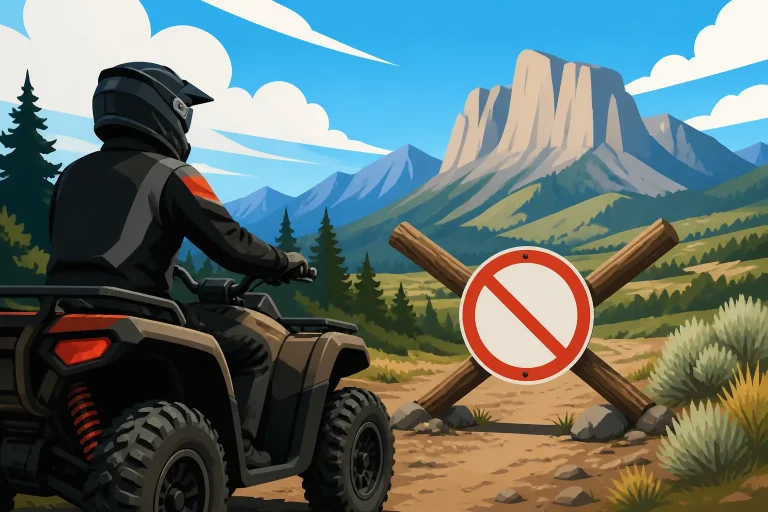
- The signs on the ground. A closed sign or barrier matters. Do not ride around it because a map appears to show the route as open.
For a broader explanation of how route designations and map details work, see Wyoming’s Enrolled Road System and Wyoming Trail Maps and MVUMs. When a map and a sign seem to conflict, pause and check with the land manager rather than assuming the less restrictive interpretation applies.
| Before riding | What to confirm |
|---|---|
| Route access | The current MVUM or travel map shows the road or trail as open to motorized use |
| Machine fit | Your ATV or UTV meets any posted width or vehicle-type restriction |
| Dates | The route is open for the season and no temporary closure applies |
| Permit | Your machine has the Wyoming ORV permit required for the riding area |
| Route limits | You know where the open segment ends and where private or restricted land begins |
Get the Wyoming permit and understand what it does
A Wyoming ORV permit and a Forest Service route designation answer different questions. The permit addresses the state’s off-road vehicle requirements; it does not give you permission to ride every national forest road or trail. You still have to follow federal route designations, local orders and posted restrictions.
For a machine that falls within Wyoming’s ORV rules, a Wyoming permit is generally required for riding on public lands. National forest riding is public-land riding, but exemptions and the exact permit requirements depend on the machine and circumstances. Check the current rules for your machine before the trip. Which Machines Wyoming Counts as Off-Road Vehicles explains why the vehicle type matters.
A sticker or registration from another state does not automatically replace the Wyoming permit. Visitors should not assume that a home-state registration, plate or off-road decal provides reciprocity. See Wyoming ORV Reciprocity Rules and Wyoming ORV Permit for a Visiting Rider if you are bringing a machine from out of state.
The permit is associated with the machine, not a general permission slip for whoever is riding. If you’re using a borrowed or rented ATV or UTV, confirm that the specific machine has the required Wyoming decal and that you have permission to operate it on the selected route. A rental business may handle permit requirements for its fleet, but ask rather than assume. Do Rentals Come With the ORV Decal Already? covers the question for rented machines.
Buy the permit through an authorized seller or the state’s official process, and check current instructions for placement. Keep any purchase confirmation until the decal is attached and you have verified that the machine is properly permitted. The permit period and renewal details can matter if you ride late in the year; How Long a Wyoming ORV Permit Lasts and When a Wyoming ORV Permit Expires explain the timing.
A permit does not replace other requirements. It does not make a closed trail legal, authorize cross-country travel, provide access through private property, or convert an off-road machine into a street-legal vehicle. If your trip includes public roads, check the separate rules for that road and machine rather than treating the ORV decal as road registration. Why an ORV Permit Is Not a Road License explains the distinction.
Plan for closures, land boundaries and changing conditions
Wyoming national forests cover varied terrain, and conditions can change quickly between valleys and high-elevation routes. A road that is dry and passable near a town may still be snowed in farther up, while a trail that was open on your last visit may have a new seasonal or emergency closure.
Use the forest’s current travel map alongside local information from the relevant Forest Service office. Check notices for closures before leaving home, then look again near your riding area if practical. If a posted sign, gate or closure order conflicts with your plan, follow the restriction and ask the land manager if you need clarification.
Do not treat an unmarked two-track as an invitation to ride. A visible track can be an unauthorized route, a private road or a route closed to motor vehicles. Stay on designated routes, and avoid creating new tracks around mud, snow, fallen trees or other obstacles. Going around a barrier can widen the impact and may take you onto land where riding is not allowed. For more on staying within route boundaries, see [Wyoming Rules for Riding a Designated Route] and Wyoming Penalties for Leaving a Route.
Land ownership can change within a short distance. National forest boundaries may border private land, state trust land or other public land with different access requirements. A route that crosses a boundary does not necessarily stay open under the same rules. Do not cross private property without permission, and check the rules for any non-federal parcel along your route. Wyoming Rules for Crossing Private Ground offers more detail.
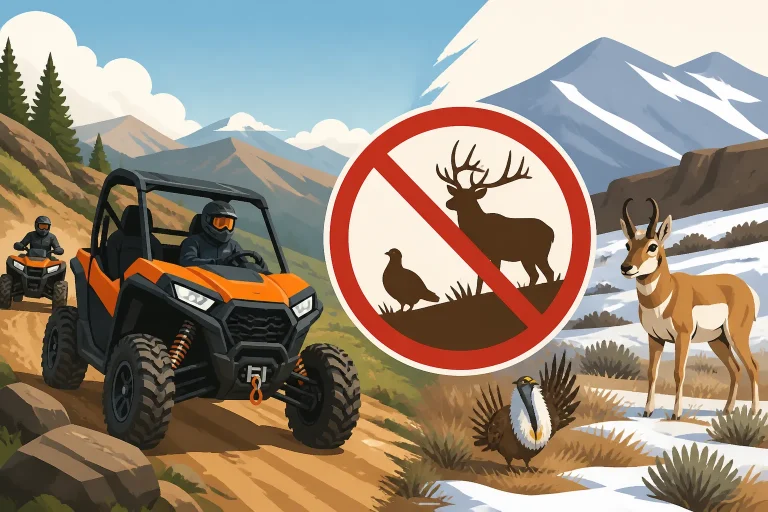
Seasonal limits deserve particular attention in spring and early summer. Snowmelt can leave roads soft and vulnerable to deep ruts. Wildlife-related closures may also apply, and forest managers can restrict access to protect habitat or reduce damage. A route’s usual opening period is not a guarantee that it is open on the day you arrive. Review Wyoming Seasonal Closures for Wildlife and Wyoming Fire Restrictions That Close Trails when either may affect your plans.
If a route is closed, turn around rather than searching for a way around the closure. If you reach a junction that is not clear on your map, stop before entering the unknown segment. Check the route designation, sign and current map before continuing. That small pause is much easier than dealing with a citation, a damaged machine or an unplanned trip onto private land.
Prepare your machine and ride responsibly
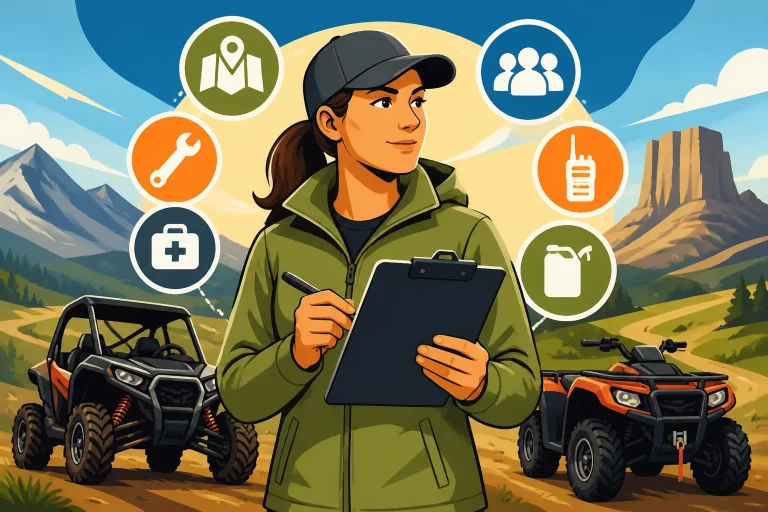
Before heading into a national forest, make sure your ATV or UTV is in sound condition for the terrain and distance. A machine that runs well around a campsite may not be ready for a long, remote ride with steep grades, rough surfaces or limited cell service. Check tires, brakes, steering, controls, lights and fuel range. Bring tools and basic repair supplies suited to the machine, and do not rely on phone coverage for navigation or help.
Wyoming public-land rules and local land-manager requirements can apply to equipment as well as route access. A properly functioning muffler and an approved spark arrester may be required. Confirm the requirements for your machine and riding area before departure; do not assume that factory equipment meets every rule. See Wyoming Spark Arrester Requirement and Wyoming Sound Limits on Public Land.
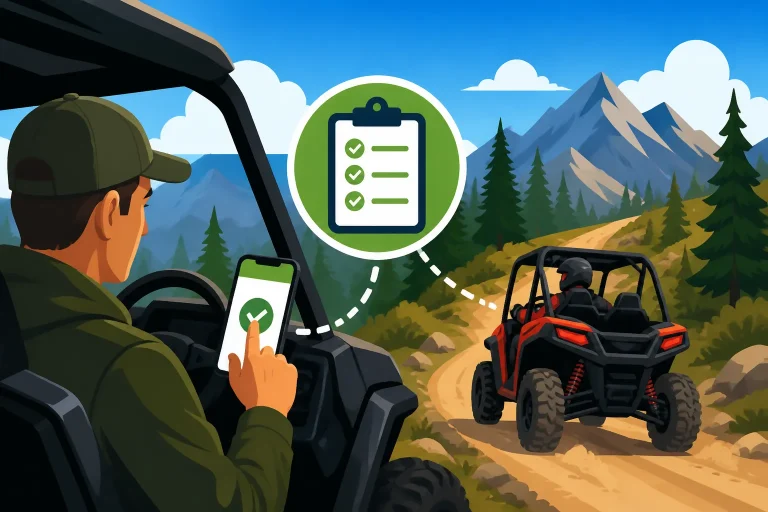
A practical pre-ride check includes:
- Confirm the route is open on the current travel map and check for temporary notices.
- Verify that the machine fits any width or vehicle-type limits.
- Check the Wyoming permit and decal for the machine.
- Inspect tires, brakes, steering, lights, fuel and any required exhaust equipment.
- Pack the route map, water, suitable clothing, basic tools and a way to contact help if phone service is unavailable.
- Tell someone where you plan to ride and when you expect to return.
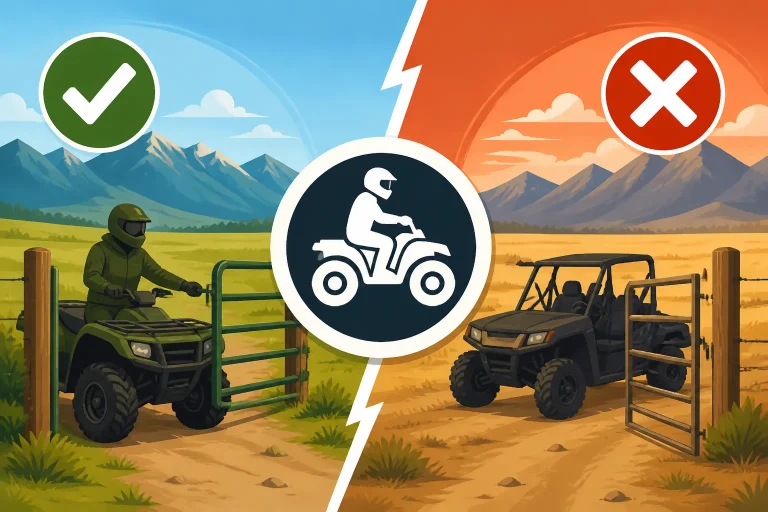
Ride at a pace that gives you time to respond to terrain, other users and wildlife. Yield courteously to other trail users, especially horses, and slow down where visibility is limited. Keep noise down, avoid spinning tires and stay off wet ground when your machine is leaving deep ruts. Pack out your trash and leave gates as you find them, unless posted instructions say otherwise. These choices help protect access as well as the forest itself.
A national forest trip may also involve steep terrain, fast weather changes and long distances between services. Check the forecast and be prepared for conditions that differ from those at the trailhead. If the route becomes unsafe or conditions worsen, turn back while you still have a safe option. A destination is not worth pushing beyond your machine’s limits or the route’s rules.
Before you go, treat the trip as two checks: is the route open to this machine, and does this machine meet the permit and equipment requirements? A Wyoming decal cannot answer the first question, and an open route cannot answer the second. Confirm both, follow signs and closures, and stay on designated routes.
Disclaimer
This article is for general informational purposes only and does not constitute professional advice. Laws, prices and regulations vary by location and change over time. Consult a qualified professional for guidance on your specific situation.