Wyoming State Trust Land Permit Cost
Wyoming state trust land access and an ATV or UTV decal are separate issues, so it is easy to budget for one and miss the other. The right cost depends on the permit or authorization you need—and whether motorized riding is allowed on the specific land. Here’s how to check before you pay or head out.
What a Wyoming state trust land permit pays for
State trust lands are managed to support designated public beneficiaries, and public recreation is subject to the state’s access rules. A permit or other authorization may be required for the activity you plan to do. The first step is to confirm that you need the right kind of authorization for motorized recreation, not just assume that a permit for another recreational activity covers an ATV or UTV trip.
The phrase “state trust land permit” can be used loosely. It might refer to an authorization for recreational access, while the trip itself may also require permission to use a particular route or parcel. Read the terms that apply to the land and activity you have in mind. A payment alone does not necessarily open every parcel, create a right to cross private land, or make every two-track legal to ride.
That distinction matters because trust land is not the same as a public trail system with unrestricted access. A parcel may have access conditions, seasonal restrictions, lease-related limits, or no permitted motorized route. Even where access is allowed, the permitted activity and travel method may be limited. Start with Wyoming Trust Land and Its Own Permit and check the state’s current instructions before planning a ride.
A state trust land authorization is also separate from Wyoming’s off-road vehicle permit. The state ORV permit is a decal requirement for covered machines used in the circumstances described by the state’s rules. It does not by itself grant permission to ride on trust land. Conversely, land access authorization does not replace a required ORV decal. See Wyoming ORV Permit Cost for the separate decal question.
| Cost or requirement | What it relates to | What to verify |
|---|---|---|
| Trust land authorization | Access to a particular kind of recreation or land | Whether the authorization covers motorized riding and the land you plan to visit |
| Wyoming ORV permit | A machine’s state off-road permit requirement | Whether your machine and planned use require a decal |
| Route or parcel access | Where you may travel | Whether the specific road or trail is open to your machine |
| Lease or landowner permission | Access where other rights or conditions apply | Whether permission is needed beyond a state permit |
| Trip expenses | Transport, fuel, gear and other costs | Your own route, machine and trip plans |
The table is a planning aid, not a substitute for the current terms. If the state’s permit page or land information does not clearly answer whether an ATV or UTV may be ridden there, ask the responsible office before traveling.
How to find the current permit cost
The safest answer to “How much does a Wyoming state trust land permit cost?” is the current amount shown by the state for the specific authorization you need. Fees and eligibility can change, and a listed price may apply to only one permit type or duration. Don’t rely on an old receipt, a third-party summary, or a fee quoted for a different activity.
Use this process:
- Identify the activity. Say that you plan to ride an ATV or UTV, rather than asking only for a general recreation permit. Ask whether motorized riding is authorized at all.
- Identify the location. Have the parcel, access point, or route information ready. A permit that applies to one situation may not apply to another.
- Check the current state instructions. Look for the official information from the Wyoming Office of State Lands and Investments, including the permit terms, fee, validity period, and any exclusions.
- Confirm how to buy and carry it. Check whether authorization is issued online, through another official channel, or in another form, and whether you must be able to show proof while riding.
- Save the terms and proof. Keep the confirmation and any relevant access information where you can reach them. A receipt is useful, but it does not make a closed route open.
For information about buying a recreational-use authorization, see Buying a Recreational Use Permit. Before completing a purchase, read the conditions rather than treating the checkout price as proof that your planned ride is allowed. If the official information is unclear about motorized use, pause and ask the state office for clarification.
A low permit price can be misleading if it is not the permit you need. The reverse can also happen: a rider may assume a special land permit is required when the relevant route has different access terms. Verify the type of authorization first, then compare the actual current cost.
When asking the state or a land manager, useful questions include:
- Does this authorization allow ATV or UTV use, or only other recreational activities?
- Does it apply to this parcel and the route I plan to ride?
- Are there seasonal closures, vehicle restrictions, or other conditions?
- Is separate permission needed from a lessee, landowner, or managing agency?
- What proof must I carry, and how long is the authorization valid?
Clear answers to those questions are more useful than a price alone. They help prevent paying for access that does not match your trip.
What to include in your riding budget
Think of the permit cost as one line in a trip budget, not the total cost of permission to ride. A state trust land authorization, when applicable, does not combine every land-access rule and vehicle requirement into one payment. You may need to account for several separate items, each with its own terms.
Start with the machine. Check whether it needs Wyoming’s ORV decal for the way you plan to use it. The decal requirement is distinct from access permission, and a permit from another state should not be assumed to replace Wyoming’s decal. Wyoming ORV Reciprocity Rules explains why riders should check Wyoming’s rules even when a machine already has an out-of-state sticker or registration.
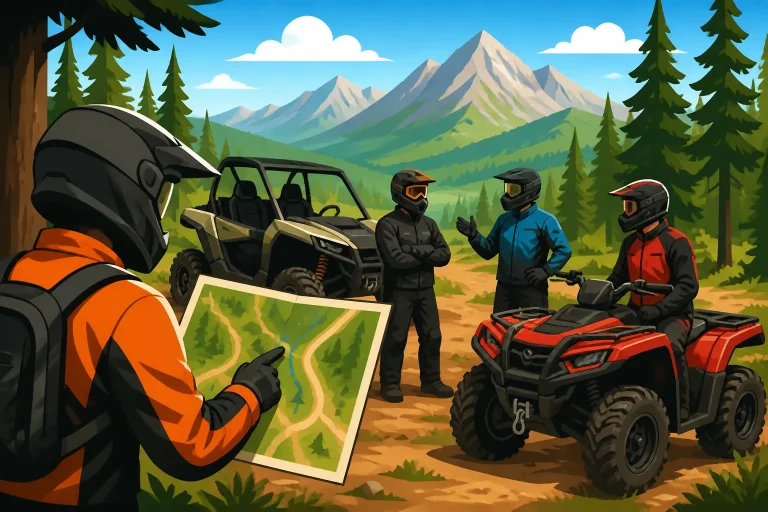
Next, check the route and land status. Some riding may involve a combination of trust land, private land, federal land, or other managed property. Permission for one segment does not automatically carry over to the next. A map can help you understand the planned route, but confirm that the route is currently open and that the relevant manager allows your machine. For grazing areas, [Wyoming Rules for Riding a Grazing Lease] is a useful companion read.
Then budget for ordinary trip expenses: fuel, transportation, safety equipment, and any lodging or camping you choose. These are not trust land permit fees, but they can affect the real cost of a ride, especially if the access point is remote or the route requires a longer drive. If you are borrowing or renting a machine, confirm who is responsible for any required decal and whether the route is permitted for that vehicle.
A practical checklist can keep the costs and permissions separate:
- Land access: Confirm the exact authorization and its current fee, if one applies.
- Motorized use: Confirm that the authorization specifically allows the planned ATV or UTV activity.
- Route access: Check that each road or trail is open to your machine and that you can reach it legally.
- Machine requirements: Check Wyoming’s decal rules and any other requirements relevant to your use.
- Permission beyond the permit: Ask whether a lessee or landowner’s permission is also needed.
- Trip costs: Add fuel, transport, equipment, and overnight costs to your own budget.
If you are comparing a trust land ride with a designated riding area, remember that access arrangements can differ. A state permit does not operate like an all-access pass to every public route. Wyoming Riding on State Trust Land provides more context for checking the land and access rules before setting out.
Before riding: verify the land and route
The most important step after checking the fee is confirming that your intended route is open and appropriate for your machine. A permit can satisfy one part of the rules while leaving other restrictions in place. Follow the current state terms, on-site signs, and the instructions of the agency or land manager responsible for the route.
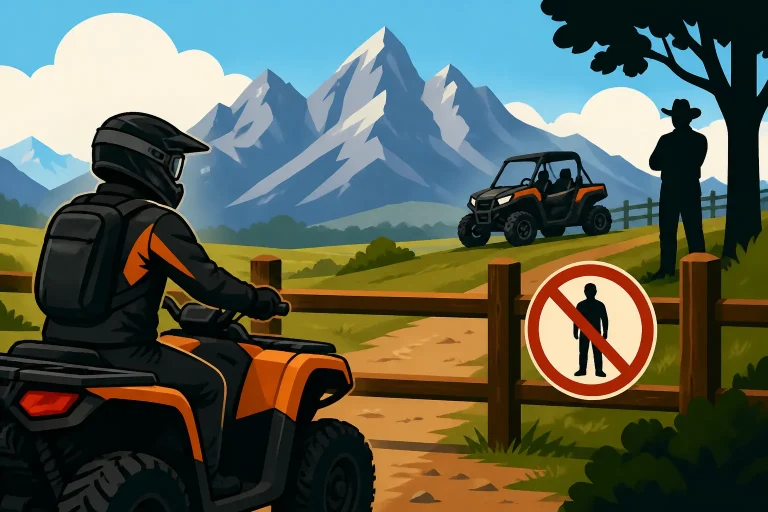
Do not assume that a two-track is public simply because it appears on a map or is physically passable. It might cross private ground, follow a lease road, or be closed to motorized travel. Likewise, a route that is open to some users or vehicle types may not be open to every ATV or UTV. If a map and a sign appear to conflict, treat that as a reason to stop and confirm the current rule rather than choosing the more permissive interpretation. When a Map and a Sign Disagree explains why checking the route on the ground matters.
Keep separate proof for separate requirements. If you have a trust land authorization, retain its confirmation and terms. If your machine needs a Wyoming ORV decal, make sure that requirement is met too. Neither document should be treated as a substitute for route access or private-land permission. For decal rules and placement, see Where the Wyoming Decal Goes on a Machine.
A few final checks can prevent a wasted trip:
- Confirm the exact land parcel and the route you intend to use.
- Verify that motorized recreation is allowed there and that your machine is permitted.
- Check for seasonal closures or other temporary restrictions close to your travel date.
- Confirm the current cost and validity of any required land authorization through the official state channel.
- Check whether the machine needs a separate Wyoming ORV permit.
- Carry the required proof and follow posted directions while riding.
If the state’s information does not settle whether a route is open to an ATV or UTV, contact the responsible office before leaving. That small check can be more valuable than relying on a permit name or price that sounds broad but has narrower terms.
Disclaimer
This article is for general informational purposes only and does not constitute professional advice. Laws, prices and regulations vary by location and change over time. Consult a qualified professional for guidance on your specific situation.