Wyoming’s Designated ORV Roads
It's a common scenario: you've got your ATV or side-by-side loaded up, you're heading to a fantastic riding area in Wyoming, and you see what looks like a perfectly good dirt road stretching ahead. "Can I just drive my machine on that?" you wonder. The answer, unfortunately, is rarely a simple "yes" or "no," and misunderstanding the rules can quickly lead to frustration, or worse, a costly ticket. This guide is here to untangle the complexities of Wyoming's designated ORV roads, helping you understand where you can legally ride your off-road machine on pavement or gravel, and what you need to do to stay on the right side of the law.
The Great Wyoming Road Confusion – What's the Deal with ORVs on Pavement?
Wyoming is an outdoor enthusiast's paradise, offering incredible access to vast landscapes. But for ATV and UTV riders, knowing exactly where you can legally operate your machine, especially on roads, can feel like navigating a maze. It’s not just about finding a trail; it’s about understanding the nuances of road designations.
Why "Street Legal" Isn't a Simple Yes or No
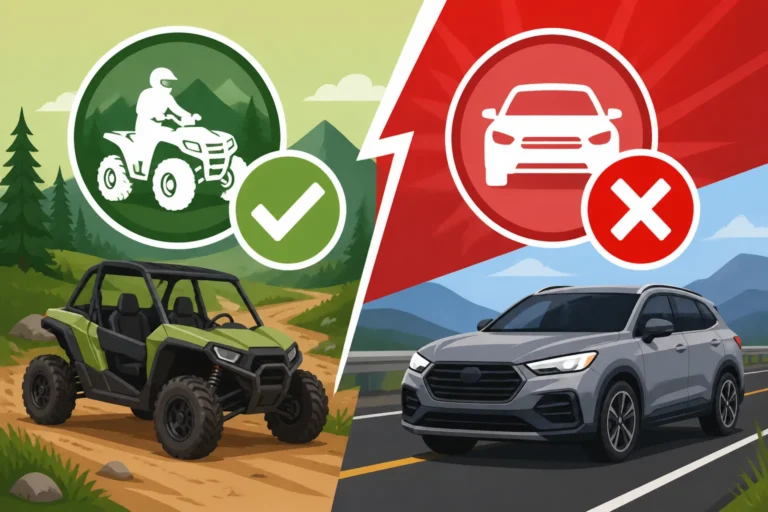
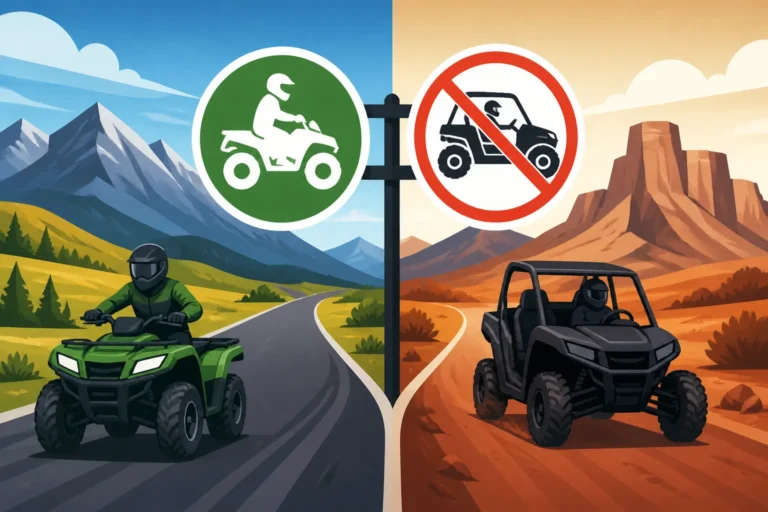
Many riders come to Wyoming from other states where "street legal" might simply mean adding a license plate and a few basic accessories to their ATV or side-by-side. They assume the same applies here, only to be met with confusion. Wyoming has a more nuanced approach, distinguishing between an Off-Road Recreational Vehicle (ORV) and a Multipurpose Vehicle (MPV). An ORV is what most folks think of when they picture an ATV, UTV, or dirt bike – machines designed primarily for off-pavement use. While these ORVs can gain access to specific "designated ORV roads," they are not generally "street legal" in the same way a car or motorcycle is.
This distinction is a major source of frustration for riders. You might have a perfectly capable side-by-side that you use for ranch work or trail riding, and you just want to drive it a few miles down a county road to get to the next trail segment or to grab supplies in a small town. But without understanding the specific classifications and requirements, that short drive could land you in hot water. The state doesn't just wave a magic wand and declare all off-road machines welcome on all roads; it's a careful, deliberate process of designation.
The Role of Designated Routes, Not Open Season
In Wyoming, the general rule of thumb for ORVs on roads is: if it's not specifically designated as an ORV route, assume it's off-limits. This isn't an "open season" approach where you can ride anywhere unless explicitly prohibited. Instead, it's a "designated routes only" policy. This means that government agencies – whether it's the Forest Service, Bureau of Land Management (BLM), or local county governments – must formally identify and mark roads where ORV use is permitted.
Imagine pulling up to a trailhead in the Bighorn National Forest. You might see a dirt road leading off into the pines, but unless there's a sign or it's marked on an official map as an ORV route, you can't just take your quad down it. This system is designed to protect sensitive ecosystems, minimize conflicts with other road users, and manage traffic flow effectively. It can be a bummer when you're looking at a shortcut, but these rules are in place for a reason, and understanding them is crucial for enjoying Wyoming's vast riding opportunities without incident.
Deciphering "Designated" – How Roads Get the Green Light for ORVs
So, what exactly does "designated" mean, and how does a road earn that special status allowing ORV traffic? It's not a simple process, and it often involves multiple layers of government agencies working together.
The Interagency Approval Process
One of the biggest misconceptions is that a single entity, like the state of Wyoming, simply decides which roads are open. In reality, opening a road to ORV traffic, especially on federal lands, is often a collaborative effort, involving both local and federal agencies. For instance, a county might have to give its blessing first before a federal agency like the Forest Service or BLM can officially enroll a road in the ORV system. It's a testament to the complex land management structure we have. [Why a Road Opens Only When Two Agencies Agree]
Think about a county road that cuts through a section of national forest. The county has jurisdiction over that road, but the land it traverses is managed by the Forest Service. For ORVs to be allowed on that road, both the county and the Forest Service would typically need to agree and take official action. The county might pass an ordinance, and the Forest Service would then incorporate that road into their Motor Vehicle Use Map (MVUM) as an ORV route. This can sometimes feel like a bureaucratic hurdle, but it ensures that local concerns are addressed and that land management goals are aligned. You can't just [Asking State Parks to Enroll a Road] on a whim; there's a process, often involving public input and careful consideration. It really highlights [Why a County Must Say Yes First] before these designations can proceed.
Reading the Maps – Finding Your Legal Path
Knowing which roads are designated means becoming proficient at reading official maps. For federal lands, the Motor Vehicle Use Maps (MVUMs) are your bible. These maps, issued by the Forest Service and BLM, clearly show which roads and trails are open to specific types of vehicles, including ORVs. They use distinct markings, often colored lines, to indicate where you can ride. It’s absolutely essential to consult these maps before you head out, and even carry a copy with you – either a physical map or a downloaded digital version on your phone or GPS device.
Waiting until you're already out on the trail to figure this out is a recipe for disaster. These maps also indicate seasonal closures, width restrictions, and other important rules. There might even be situations [When a Map and a Sign Disagree]. In such cases, the general rule of thumb is to err on the side of caution and follow the most restrictive guidance, whether it's the map or a sign on the ground. A good practice is to always have the latest MVUM for the area you're riding in. You can usually find these on the websites of the specific National Forest or BLM field office you plan to visit. Relying on generic apps or outdated information can lead you astray, potentially onto closed roads or into areas where ORV use is prohibited.
The Rules of the Road (Even When It's an ORV Road)
Just because a road is "designated" for ORV use doesn't mean it's a free-for-all. There are specific equipment requirements and rules of conduct that riders must adhere to, ensuring safety for everyone and minimizing impact.
Required Equipment for On-Road Travel
When you're riding a designated ORV road, even if it's unpaved, you're essentially sharing it with other traffic – potentially cars, trucks, and even large RVs. Because of this, your machine needs to have certain equipment that might not be necessary for strictly off-trail riding. This isn't about making your machine fully "street legal" as an MPV, but it is about making it safe and visible for road-sharing.
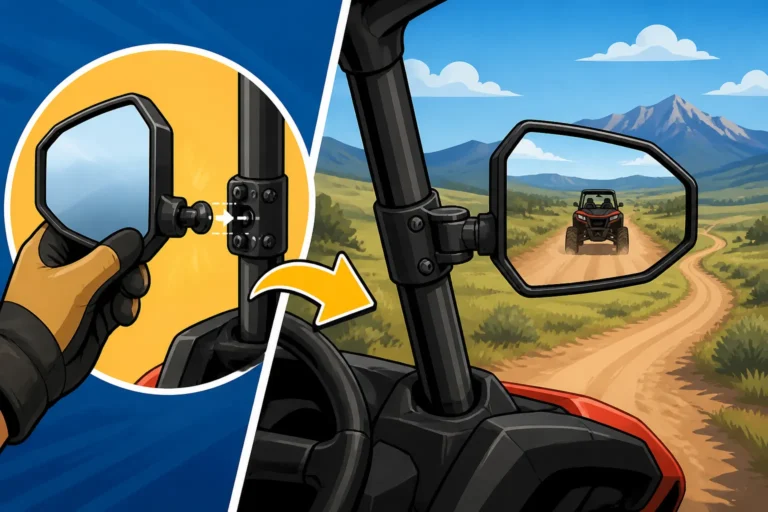
First and foremost, you'll need proper lighting. This means a functional headlight, taillight, and a stop lamp that illuminates when you hit the brakes. [Headlight, Taillight and Stop Lamp] are non-negotiable for visibility, especially in dusty conditions or low light. You also need a left-side mirror to see traffic approaching from behind. [The Left-Side Mirror Wyoming Wants] is essential for safe maneuvering and awareness. Don't forget a horn. [Fitting a Horn to a Road-Legal Side-by-Side] allows you to alert other vehicles or even wildlife to your presence. These aren't just suggestions; they are requirements for operating on these designated roads. If you're looking to upgrade or add these components, companies like SuperATV offer a range of aftermarket parts specifically designed to help UTVs and ATVs meet these kinds of compliance needs.
Furthermore, your machine must be equipped with a spark arrester and a muffler that keeps noise levels within acceptable limits. [Wyoming Muffler and Spark Arrester Rules] are critical for preventing wildfires and reducing noise pollution, both of which are major concerns in Wyoming's wildlands. And depending on your speed capability, some machines might also need a [When a Machine Must Carry a Slow-Moving Vehicle Emblem], often that orange triangle, to warn faster-moving traffic. These equipment mandates are designed to make sure that while you're enjoying the designated roads, you're doing so safely and respectfully.
Rider Requirements and Behavior
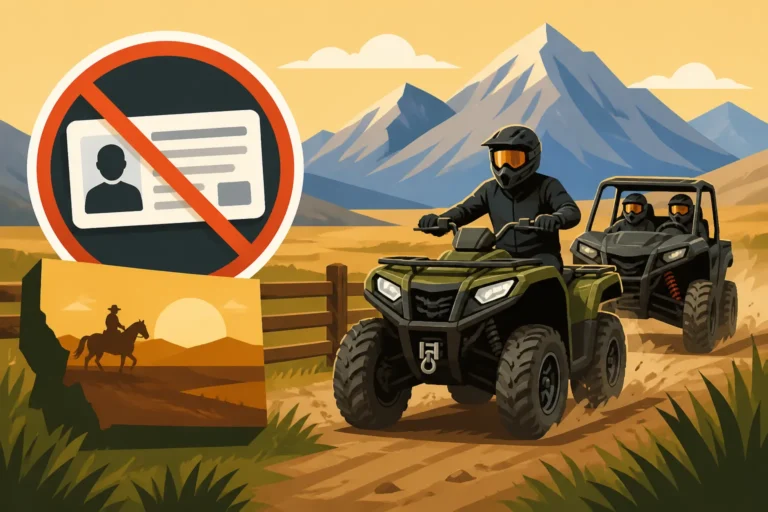
Beyond the machine itself, the person operating it also has responsibilities. When on any designated road, you must possess a valid driver's license. This isn't optional; it's a fundamental requirement. [Wyoming Driver's License Rules for ORVs] are clear on this point. Even if you're on a dirt road deep in the national forest, if it's designated for ORV use and thus open to other traffic, you need to be a licensed driver.
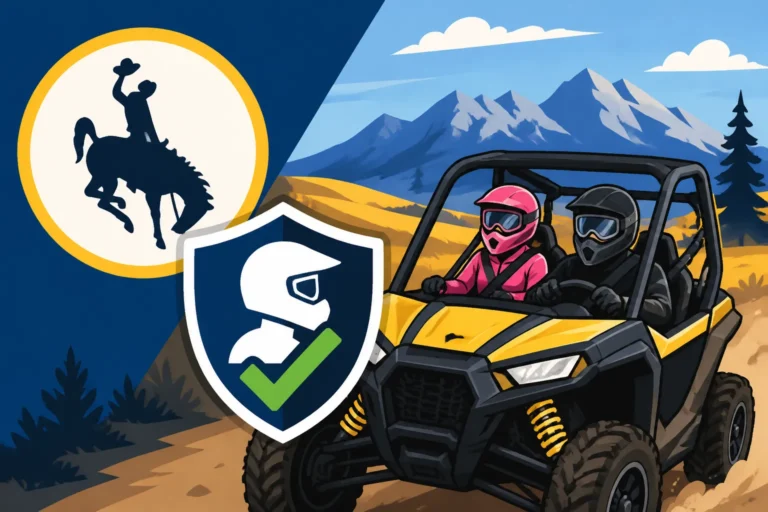
Age also plays a role, especially concerning helmets. While Wyoming doesn't mandate helmets for all adult ORV riders, if you're under 18, you absolutely must wear one, whether you're driving or a passenger. [Wyoming Helmet Law for ATV Riders] and [Wyoming Helmet Law for Passengers] apply on all public lands and designated roads. This is a critical safety measure for younger riders.
Another vital requirement is insurance. While not always strictly mandated for off-trail ORV use, liability insurance becomes critical when operating on designated roads. [Wyoming ATV Insurance Requirement] is a wise investment, protecting you financially in case of an accident involving other vehicles or property. And finally, common sense road etiquette is paramount. Always [Keeping to the Right Edge in Wyoming], yield to oncoming traffic, and maintain appropriate speeds. These roads are often used by ranchers, loggers, and other recreationalists, so mutual respect is essential for everyone's safety and continued access.
Distinguishing ORV Designated Roads from MPV Street Legal Status
Here’s where a lot of riders get truly confused. There's a big difference between riding a designated ORV road and having a truly "street legal" machine in Wyoming. Understanding this distinction is crucial to avoid trouble.
ORV Permits vs. MPV Plates
First, let's talk about the [Wyoming's Annual ORV Permit]. This is the decal you purchase and affix to your machine. This permit allows you to ride on Wyoming's vast network of designated ORV trails and, yes, those specific designated ORV roads we've been discussing. It signifies that you've contributed to the state's trails program and are authorized for off-road recreational use. It's an essential piece of paper, and wardens will check for it.
However, an ORV permit is not a license plate. It does not make your machine "street legal" for general road use. For that, you need an MPV (Multipurpose Vehicle) plate. This is a standard vehicle license plate issued by the county, similar to what you'd get for a car or truck. An MPV plate allows you to operate your qualified machine on virtually any public road in Wyoming, with the exception of interstate highways and explicitly closed routes. This is the true [Wyoming's MPV Path to the Road]. The process for getting an MPV plate involves titling your machine through the County Clerk and then registering it for plates through the County Treasurer. These are two separate steps, with [Plates That Come After the Title] being the final step to full street legality.
The key takeaway here is this: an ORV permit gets you on designated off-road routes and specific ORV roads. An MPV plate, granted your machine qualifies, opens up almost the entire public road system (minus interstates) to your side-by-side or ATV.
Machine Eligibility – Not All ORVs Can Become MPVs
This is where the dream of plating your favorite ATV might hit a snag. Not every ORV can qualify for MPV status and thus get a license plate. Wyoming has very specific requirements for what constitutes a Multipurpose Vehicle. Your machine must weigh between [Weight Between 300 and 3,000 Pounds] and have a seat at least [A Seat at Least 24 Inches Up] from the ground.
These seemingly arbitrary numbers are actually quite significant. Most traditional ATVs, especially those with a straddle seat, will not meet the "seat at least 24 inches up" requirement. The low-slung, ergonomic design of many quads means their seat height falls below this threshold. This is why [Why a Quad Cannot Qualify as an MPV] for MPV registration. While you might see older ATVs with plates in other states, Wyoming's definition is stricter.
Side-by-sides (UTVs), on the other hand, are generally excellent candidates for MPV conversion. Their design, with bucket seats and a higher ground clearance, typically meets both the weight and seat height requirements. [Registering a Side-by-Side as a Wyoming MPV] is a common and straightforward process for many UTV owners who want the flexibility of road travel. So, if your goal is true street legality for general road use, a side-by-side is usually your best bet for meeting Wyoming's MPV criteria.
Navigating Specific Road Types – What's Open, What's Not?
Understanding the general rules is one thing, but applying them to the diverse network of roads across Wyoming requires a bit more specific knowledge. Different types of roads fall under different jurisdictions and have varying levels of ORV access.
County, Forest, and BLM Roads
A significant portion of Wyoming’s designated ORV roads falls into the categories of county roads, Forest Service roads, and BLM (Bureau of Land Management) roads. These are often gravel or dirt, winding through incredible landscapes.
Many rural [Wyoming Rules for Riding a County Road] are, in fact, designated for ORV use, especially in areas with a strong agricultural or recreational focus. Counties often adopt ordinances to allow ORVs, recognizing their utility for ranchers and recreationists. However, it's never safe to assume. Always check with the specific county's regulations or look for signage. These roads also come with responsibilities, like being mindful of private property boundaries, respecting [Wyoming Rules for Riding Near Livestock], and always remembering to [Wyoming Rules for Opening a Gate] if you pass through one.
On federal lands, such as National Forests and BLM lands, the rules are clearer, thanks to their comprehensive mapping systems. [Wyoming Rules for Riding a Forest Road] and [Wyoming Rules for Riding a BLM Road] are explicitly detailed on their Motor Vehicle Use Maps (MVUMs). These maps are color-coded to show which roads are open to licensed vehicles, which are open to ORVs, and which are entirely closed. It's crucial to consult these maps. Even a perfectly maintained dirt road within a national forest might be closed to ORVs if it's not explicitly marked as open on the MVUM. Always carry the map, know your route, and remember that "forest road" isn't a blanket permission slip for ORV use.
Interstate Highways and City Streets – Generally Off-Limits
Now for the tougher news: interstate highways are almost universally off-limits for ORVs and even MPVs in Wyoming. You will rarely, if ever, find a designated ORV route that includes an interstate. [Interstates Closed to MPVs and Dirt Bikes] is the standard. There are highly specific, and often rare, exceptions for grade-separated crossings where an ORV trail might pass under or over an interstate, but you are not allowed to ride on the interstate itself. Understanding [Wyoming Rules for Crossing an Interstate] means knowing the precise, narrow circumstances under which it's permissible to pass over or under these major roadways.
[Wyoming Rules for Riding a City Street] are also very restrictive. Unless a specific city or town has passed an ordinance explicitly designating certain streets as ORV routes (which is rare), you generally cannot ride your ORV on city streets. This is usually due to safety concerns, traffic congestion, and local noise ordinances. If your side-by-side is fully registered as an MPV with a license plate, then you have much more freedom on city streets, subject to speed limits and other traffic laws, but a standard ORV decal won't get you there. If you need to [Wyoming Rules for Crossing a Highway], such as a state highway, this typically involves a direct, perpendicular crossing to get from one designated route to another, with strict rules about stopping, yielding, and ensuring clear sightlines. It's not about riding along the highway, but crossing it quickly and safely.
Practical Tips for Riding Wyoming's Designated Roads
Riding Wyoming's designated ORV roads can be an incredibly rewarding experience, offering access to stunning scenery and connecting different trail systems. But to make the most of it, a little preparation and mindful riding go a long way.
Preparation is Key – Before You Head Out
First and foremost, research your route meticulously. Before you even load your machine onto the trailer, pull out those MVUMs, check county websites, and verify local regulations for the specific area you plan to ride. Don't rely on word-of-mouth or outdated information. Many a rider has faced a frustrating detour or a stern lecture from a ranger because they didn't do their homework.
Next, ensure your machine is fully compliant with equipment requirements. Double-check your lights, horn, mirror, and spark arrester. Are your tires in good condition? Is your muffler performing as it should? Think of it like a pre-flight checklist for your adventure. If you're needing to add or upgrade any of these components, aftermarket suppliers like SuperATV can be a great resource for compliant lights, mirrors, or even specific exhaust systems that meet sound regulations.
Finally, always carry all necessary paperwork. This includes your current Wyoming ORV decal (affixed to your machine in the correct location), your valid driver's license, and proof of insurance. While a digital copy on your phone might seem convenient, the physical decal must be on the machine. As for a permit receipt on your phone, [Does a Permit Receipt on Your Phone Count?] as official proof? While it might help explain your situation, law enforcement will ultimately be looking for that physical decal. Avoid [Wyoming Fines for Riding Without a Permit] by being prepared. Having all your documents readily accessible can save you a lot of hassle if you encounter a warden or law enforcement officer.
On-Road Etiquette and Safety
Once you're out on those designated roads, practicing good etiquette and prioritizing safety are paramount. Remember, these aren't private playgrounds; they're shared thoroughfares.
Share the road. You'll encounter other vehicles, from full-sized trucks to bicycles, and even horses. Be courteous, slow down, and give other users ample space. If you're kicking up a lot of dust, back off a bit to improve visibility for those behind you.
Maximize your visibility. Wear bright clothing, especially if your machine isn't a vibrant color. Always use your lights, even during the day, particularly on dusty roads or in areas with shade and sun patches. Making yourself seen is one of the best ways to prevent accidents.
Be environmentally aware. Staying strictly on designated routes is not just a legal requirement; it's an ethical one. Going off-route, especially in sensitive areas, can damage fragile ecosystems, disturb wildlife, and lead to new closures. Always pack out everything you pack in, leaving no trace.
Prepare for the unexpected. Wyoming's weather can change in an instant, and breakdowns can happen miles from anywhere. Carry essential tools, spare parts, a first-aid kit, extra water, and enough fuel. In remote areas, a satellite messenger can be a literal lifesaver, allowing you to call for help even without cell signal. By being prepared and riding responsibly, you'll ensure a safer, more enjoyable experience for yourself and help preserve access for all riders.
Penalties for Non-Compliance
Nobody wants a vacation ruined by a citation, or worse. Riding illegally in Wyoming, whether it's on a closed road or without the proper permits, carries real consequences. Understanding these penalties isn't about fear-mongering; it's about making informed decisions and protecting your access to the incredible riding opportunities Wyoming offers.
The Costs of Riding Illegally
The most immediate consequence of riding on a closed or undesignated road, or without the proper ORV permit, is a fine. [Wyoming Fines for Riding a Closed Road] can vary significantly depending on the jurisdiction (state, federal, or county) and the severity of the violation, but they are never insignificant. Similarly, if you're caught without your required ORV permit decal, [Wyoming Fines for No ORV Permit] will definitely put a damper on your day. These fines are often designed to be punitive enough to deter repeat offenses, and they're money that could have been better spent on your adventure.
Beyond the monetary penalties, serious or repeated violations can lead to more severe outcomes. In some cases, your machine could even be impounded, leaving you stranded and facing additional costs for retrieval. There's also the potential for losing future riding privileges in certain areas, or even impacting your ability to register or permit machines in the future. The ripple effects of a citation can extend beyond just the initial fine, impacting your overall enjoyment of the sport and your reputation as a responsible rider.
Respecting the Rules Protects Access
It's easy to view these rules as annoying bureaucratic hurdles, but they serve a vital purpose. Every time a rider ignores a closure, rides off-trail, or operates without the necessary equipment, it creates negative publicity and puts pressure on land managers to restrict access for everyone. [Wyoming Rules for Leaving a Route] are there to protect the land, prevent erosion, safeguard wildlife habitats, and ensure the sustainability of our riding areas.
By diligently adhering to all rules, carrying the correct permits, ensuring your machine is properly equipped, and staying on designated routes, you're not just avoiding a ticket – you're actively contributing to the preservation of ORV access in Wyoming. Responsible riding builds trust with land managers, local communities, and other recreationists. This trust is invaluable for keeping existing designated roads and trails open, and for advocating for the creation of new ones. Ultimately, the future of ORV riding in Wyoming rests on the collective responsibility of all riders to follow the rules and demonstrate respect for the land and its management.
| Feature | ORV Permit (Decal) | MPV Plate (Street Legal) |
|---|---|---|
| Primary Use | Designated ORV trails & designated ORV roads | All public roads (except interstates & explicit closures) |
| Permit/Plate Type | Annual decal | Standard vehicle license plate |
| Machine Type | Any qualifying ORV (ATV, UTV, dirt bike, etc.) | UTVs, some specially equipped ATVs (must meet MPV def.) |
| Required Equipment | Basic ORV safety gear (helmet for under 18, spark arrester, lights, horn, mirror for designated roads) | Full street-legal equipment (headlights, taillights, brake lights, mirrors, horn, turn signals, DOT tires, etc.) |
| Driver's License | Required for operation on designated roads | Required (M or MR endorsement often needed for UTVs/ATVs) |
| Insurance | Recommended, often required on designated roads | Required for road operation |
| Cost | Flat annual fee (check current state rates) | Registration fees, title fees, sales tax |
| Where to Purchase | Online, dealers, state parks, county counters | County Clerk (title), County Treasurer (plate) |
| Wyoming Reciprocity | None (everyone needs a WY permit to ride ORV routes) | Generally honored for road use (if legal in home state) |
Disclaimer
This article is for general informational purposes only and does not constitute professional advice. Laws, prices and regulations vary by location and change over time. Consult a qualified professional for guidance on your specific situation.