Why a Road Needs Two Designations
Riders often find themselves scratching their heads when they see a perfectly good dirt road snaking through Wyoming's incredible landscape, only to discover they can't legally ride their ATV or side-by-side on it. It seems counterintuitive, doesn't it? A road is a road, whether it's paved or gravel, but in our state, navigating the rules for off-road vehicles can feel like deciphering ancient hieroglyphs. This guide is going to clear up that confusion, explaining precisely why a road in Wyoming needs not just one, but two distinct designations before you can confidently and legally open the throttle on your machine.
"But It's Just a Road!": The Common Misconception About Off-Road Access
It's a familiar scenario: you're driving your truck, trailer loaded with your prized side-by-side, down a county-maintained gravel road, and you spot a fantastic-looking two-track veering off into the sagebrush. It looks like it goes somewhere interesting, perhaps to a hidden fishing spot or a panoramic viewpoint. Your immediate thought is, "This is public land, it's a road, so I can ride my off-road vehicle here, right?" Unfortunately, that's often where the misconception begins, and it can lead to frustration or, worse, a citation.
The Frustration of Mixed Signals
Many public roads, especially in vast states like Wyoming, simply look inviting. They appear to be part of the open landscape, a natural extension of your outdoor adventure. When you see a county sign, or a Forest Service road marker, it signals public access for vehicles. However, the crucial nuance that often trips riders up is that "public access for vehicles" doesn't automatically translate to "public access for all off-road vehicles." This can be incredibly frustrating, especially for folks who are used to different rules in other states or are just visiting. You’ve done your homework, you have your [Wyoming's Annual ORV Permit], but the rules can still feel like a moving target. It’s not about malice; it’s about a system designed to manage diverse land uses.
Why a Road's Legal Status Isn't Enough
The core of the issue lies in the distinction between a road's general legal status and its specific designation for off-road vehicle use. A road might be legally identified as a county road, a U.S. Forest Service road, or a Bureau of Land Management (BLM) route. This first designation defines who owns and maintains the road and its basic accessibility for registered, street-legal vehicles like cars and trucks.
However, for off-road vehicles (ORVs) like most ATVs, dirt bikes, and even many side-by-sides, this initial legal status isn't enough. These machines are often treated differently by land management agencies. Just because a road is open to a pickup truck doesn't mean it's open to an unregistered ORV, or even a street-legal Multipurpose Vehicle (MPV), without an additional, explicit "designation" for that specific type of use. Think of it like a public park: you can walk on all the paths (like a car on a road), but you can only ride your bicycle on paths that are specifically signed for bikes (like an ORV on a designated trail). Without that second layer of permission, your ride could quickly become illegal.
Wyoming's Layered Approach: ORVs, MPVs, and the Road System
Wyoming has a very specific framework for how off-road vehicles interact with its vast network of roads and trails. It’s not always black and white, and understanding the differences between ORVs and MPVs is key to knowing where you can and can't ride.
Understanding Off-Road Vehicles (ORVs)
For the most part, when we talk about Off-Road Vehicles (ORVs) in Wyoming, we're referring to machines like traditional ATVs, dirt bikes, and many types of side-by-sides that are designed purely for off-highway recreation. These vehicles are not built to meet federal highway safety standards and are not typically street-legal right off the showroom floor. In Wyoming, these machines require an annual ORV permit (a decal you affix to the machine) to operate on designated trails and areas.
The critical point here is "designated." An ORV, even with a valid permit, is generally restricted to routes that have been explicitly opened and signed for their use. These are your true "off-road" trails. The default assumption for an ORV should always be that it is not allowed on public roads unless that road is specifically part of a designated ORV system, clearly marked as such, or falls under a specific exception (like crossing a road safely).
The Multipurpose Vehicle (MPV) Distinction
This is where things get a bit more nuanced. Wyoming created the [Wyoming's Multipurpose Vehicle Class] specifically for certain types of side-by-sides (UTVs) that can be legally operated on public roads. To qualify as an MPV, a side-by-side must meet specific criteria, including weight limits (between 300 and 3,000 pounds), seat height, and most importantly, it needs to be equipped with street-legal features like headlights, taillights, brake lights, mirrors, a horn, and a windshield. Brands like SuperATV offer a wide range of accessories that can help you upgrade your UTV to meet these rigorous requirements, transforming it into a capable street machine.
Once an eligible side-by-side is properly equipped, inspected, titled, and registered with a license plate (obtained through your County Treasurer), it becomes an MPV. This means it can operate on most public roads, including state highways and county roads, where traditional cars and trucks operate. This offers a fantastic degree of freedom compared to a pure ORV.
Why "Street Legal" Isn't "Any Road Legal"
Here's the often-missed part: even a fully street-legal MPV with a valid license plate still faces limitations on certain "roads." While an MPV can traverse a paved highway or a gravel county road, it doesn't automatically mean it can ride on every two-track, Forest Service route, or BLM road that looks like part of the backcountry.
For an MPV to travel on these more informal, often unpaved routes that weave through public lands, those specific routes still need to be "designated" or "enrolled" for ORV/MPV use. Why? Because the land management agencies (Forest Service, BLM, State Parks, etc.) have their own authority over their lands, and they need to approve the use of any off-highway-style vehicle, even a street-legal one, on what they classify as an "off-highway route" or part of their designated trail system. It's about blending the state's MPV laws with federal and local land management policies. So, while your MPV can get you to the trailhead on a county road, you still need to ensure the trail itself, or the specific dirt road you plan to explore, is open and designated for your machine. This is a critical distinction that riders often overlook, leading to confusion and potential issues.
The "Designation" Process: Who Decides and How
So, if a road needs two designations – its basic legal classification and a specific "enrollment" for off-road use – how does that second part happen? It's not a single, monolithic process but rather a collaborative effort involving various state and federal entities.
The Role of Land Management Agencies
In Wyoming, vast tracts of land, and the roads that traverse them, are managed by a patchwork of agencies. We have county roads managed by local governments, state highways managed by the Wyoming Department of Transportation (WYDOT), and huge swaths of federal land managed by the U.S. Forest Service and the Bureau of Land Management (BLM). Each of these agencies has its own jurisdiction, its own mandate, and its own set of rules regarding vehicle access and use on the roads and trails under its care.
This means that simply being a "Forest Service road" doesn't automatically open it to ORVs or MPVs. The Forest Service, for example, conducts extensive planning to determine which routes are appropriate for motorized use, considering environmental impacts, wildlife, and other recreational users. The same goes for the BLM. Their decision to allow ORV/MPV use on a specific route forms the first layer of the "designation." [Why a Road Needs Two Designations] is rooted in this complex web of land management.
The Wyoming State Trails Program: The Facilitator
Enter the [Wyoming State Parks, Historic Sites and Trails] department, specifically its Off-Road Vehicle Trails Program. This program acts as a crucial facilitator in getting roads and trails formally "designated" or "enrolled" for ORV/MPV use. The State Trails Program doesn't own the land or the roads, but they work with the land management agencies (counties, Forest Service, BLM) to identify, review, and ultimately officially enroll routes into the state's ORV system.
This "enrollment" is the second, vital designation. When a road or trail is enrolled, it means the state recognizes it as a legitimate part of the ORV system, allowing both permitted ORVs and licensed MPVs to use it (subject to any specific vehicle type or seasonal restrictions). This state-level recognition is key to providing a unified network of legal riding opportunities across diverse land ownerships. Without this formal enrollment, even if a federal agency says a road is open to motorized travel, it might not fully align with Wyoming's state-level ORV framework, leading to potential discrepancies.
Collaborative Decisions: [Which Agency Must Consent Before a Road Opens]
The process of officially designating a road for ORV or MPV use is almost always a collaborative one, reflecting the shared responsibilities and interests involved. It's not a single agency making a unilateral decision.
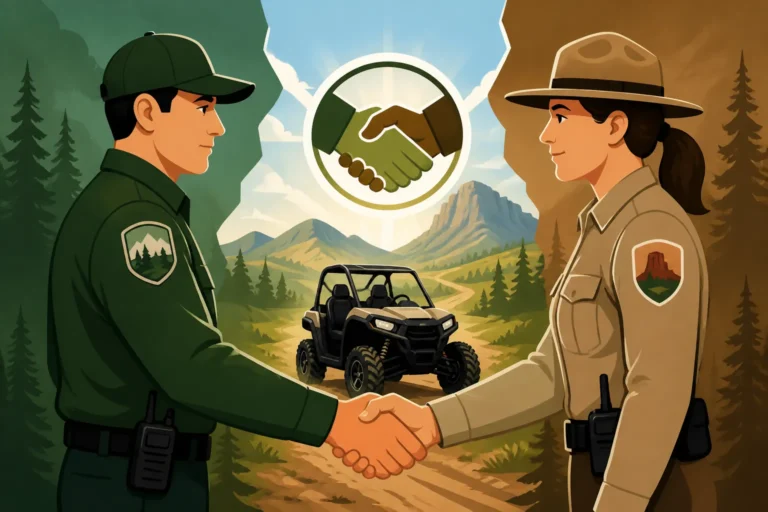
For a county road to become part of the state's designated ORV system, for example, the local county commissioners must officially agree to it. The State Trails Program can propose it, but [Why a County Must Say Yes First] often comes down to local concerns about maintenance, safety, and community impact. Similarly, if the State Trails Program wants to include a Forest Service or BLM road in the statewide system, the federal agency must give its explicit consent. This often involves reviewing environmental assessments, public feedback, and ensuring the route aligns with their larger land use plans. [Asking State Parks to Enroll a Road] is the beginning, but mutual agreement with the landowner is the essential next step. This layered approval ensures that local needs are met, resources are managed responsibly, and the integrity of the trail system is maintained.
Navigating the System: How to Find and Use Designated Roads
Okay, so you understand why roads need two designations. Now, how do you actually find these magical, dual-designated routes and ensure you’re riding legally and responsibly? It all comes down to good planning and knowing your resources.
Understanding Travel Management Maps (MVUMs)
The single most important tool in your arsenal for finding designated roads and trails on federal lands (Forest Service and BLM) are Motor Vehicle Use Maps, or MVUMs. These maps are the official record of where motorized vehicles are allowed to go. They are usually black and white, with different line types indicating which roads and trails are open to highway-legal vehicles, which are open to ORVs (and what type, like motorcycles vs. side-by-sides), and which are closed entirely.
These maps are indispensable. You need to carry the current MVUM for the area you plan to ride, either a physical copy or a digital version on your phone or GPS device. MVUMs also detail seasonal closures, width restrictions, and other crucial rules. Trying to ride without consulting an MVUM is like trying to navigate a new city without a map – you're almost guaranteed to get lost or, worse, end up somewhere you shouldn't be. [Wyoming Trail Maps and MVUMs] are your best friends out there.
Reading the Signs on the Ground
While MVUMs are the authoritative source, actual signs on the ground provide real-time information and are equally important. You'll often see signs at trailheads, at intersections, and along routes indicating permitted vehicle types, width restrictions, and seasonal closures. These signs are there for a reason, and they must be obeyed.
Sometimes, a road might be signed open to highway-legal vehicles but have a separate sign prohibiting ORV use. Other times, you'll see a specific ORV symbol indicating that the route is part of the designated system. Always look for these visual cues. If a sign explicitly says "No OHVs" or "Route Closed," then it's closed, regardless of what an older map might imply. When you're out there, always respect the signage – it's the final word on what's allowed.
The Difference Between an "Enrolled" Road and a "County" Road
This can be a point of considerable confusion for riders. A "county road" generally means a route maintained by the local county government, open to registered, street-legal vehicles. If you have an MPV with a license plate, you can typically drive on these county roads just like a car.
However, an "enrolled" road implies something more specific for off-road enthusiasts. An enrolled road is a route that has been formally accepted into the Wyoming State Trails Program's system, specifically for ORV and/or MPV use. This second designation often applies to dirt roads, two-tracks, or even certain county roads that are intended to connect ORV trails or provide access within an ORV system. [Wyoming's Designated ORV Roads] usually refers to these enrolled routes.
While many county roads are open to MPVs, not all county roads are "enrolled" for ORV trail connectivity. Conversely, some enrolled routes might be old logging roads or two-tracks on federal land that aren't technically "county roads" but are vital for ORV access. The overlap is where it gets tricky: an MPV can use most county roads, but an ORV only on enrolled roads or designated trails. For both, always check the MVUM and local signs.
Why All the Red Tape? The Benefits of Dual Designation
It’s easy to look at the two-designation system and groan about "red tape" or "unnecessary bureaucracy." From a rider's perspective, it can feel like extra hoops to jump through. But there are very real, tangible benefits to this layered approach, benefits that ultimately protect our riding opportunities and the incredible landscapes we love to explore.
Safety and Conflict Mitigation
Imagine if every road, trail, or two-track in Wyoming was simply open to every type of vehicle. You'd have fast-moving side-by-sides mixing with slow-moving hikers, mountain bikers, and horseback riders on narrow paths. This creates immense safety hazards and user conflicts. The designation process helps to separate user groups, ensuring that certain routes are maintained for specific types of recreation.
By having clear designations, land managers can implement appropriate speed limits, signage, and even seasonal restrictions to reduce the likelihood of accidents. It allows them to consider the capabilities of different machines and the vulnerabilities of other users. For instance, a designated ORV trail might be specifically designed to handle the width and speed of an ATV or UTV, while a non-designated hiking path is clearly kept free of motorized traffic. This thoughtful planning makes our outdoor experiences safer and more enjoyable for everyone.
Environmental Protection and Sustainability
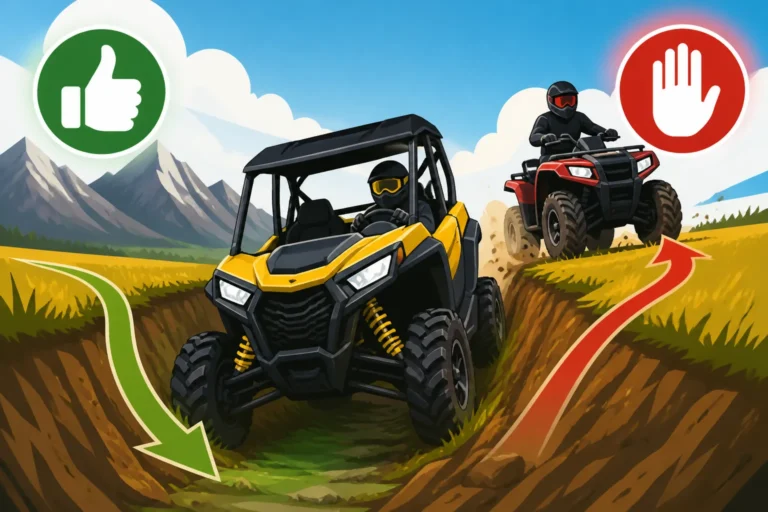
Wyoming is home to some of the most pristine and diverse ecosystems in the country. Unregulated off-road travel can wreak havoc on these delicate environments. Riding off-route or on undesignated trails can lead to severe soil erosion, damage to fragile plant communities, disturbance of wildlife habitat, and pollution of waterways.
The dual designation process acts as a critical safeguard. Routes are carefully evaluated for their environmental impact before being opened to motorized traffic. Agencies consider factors like wetland crossings, critical wildlife migration corridors, and archaeological sites. By confining motorized use to specifically designated routes, the system prevents riders from creating damaging "rogue" trails and helps ensure that our natural resources are protected for future generations. This focus on sustainability means we get to keep riding in beautiful places without destroying them.
Funding and Trail Maintenance
Another powerful, often overlooked, benefit of the designation system is its direct link to funding for trail maintenance and development. When you purchase your annual [Wyoming's Annual ORV Permit], that money doesn't just disappear into a general fund. A significant portion of those fees is channeled directly back into the Wyoming State Trails Program.
This program, in turn, uses those funds for the very things that make our riding experiences possible: maintaining existing designated trails and roads, repairing damage from weather or heavy use, purchasing new equipment, and even funding grants to expand the network of legally designated routes. It’s a virtuous cycle: the permit fees support the designated system, and the designated system provides more places for permit holders to ride. [Where Wyoming ORV Permit Money Goes] is directly tied to the health and expansion of the state's official riding areas, including those crucial designated roads that connect trails or allow access.
Practical Steps and Future Considerations for Riders
Understanding Wyoming's two-designation system is the first step. Now, let's talk about practical actions you can take to ensure your rides are always legal, safe, and enjoyable.
Always Verify Before You Ride
This is the golden rule for riding in Wyoming: never assume a road or trail is open to your machine unless you have explicitly verified it. This means checking the latest MVUMs, looking for on-the-ground signage, and, if in doubt, contacting the local land management office (Forest Service Ranger District, BLM Field Office, or State Parks & Trails) for clarification. A quick phone call before you leave can save you a lot of grief—and a potentially hefty fine.
The landscape, and therefore the trail system, can change. Seasonal closures for wildlife migration, road damage, or fire restrictions can alter access, sometimes with little notice. Relying on outdated maps or general assumptions is a recipe for trouble. Being proactive in your research is your best defense against inadvertently trespassing or violating regulations.
Equipping Your Machine for Designated Roads
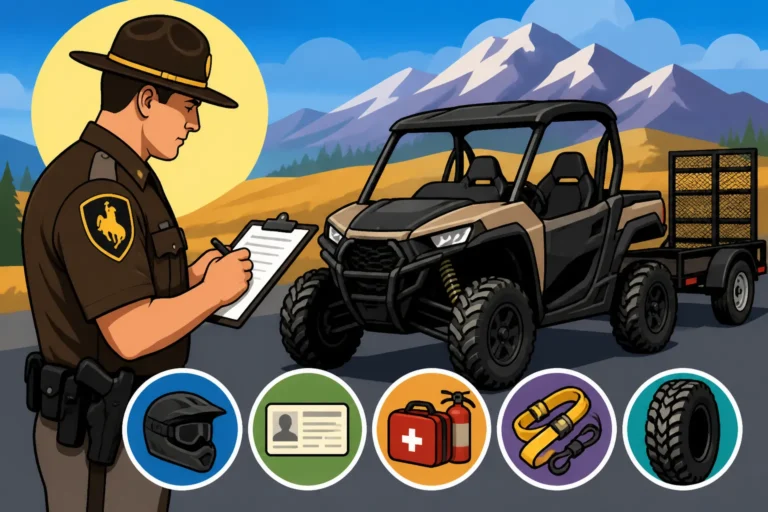
If you own a side-by-side that qualifies as an MPV, and you plan to ride it on roads (whether county roads or designated dirt roads), ensure it meets all the [Wyoming MPV Street Legal Requirements]. This isn't just a suggestion; it's the law. Your machine must have a windshield, horn, mirrors (a full-view rearview and at least one outside mirror, often available from brands like SuperATV), turn signals, brake lights, headlights, and a taillight, among other safety features. It also needs a valid license plate from the County Treasurer.
Even if you're primarily riding on what you perceive as "off-road" designated routes, if those routes are part of a system that includes roads, having a fully equipped MPV gives you more flexibility and peace of mind. Remember, a warden might check your equipment even on a remote two-track if it's considered part of the designated road system.
The Ongoing Evolution of Wyoming's Trail System
The system of designated roads and trails in Wyoming isn't static; it's constantly evolving. Rider groups, local communities, and the State Trails Program work continuously with land management agencies to identify new opportunities, address closures, and improve the existing network. New routes are evaluated, existing ones are maintained, and sometimes, unfortunate closures become necessary.
As a rider, staying informed is crucial. Join local ORV clubs, follow the Wyoming State Parks, Historic Sites and Trails website, and pay attention to public notices from the Forest Service and BLM. Your voice can also play a role in advocacy for more designated access. By understanding the intricate "two designation" system, you empower yourself to be a responsible rider, contribute to the sustainability of our trails, and make the most of Wyoming's unparalleled off-road adventures.
Disclaimer
This article is for general informational purposes only and does not constitute professional advice. Laws, prices and regulations vary by location and change over time. Consult a qualified professional for guidance on your specific situation.