Can You Plate a Side-by-Side in Wyoming?
It's a common dream for side-by-side owners in Wyoming: being able to hop on your machine, ride straight from your driveway, and cruise down the highway to hit your favorite trailhead or even just run into town for supplies. But the reality often hits harder than a rock garden when you realize the rules for riding public roads on your UTV are far more complicated than just slapping on a decal. This guide will cut through the confusion and explain exactly what it takes to get your side-by-side legally "plated" for road use in the Cowboy State.
The Short Answer: It Depends on the Designation
Riding an off-road vehicle on public roads in Wyoming can feel like navigating a maze blindfolded. You see other folks doing it, but the path from your dirt-ready machine to a street-legal one isn't always clear. It's not as simple as putting a plate on just any machine; there are specific hoops you need to jump through.
Why Most ATVs and UTVs Aren't "Street Legal" Out of the Box
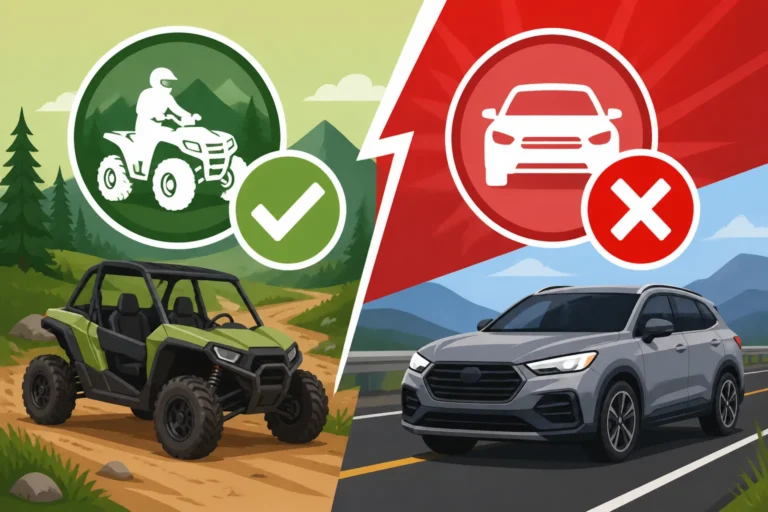
Let's be real: when you bought your side-by-side, its primary purpose wasn't to commute to work. These machines are engineered for adventure, for tearing up trails, climbing dunes, and traversing rugged terrain. They're built for dirt, mud, and rocks, not for asphalt and traffic lights. This fundamental design difference is why most ATVs and UTVs fall into Wyoming's "off-road vehicle" (ORV) category. As ORVs, they're typically restricted to designated trails, private land (with permission, of course), and specific enrolled roads where ORV use is explicitly allowed.
The confusion arises because while your machine might look capable of highway speeds, it often lacks the safety features and legal designations required for standard road vehicles. Things like proper turn signals, DOT-approved tires, windshields, and even basic mirrors often aren't standard. This isn't just a minor oversight; it's a legal distinction that determines where you can and cannot ride. Trying to ride an ORV on a highway without the proper designation can lead to fines and a quick end to your day's adventure. It’s a frustrating barrier when all you want to do is connect a few trails or legally get from point A to point B without trailering your rig.
Introducing Wyoming's Multipurpose Vehicle MPV Class
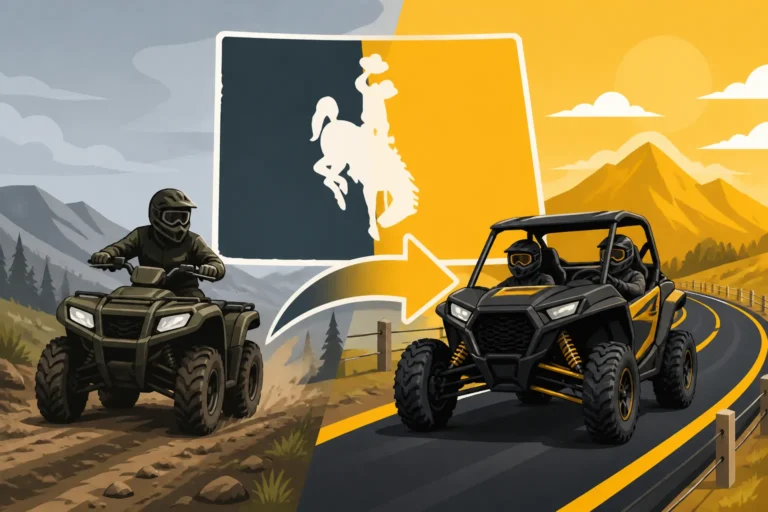
Thankfully, Wyoming understands the appeal and utility of these machines. That's why the state created a special classification: the Multipurpose Vehicle, or MPV. Think of the MPV class as the bridge between your trail-hungry side-by-side and a fully street-legal vehicle. It's Wyoming's specific pathway for allowing certain UTVs and larger, qualifying ATVs to be registered, titled, and plated for use on many public roads.
This MPV designation isn't just a fancy name; it comes with a distinct set of requirements that your machine must meet, both in terms of its physical characteristics and the equipment it carries. The intent behind the MPV class is to allow these capable vehicles to function more broadly, connecting trail systems, accessing remote areas, and providing transportation in communities where they make practical sense. It acknowledges that for many rural residents and outdoor enthusiasts, a side-by-side isn't just a toy—it's a crucial tool or a preferred mode of transport. Understanding the MPV rules is the absolute key to unlocking broader road access for your machine. Without this designation, your dream of riding from your garage to the grocery store will likely remain just that—a dream.
Meeting the Wyoming MPV Requirements
Getting your side-by-side qualified as an MPV in Wyoming isn't just a paperwork exercise; it often involves some practical modifications to your machine. The state has clear criteria for what constitutes an MPV, both in terms of its inherent design and the safety features it must possess to be road-worthy.
Key Physical Characteristics for MPV Qualification
First off, your machine needs to fit within a specific physical profile to even be considered an MPV. Wyoming law defines these vehicles, in part, by their dimensions and seating. One of the most critical aspects is the weight requirement: an MPV must weigh between 300 and 3,000 pounds. This range is designed to include the vast majority of modern side-by-sides, from smaller two-seaters to larger four and six-person rigs. However, it effectively excludes smaller youth ATVs, which might be under 300 pounds, and some highly customized, heavily armored, or unusually large machines that could push past the 3,000-pound mark. So, if you've got a custom rock crawler with a reinforced cage and tons of heavy accessories, it's worth getting an accurate weigh-in. For more on this, check out [Wyoming MPV Weight Limits].
Another crucial physical characteristic is the seat height. The machine must have a seat at least 24 inches from the ground. This rule is generally straightforward for most side-by-sides, which inherently have higher seating positions. However, it's a detail that can trip up owners of certain low-slung, sport-oriented ATVs, which might not meet this minimum. This requirement ensures that the driver has adequate visibility on public roads. You can find more specific details on this at [Wyoming MPV Seat Height Rule]. These foundational characteristics ensure that the vehicle has a certain level of size and presence on the road, distinguishing it from smaller, less visible off-road machines.
Mandatory Road Equipment Upgrades
Once your side-by-side meets the basic physical criteria, you'll need to equip it with specific safety features that are standard on most highway-legal vehicles. This is where many off-the-shelf UTVs require aftermarket additions to become compliant. The list of required equipment includes:
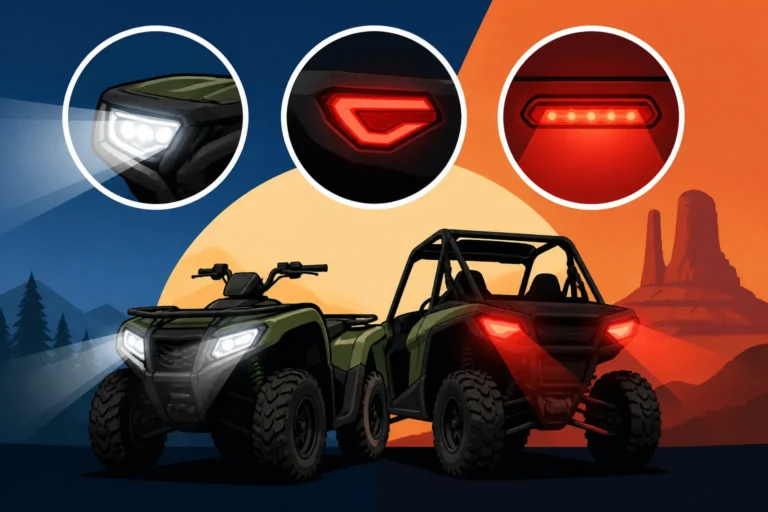
- Headlights and Taillights: Your machine must have functional headlights, taillights, and a stop lamp (brake light) that illuminate when you hit the brakes. These need to be visible from a certain distance to ensure you can see and be seen, especially during dawn, dusk, or in adverse weather.
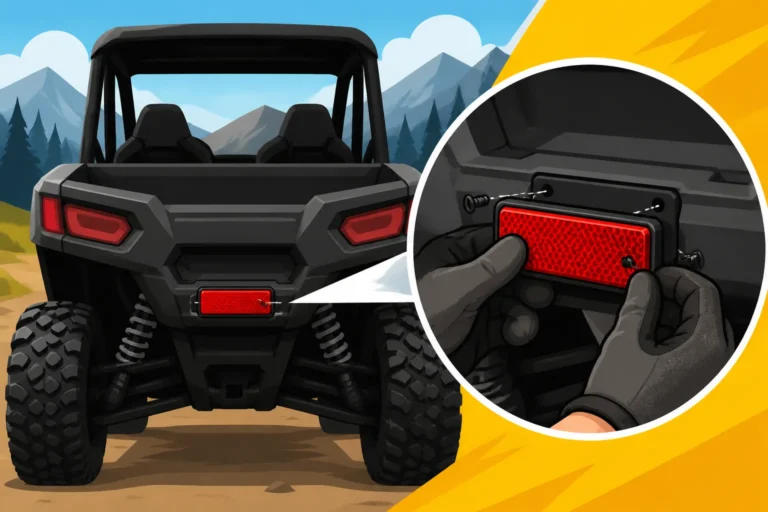
- Red Rear Reflector: In addition to taillights, a red rear reflector is required, providing an extra layer of visibility from behind, especially if your electrical system were to fail.
- Horn: A working horn is absolutely essential for warning other drivers or pedestrians of your presence. This isn't just for trails; it's a critical safety device on paved roads.
- Left-Side Mirror: While some side-by-sides come with mirrors, Wyoming specifically requires at least a left-side mirror to provide the driver with a clear view of traffic approaching from the rear. Many riders choose to add a full set of mirrors, including a rearview mirror and a right-side mirror, for enhanced safety and visibility, even if not strictly mandated.
- License Plate Light: To ensure your license plate is visible at night, a functional light illuminating the plate is necessary.
Many of these items, like turn signals (which are often added even if not explicitly mandated for MPVs, though highly recommended for safety), horns, and mirrors, can be purchased as aftermarket kits. Companies like SuperATV offer a wide range of accessories designed to help transform your off-road rig into a road-ready machine, providing everything from turn signal kits to DOT-approved windshields. Choosing quality, durable components is key, as they'll need to withstand both the rigors of the trail and the demands of road use. For a deeper dive into these requirements, you can look at [Wyoming Lighting Requirements for ORVs], [Wyoming Mirror Requirements for Road Use], and [Wyoming Horn Requirement on a Road Machine]. Equipping your machine correctly is not just about compliance; it's about ensuring your safety and the safety of others when you're sharing the road.
The MPV Registration and Titling Process
Now that your side-by-side is physically ready to become an MPV, it's time to make it official with the state. This involves two distinct, but interconnected, steps: obtaining a title and then getting your actual license plates and registration.
Getting Your MPV Titled at the County Clerk's Office
Unlike many standard off-road vehicles in Wyoming, which do not typically require a title, an MPV absolutely does. This is a crucial distinction and often where the process for a street-legal side-by-side truly begins. The titling process is handled at your local County Clerk's office. You'll need to gather all your ownership documents, such as the Manufacturer's Statement of Origin (MSO) if it's a new machine, or a previous title and bill of sale if you purchased it used.
When you head to the County Clerk, be prepared to fill out an application for a Wyoming title. They'll also require a VIN inspection to verify that the vehicle identification number on your machine matches your paperwork. This helps prevent fraud and ensures the machine is legitimate. If you bought your side-by-side from an out-of-state dealer or a private seller, having a clear, notarized bill of sale is paramount. This establishes your ownership and helps the clerk process your title without hiccups. The title proves legal ownership of the vehicle, and without it, you cannot move on to the next step of obtaining plates. For comprehensive information on what you'll need, refer to [Wyoming MPV Title Requirements] and [Wyoming County Clerk Title Process]. Take your time here, as any errors in the title can cause headaches down the road.
Obtaining Plates and Registration at the County Treasurer's Office
Once you have your Wyoming MPV title in hand (or at least proof that the title application is being processed), your next stop is the County Treasurer's office. This is where you'll register your machine and finally receive those coveted license plates. The Treasurer's office handles vehicle registration, collecting applicable fees, and issuing the physical plates that will go on your side-by-side.
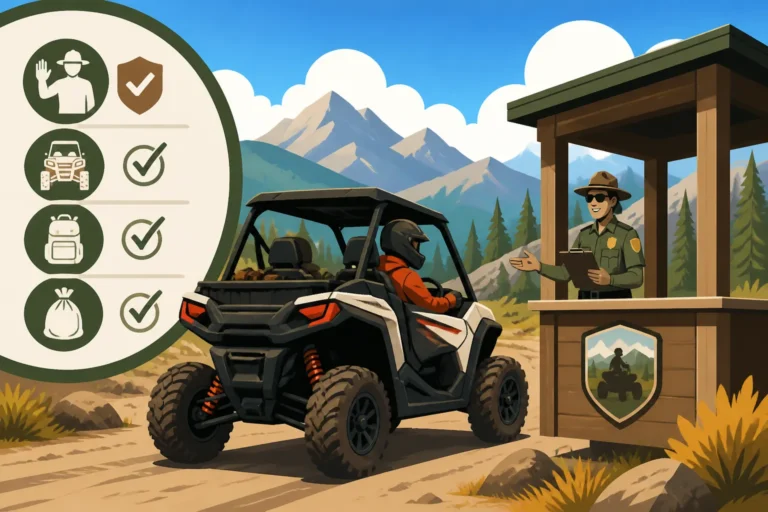
You'll need to bring your newly acquired MPV title or proof of application, your driver's license, and be ready to pay registration fees, which can vary. Remember, these fees are distinct from the annual ORV permit. A crucial requirement for plating an MPV is proof of liability insurance. Just like any other road-going vehicle, your MPV must be insured to legally operate on public roads. This ensures that in the event of an accident, there's coverage for damages or injuries. Once all paperwork is in order and fees are paid, the Treasurer's office will issue your license plate and registration sticker. This plate must be displayed prominently on your machine, typically on the rear, similar to a motorcycle or car. More details can be found in [Wyoming MPV Plate Requirements] and [Wyoming County Treasurer Plate Process]. Now, with your plate affixed, you're one step closer to road-legal adventures!
Riding Your Plated Side-by-Side on Wyoming Roads
Having an MPV designation and a license plate is a huge step, but it doesn't mean every road is now your playground. There are still important rules and regulations to follow to ensure you're riding legally and safely on Wyoming's diverse road network.
Driver's License and Insurance Requirements for MPVs
When you take your plated side-by-side onto Wyoming roads, you're essentially operating a street-legal vehicle, and with that comes the same responsibilities as driving a car or truck. First and foremost, you must possess a valid driver's license. For many side-by-sides, a standard Class C driver's license is sufficient. However, depending on the specific characteristics of your machine and how it's classified, a motorcycle endorsement (Class M or MR) might be required. It's always best to check with the Wyoming Department of Transportation (WYDOT) or your local County Clerk if you're unsure about your specific machine, especially if it's on the smaller or more unique side. Don't get caught without the right endorsement; it's an easy fix compared to a roadside citation. For more information, check out [Wyoming Driver's License Rules for ORVs] and [Wyoming Motorcycle Endorsement for an MPV].
Beyond the license, liability insurance is non-negotiable. Just like your car, your plated MPV must carry proof of insurance whenever it's on a public road. This protects you and others in case of an accident. While specific coverage amounts vary, having at least the state-mandated minimum liability insurance is a must. Always carry your insurance card with you, whether digitally or a physical copy, to present if requested by law enforcement. You can read up on this more in [Wyoming ATV Insurance Requirement]. Without both the correct license and valid insurance, your plated MPV isn't truly road legal, and you could face significant penalties.
Understanding Where You Can and Cannot Ride
This is arguably the trickiest part of riding a plated side-by-side: knowing where you're actually allowed to go. Just because you have a plate doesn't automatically grant you access to all public roads. Wyoming has a system of "enrolled" roads and trails, and while MPVs have more access than standard ORVs, there are still limitations.
Generally, plated MPVs can be operated on county roads and state highways where not specifically prohibited. However, interstates are typically off-limits, and certain state highways or sections of roads might have restrictions. It's crucial to understand that even with a plate, the authority to open or close roads to MPV traffic often rests with local jurisdictions (counties) and land management agencies (such as the Forest Service or Bureau of Land Management). For instance, a Forest Service road might be open to MPVs, while a city street within town limits might have its own specific ordinances restricting their use.
It's your responsibility as the rider to know the rules for the specific roads you plan to travel. Carrying up-to-date maps, checking local ordinances, and looking for signage are all critical. Many counties have lists of roads that are open to MPVs, and the Wyoming State Parks, Historic Sites & Trails website often provides resources for [Wyoming's Designated ORV Roads] that might include MPV access. Also, be aware that while you can use your MPV on many public roads, you should still exercise caution and yield to larger vehicles, as your machine has a smaller footprint.
Finally, remember that the goal of the MPV classification is to enable thoughtful integration of these vehicles into the road system. Respecting speed limits, traffic laws, and being a courteous driver will help maintain positive perceptions and access for all riders. Failing to do so can lead to a closure of routes for everyone, which nobody wants. For more nuanced details on specific road types, consider looking into [Wyoming Rules for Riding a County Road], [Wyoming Rules for Riding a Forest Road], and [Wyoming Rules for Riding a BLM Road].
Here's a quick comparison of ORV vs. MPV:
| Feature | Off-Road Vehicle (ORV) | Multipurpose Vehicle (MPV) |
|---|---|---|
| Primary Use | Designated trails, private land, limited enrolled roads | Road use (where permitted), designated trails, private land |
| State Registration | Annual ORV Permit/Decal | Annual Plate/Registration, similar to a car |
| Title Requirement | No (typically) | Yes |
| Weight Requirement | None specified for ORV status | 300 – 3,000 lbs |
| Seat Height Requirement | None specified for ORV status | At least 24 inches from ground |
| Road Equipment | Minimal (headlight, taillight for night riding) | Headlights, taillights, stop lamp, red reflector, horn, left-side mirror, license plate light |
| Driver's License Required | No (on trails), Yes (on enrolled roads if applicable) | Yes (standard or motorcycle endorsement, depending on machine) |
| Insurance Required | No (on trails), Yes (on enrolled roads if applicable) | Yes (liability for road use) |
| Road Access | Restricted to designated ORV roads/trails | Wider access on county roads, state highways (where not prohibited), designated ORV roads/trails |
| Interstate Access | No | No |
Disclaimer
This article is for general informational purposes only and does not constitute professional advice. Laws, prices and regulations vary by location and change over time. Consult a qualified professional for guidance on your specific situation.