Wyoming Rules for Riding a Forest Road
Trying to figure out exactly where and how you can legally ride your ATV or UTV on the vast network of forest roads in Wyoming can feel like navigating a maze blindfolded. The rules aren't always immediately obvious, and nobody wants to inadvertently break a law or, worse, put themselves or others in a dangerous situation. This comprehensive guide is here to cut through the confusion, helping you understand the specific regulations and best practices for enjoying Wyoming's incredible forest roads responsibly and without a hitch.
Navigating Designated Routes and Forest Service Maps
One of the biggest hurdles many riders face when heading out to explore Wyoming's national forests is simply knowing where they're allowed to go. These aren't just open playgrounds; they're managed lands with specific regulations designed to protect natural resources, wildlife, and the experience of all visitors. The key to successful and legal riding lies in understanding and utilizing the tools provided by the U.S. Forest Service.
Understanding the Motor Vehicle Use Map (MVUM)
If you plan on riding in a national forest, consider the Motor Vehicle Use Map, or MVUM, your absolute Bible. This isn't just a suggestion; it's the official, legal document that designates which roads and trails are open to motorized use, what types of vehicles are allowed, and during what times of the year. Not having a copy, or at least understanding its contents, is like trying to drive across the state without a map – you’re bound to get lost, or worse, end up somewhere you shouldn't be.
Every national forest in Wyoming publishes its own MVUMs. These maps typically use different line styles and colors to indicate various allowances: routes open to all vehicles, routes restricted to vehicles 50 inches or less in width, roads open only to highway-legal vehicles, and roads that are seasonally closed. It’s crucial to scrutinize these maps carefully before you even load your machine onto the trailer. Look for the specific codes and symbols that tell you if your ATV or side-by-side is permitted on the routes you intend to ride. These maps are often updated annually, so always make sure you have the most current version.
Finding and Interpreting Road Openings and Closures
While the MVUM is your baseline for designated routes, it doesn't always reflect real-time conditions. Forest roads can be subject to temporary closures due to a myriad of factors, including heavy snow, flooding, mud, wildfire activity, or even specific wildlife management closures. Relying solely on an MVUM, particularly if it's an older printout, could lead you straight to a locked gate or a hefty fine.
The best practice is always to check the specific national forest's website for alerts and conditions before you leave home. Many forests, like the Shoshone or Medicine Bow-Routt, have dedicated sections for current conditions and closures. Additionally, a quick phone call to the local ranger district office closest to your riding area can provide invaluable, up-to-the-minute information. These rangers are on the ground and can tell you about conditions that might not be posted online yet. It's also important to remember that on-the-ground signage always takes precedence. [When a Map and a Sign Disagree] If a sign at the trailhead or along a route indicates a closure, even if your MVUM shows it as open, the sign is the law. Disregarding it can lead to citations and puts you at risk.
General Riding Rules and Etiquette on Forest Roads
Riding on Wyoming's forest roads isn't just about following legal designations; it's also about being a responsible and respectful user of public lands. These roads are often shared by a diverse group of users, from hikers and mountain bikers to equestrians and even wildlife, so understanding the general rules and practicing good etiquette is paramount for everyone's safety and enjoyment.
Wyoming ORV Permit Requirements on Federal Land
Let's get this straight from the start: If you're riding any off-road machine on designated routes in a Wyoming national forest, you absolutely need a Wyoming ORV permit. It doesn't matter if you're a resident or just visiting from out of state; Wyoming does not have reciprocity agreements with other states when it comes to ORV registration. [Does Wyoming Honor a Montana Registration?] That Montana sticker, or Colorado permit, or Utah registration you proudly display on your machine might be perfectly valid back home, but it won't cut it in the Cowboy State.
This permit is required annually, running on a calendar year. [Wyoming's Annual ORV Permit] You can purchase these permits at a variety of locations, including many powersports dealerships, state parks, game and fish offices, and even online through the Wyoming State Parks, Historic Sites, and Trails website. [Where Wyoming Sells ORV Permits] Once you have it, make sure the decal is prominently displayed on the front of your machine, on the left side, where it's easily visible to enforcement officers. [Sticking a Decal Where It Shows] This simple step ensures you're contributing to the state's trail system and avoiding unnecessary fines. Remember, the cost is the same flat fee for everyone, resident or non-resident. [Wyoming's Flat Fee for Residents and Visitors]
Respecting Wildlife, Environment, and Other Users
The golden rule for riding on federal land is simple: Stay on designated routes. Riding cross-country, creating new trails, or cutting switchbacks is not only illegal but severely damaging to fragile ecosystems, leading to erosion and habitat destruction. Forest Service and BLM rangers take this rule very seriously, and getting caught riding off-route can result in significant fines. [Wyoming Fines for Riding Off a Route] Always look for official signage and stay within the marked boundaries of the road or trail.
Wyoming's forest roads are shared by many. When you encounter hikers, mountain bikers, or especially horseback riders, slow down, yield the right-of-way, and be prepared to stop. [Yielding to Horses on a Wyoming Trail] Give equestrians a wide berth and kill your engine if necessary to avoid spooking their animals. A friendly nod and a wave go a long way in fostering good relationships between different user groups. Also, be mindful of gates. If you pass through a gate that is closed, it's almost always there for a reason – usually to manage livestock or protect sensitive areas. Always close it behind you. [Wyoming Rules for Opening a Gate] Finally, pack out everything you pack in. There are no trash services on most forest roads, and leaving litter spoils the experience for everyone else and harms wildlife.
Speaking of wildlife, Wyoming is home to an incredible array of animals, from deer and elk to moose and bears. Always be aware of your surroundings, especially around dawn and dusk when animals are most active. Maintain a safe distance if you encounter wildlife and never harass them. In areas where grizzly bears are present, particularly in the northwestern forests, carrying bear spray and knowing how to use it is a wise precaution. [Wyoming Rules for Riding in Grizzly Country]
Speed Limits and Safe Operation
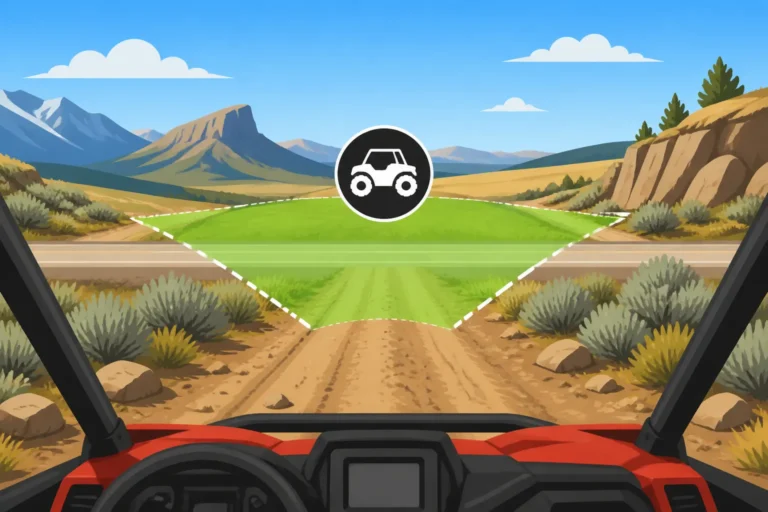
While many forest roads may not have explicitly posted speed limits like paved highways, that doesn't mean it's a free-for-all. General regulations require you to operate your machine at a safe and reasonable speed for the conditions. Forest roads are often unpaved, uneven, and can have blind corners, loose gravel, or unexpected obstacles. Slow down, especially when visibility is limited or when approaching turns. You might encounter other vehicles, wildlife, or even fallen trees around any bend.
In certain areas, like campgrounds or developed recreation sites, specific speed limits, often as low as 15 mph, will be posted. [15 mph in a Wyoming Campground] Always adhere to these for the safety of pedestrians and campers. It's also a good practice to ride with your headlights on, even during the day, to increase your visibility to other users, particularly on dusty roads or in shaded sections. And while it might seem obvious, remember that all Wyoming laws regarding impaired driving apply to ATVs and UTVs on public lands, including forest roads. [Wyoming DUI Rules for ATV Riders] Never operate your machine under the influence of alcohol or drugs.
Machine Requirements and Equipment for Forest Road Use
Beyond permits and etiquette, your machine itself needs to meet certain requirements to be legally ridden on Wyoming's forest roads. These aren't just arbitrary rules; they're in place to protect the environment from fire hazards, reduce noise pollution, and ensure a baseline level of safety for all riders.
Spark Arresters and Sound Standards
A U.S. Forest Service-approved spark arrester is a non-negotiable requirement for any off-road vehicle operating on federal lands in Wyoming. [Spark Arresters on Wyoming Trails] This device is critical for preventing wildfires by containing hot carbon particles that can escape from your exhaust system. A single spark can ignite dry grass or leaves, leading to devastating forest fires. Before you head out, inspect your spark arrester to ensure it's in good working order and not clogged. If you're unsure if your machine has one, or if you need a replacement, many aftermarket parts providers, like SuperATV, offer universal and model-specific spark arresters that meet federal standards.
In addition to spark arresters, machines must be equipped with a muffler system that keeps noise levels within acceptable limits. While Wyoming law doesn't specify a decibel limit for off-road vehicles on federal land, the general expectation is that your machine should not create excessive or unusual noise. This means no gutted mufflers or illegally modified exhaust systems. [Mufflers and Sound on Wyoming Public Land] Excessive noise can disturb wildlife, disrupt the peace for other forest users, and contribute to a negative image of off-road recreation. Regularly check your exhaust system for leaks or damage that could increase sound output.
Basic Safety Gear and Machine Readiness
While Wyoming only legally mandates helmets for riders under 18 years old on ATVs, wearing a helmet is highly recommended for all riders, regardless of age, when riding on forest roads. [Wyoming Helmet Law for ATV Riders] A helmet is your primary protection in the event of an accident or rollover. Beyond helmets, consider wearing eye protection (goggles or a face shield), sturdy boots, long pants, and gloves. These items can protect you from branches, flying debris, and abrasions in a fall.
Before every ride, conduct a thorough check of your machine. Inspect your tires for proper inflation and damage – SuperATV offers robust tire options suitable for varied forest terrains, from rocky climbs to muddy sections. Check your brakes, lights, and fluid levels. It's also smart to carry a basic toolkit with essential wrenches, tire repair kit, and a small air pump. For longer rides into remote areas, a first-aid kit, extra water, snacks, a map, and a GPS device or satellite messenger can be life-savers, as cell service is often nonexistent in the backcountry.
Width Restrictions and MPV Considerations
Many forest roads are designed for standard full-sized vehicles, but some are narrower and might have width restrictions, especially those that transition into designated trails. It's not uncommon to find trails explicitly marked for machines 50 inches or less in width. [Wyoming's 50-Inch Trail Limit] If you have a wider side-by-side, you absolutely must verify that the routes you plan to ride can accommodate your machine. Attempting to force a wider machine down a narrow trail can cause trail damage, vehicle damage, and create dangerous situations.
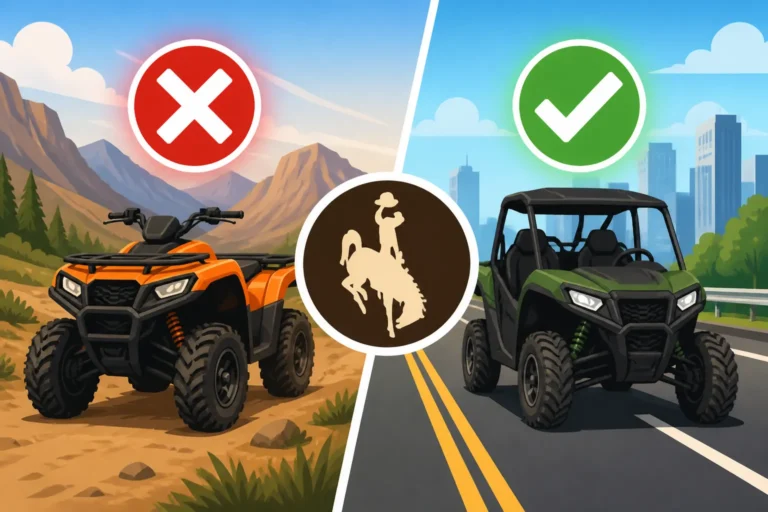
It's also important to distinguish between an "ORV" (Off-Road Vehicle), which includes most ATVs and UTVs, and an "MPV" (Multipurpose Vehicle). In Wyoming, an MPV is a specific class of off-road vehicle that has been modified and registered to be street-legal on designated public roads. [Wyoming's MPV Path to the Road] Most forest roads are not considered street-legal highways, and thus, your regular ORV permit is sufficient. However, if a forest road is designated as an MPV-eligible route, and you intend to ride it with your MPV, then your machine must meet the additional equipment requirements for street legality, such as mirrors, a horn, and proper lighting. [Wyoming Mirror Requirements for Road Use], [Wyoming Horn Requirement on a Road Machine] Many of these road-legal accessories, like turn signal kits and rearview mirrors, can be found through companies like SuperATV, helping you make your machine compliant if you plan to use MPV-designated routes.
Here’s a quick overview of some key considerations when riding forest roads in Wyoming:
| Feature/Requirement | Wyoming ORV Permit | Spark Arrester | MVUM Check | Helmet (Under 18) | Stay on Designated Routes | Yield to Other Users |
|---|---|---|---|---|---|---|
| Forest Road Riding | Required | Required | Essential | Required | Absolutely | Always |
| Primary Goal | Funding trails | Fire prevention | Route legality | Rider safety | Resource protection | Shared enjoyment |
| Who Needs It? | All riders | All machines | All trip planning | Young riders | All riders | All riders |
| Key Action | Purchase & display | Inspect & maintain | Review before trip | Wear & secure | Follow map & signs | Slow down & communicate |
Remember, the goal is to have a fantastic time exploring the vast beauty of Wyoming's forests safely and responsibly, ensuring these incredible areas remain accessible for everyone for years to come.
Disclaimer
This article is for general informational purposes only and does not constitute professional advice. Laws, prices and regulations vary by location and change over time. Consult a qualified professional for guidance on your specific situation.