Wyoming Motorcycle Endorsement for an MPV
So, you've got this amazing Multi-Purpose Vehicle (MPV) – maybe it's a zippy side-by-side or a robust UTV – and you're dreaming of hitting those open Wyoming roads, not just the trails. It's a fantastic thought, cruising from the trailhead right into town for a burger, but the reality is, making that dream legal involves a specific kind of credential: a motorcycle endorsement. This guide is here to walk you through exactly why and how you get that endorsement, ensuring your MPV is ready for the pavement without any unwelcome surprises from a friendly state trooper.
Decoding Wyoming's MPV Classification
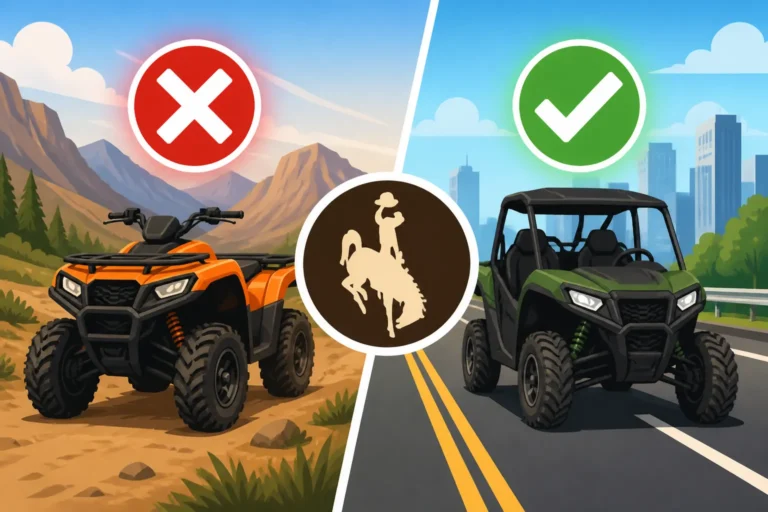
First off, let's clear up some confusion that often trips people up when they're thinking about taking their off-road machine onto public roads in Wyoming. Not every ATV or UTV can be legally driven on a paved road, even if you put a license plate on it. Wyoming has a very specific definition for what qualifies as a "Multi-Purpose Vehicle," or MPV, and it’s a crucial distinction.
An MPV isn't just any old off-road vehicle. It's a special class of machine that bridges the gap between dedicated off-road vehicles (ORVs) and traditional street-legal vehicles. The state legislature specifically crafted this category to allow certain types of utility and recreational vehicles a path to road legality, provided they meet a strict set of criteria. One of the biggest frustrations riders face is assuming their quad or side-by-side automatically fits the bill, only to find out they're missing key elements. For a deep dive into the legal language, you can refer to [Wyoming's MPV Definition in W.S. 31-1-101].
What Makes an MPV Distinct?
The difference truly comes down to construction and design, not just how you intend to use it. A standard ATV, for instance, generally won't qualify as an MPV because it lacks specific design features that Wyoming law requires for an MPV. The whole point of the MPV classification is to identify vehicles that, while capable off-road, also possess certain characteristics that make them somewhat safer or more controllable for on-road use than a typical recreational ATV. This is where you might find your frustrations simmering, especially if you've invested in a machine that just doesn't quite meet the mark.
To qualify as an MPV, your machine needs to have four or more wheels and an upright seat or seats that are at least [A Seat at Least 24 Inches Up] from the ground. Furthermore, there's a strict [Weight Between 300 and 3,000 Pounds] requirement. These aren't arbitrary rules; they're in place to define a vehicle that is, in the eyes of the law, distinct from a motorcycle, a passenger car, or even a typical ATV, and thus can be treated differently for registration and operation on public roads. It's about ensuring a minimum level of stability and visibility that the state deems necessary for shared road use.
Why the Distinction Matters for Road Use
Why all this fuss about classification? Because if your vehicle doesn't fit the MPV definition, then getting a motorcycle endorsement won't magically make it street legal. You could get the endorsement, add a plate, and still be operating an illegal vehicle on the road. The MPV definition is the foundational step. It's what allows your side-by-side to be titled as an MPV, registered with an MPV plate from a county treasurer, and then operated on designated public roads, provided you meet all the other requirements. Without meeting the MPV criteria first, your machine remains an off-road vehicle, confined to trails and designated ORV routes. This is a common point of confusion and frustration for riders new to Wyoming's specific laws.
Why Your MPV Needs a Motorcycle Endorsement in Wyoming
Okay, so your machine qualifies as an MPV. That's a huge step! But don't just bolt on a license plate and hit the highway yet. The state of Wyoming, in its wisdom, requires something else of you, the operator: a valid driver's license with a motorcycle endorsement. This requirement can often catch people off guard, especially if they've been driving cars their whole lives and feel perfectly competent behind the wheel of their side-by-side. You might think, "It has a steering wheel, not handlebars! Why a motorcycle endorsement?" It's a valid question, and one many riders grapple with.
The answer lies in how Wyoming categorizes these vehicles for operator licensing. While an MPV shares some characteristics with a car (like a steering wheel and side-by-side seating), its overall operation, exposure to the elements, and dynamics on the road are often considered more akin to a motorcycle than a traditional enclosed automobile. Therefore, the state requires that operators demonstrate a certain level of skill and knowledge associated with two-wheeled vehicles, even if their MPV has four or more. This isn't about being punitive; it's about ensuring all road users have the necessary training for the unique characteristics of the vehicle they're operating.
Understanding the M and MR Endorsements
In Wyoming, you generally have two types of motorcycle endorsements that might apply: the "M" endorsement and the "MR" endorsement.
- The "M" Endorsement: This is your full-fledged motorcycle endorsement. It allows you to operate any motorcycle on public roads, including MPVs. If you plan on riding a traditional two-wheeled motorcycle in the future, or simply want the broadest possible endorsement, this is the one to aim for. It signifies that you've demonstrated proficiency across various types of two- and three-wheeled motor vehicles.
- The "MR" Endorsement: This is the "Motorcycle-Restricted" endorsement. It's specifically designed for operating three-wheeled motorcycles (like a trike) or MPVs. Many people find this a more appropriate and sometimes less intimidating option if their primary goal is just to drive their side-by-side on the road, without the intention of ever riding a two-wheeled motorcycle. The "MR" acknowledges the different handling characteristics compared to a two-wheeler, making it a tailored fit for MPV operators. You'll want to understand [The M or MR Endorsement Wyoming Asks For] to determine which is right for you.
Why No Standard Car License Will Do
This is a point of frequent frustration, especially for seasoned off-roaders. You've driven your truck for decades, maybe even operated heavy machinery, but suddenly your side-by-side on a county road requires a different kind of license. The reason is that an MPV, while having a steering wheel and pedals, doesn't offer the same level of protection or predictable handling as a standard automobile. It's more exposed, often has a higher center of gravity, and can react differently to road conditions, especially at higher speeds or in emergency maneuvers. A regular driver's license doesn't cover these unique operational aspects, which is why Wyoming, like many states, mandates specialized training and endorsement. This is all part of the [Wyoming MPV Street Legal Requirements] that aim to make our roads safer for everyone.
The Path to Your Wyoming MPV Endorsement
Alright, you're convinced. Your MPV is good to go, and you understand why that M or MR endorsement is crucial. Now, how do you actually get one? The process involves a few key steps, and while it might seem like a bit of a bureaucratic hurdle, it's totally achievable. Think of it as investing in your freedom to ride where you want, within the bounds of the law. You'll need to interact with the Wyoming Department of Transportation (WYDOT) Driver Services program, which handles all driver licensing.
Prerequisites for Your Endorsement
Before you even think about scheduling a test, you need to have a valid Wyoming driver's license. If you're new to the state or don't have a current Wyoming license, that's your very first stop. Once you have that, you're ready to add the endorsement. Many riders, especially those who feel their MPV handles more like a car, are often surprised they need to learn about motorcycle operation. It’s part of the process of [Getting an M Endorsement at the DMV].
The Knowledge Test: Hitting the Books
Like any driver's license, getting a motorcycle endorsement starts with a written knowledge test. This test will cover specific rules of the road that apply to motorcycles and MPVs, as well as general traffic laws. Don't underestimate this step! Even if you've been driving for years, there are nuances in motorcycle-specific laws – things like lane positioning, hazard perception, and specific signage – that you might not be familiar with.
WYDOT provides a motorcycle operator manual that is your best friend for this. Read it cover to cover, take practice tests, and make sure you understand the material. While a side-by-side might feel stable, the knowledge test helps ensure you’re aware of the responsibilities and specific rules that come with operating any open-air, less-protected vehicle on public roads.
The Skills Test: Demonstrating Your Prowess
After passing the knowledge test, you'll need to demonstrate your riding skills. For a full "M" endorsement, this typically involves a traditional two-wheeled motorcycle skills test, often on a closed course. You'll be tested on maneuvers like turns, stops, obstacle avoidance, and balance. This is where riders aiming specifically for MPV use might feel a disconnect – practicing on a motorcycle when they want to drive their side-by-side.
However, if you're specifically seeking the "MR" (Motorcycle-Restricted) endorsement for your MPV, you can often perform the skills test using your own MPV. This is a huge relief for many, as it allows you to demonstrate proficiency on the actual vehicle you'll be driving. It makes much more sense to show your skills on a side-by-side if that's what you intend to ride on the road. Be sure to confirm with WYDOT whether your specific MPV qualifies for the "MR" skills test and what the testing requirements are for [When an MR Permit Works Instead of an Endorsement]. They usually have specific courses designed for these vehicles.
Preparing for the Skills Test:
- Practice, Practice, Practice: Find a safe, open space (like an empty parking lot) and practice the maneuvers described in the motorcycle manual or specifically for the "MR" test. Cones can be your best friend here.
- Know Your Machine: Understand its turning radius, braking distances, and how it handles at low speeds. These are crucial for passing the skills test and, more importantly, for safe road operation.
- Safety Gear: Wear appropriate safety gear for the test. While not always legally mandated for MPV passengers over a certain age on the road, wearing a helmet, eye protection, and sturdy clothing for the test demonstrates seriousness and adherence to safety principles.
Essential Gear and Rules for Wyoming Street-Legal MPVs
Getting your MPV titled, registered, and obtaining that motorcycle endorsement are monumental steps. You’re almost there! But simply having the right paperwork and license isn't enough. Your MPV itself needs to be properly equipped to be truly street-legal in Wyoming. This is where your off-road machine transforms into a road-ready vehicle, and it often involves adding specific components that are standard on cars but might be aftermarket additions for your side-by-side. Many riders enjoy this part, customizing their machine, but it’s critical to ensure compliance.
The "Must-Have" List for Road Legality
Wyoming law is very clear about the equipment an MPV needs to operate on public roads. Skipping any of these items could lead to fines or being pulled over. Don't risk it!
- Headlights, Taillights, and Brake Lights: Your MPV needs functioning headlights (at least one, but two are typical for side-by-sides), taillights, and a stop lamp that illuminates when you hit the brakes. These are non-negotiable for visibility, especially during dawn, dusk, or inclement weather. For comprehensive details, check out [Wyoming Lighting Requirements for ORVs].
- Turn Signals: You need functioning turn signals on both the front and rear of your vehicle. Hand signals aren't sufficient for an MPV on Wyoming roads. This is a common aftermarket addition, and companies like SuperATV offer conversion kits that provide integrated turn signal systems, making the process much smoother than piecing something together yourself.
- Horn: A working horn is essential for alerting other drivers or pedestrians to your presence. A quick beep can prevent an accident.
- Mirrors: You must have at least one rearview mirror, properly mounted to provide a clear view of the road to the rear. Many riders opt for a full set of mirrors, including side mirrors, for enhanced safety and visibility. SuperATV provides a range of durable mirrors designed for UTVs, ensuring you meet the requirements while withstanding off-road conditions. For more on mirror specifics, see [Wyoming Mirror Requirements for Road Use].
- Reflectors: A red rear reflector is required, mounted on the rear of your MPV. This passive safety feature ensures some visibility even if your taillights fail.
- Muffler and Spark Arrester: While you likely already have these for trail riding, it’s worth noting they are also required for road use to control noise and prevent wildfires.
- Windshield (Optional but Recommended): While not always legally mandated, a windshield can greatly enhance safety and comfort on the road, protecting you from debris, bugs, and the elements.
This list covers the basics, but it’s always smart to consult the specific statutes or speak with WYDOT to ensure your machine is fully compliant.
Insurance: Don't Leave Home Without It
Just like any other street-legal vehicle, your MPV operating on Wyoming roads needs to be insured. You'll need to carry proof of liability insurance, and you should always have your insurance card with you when you're out riding. A copy on your phone usually works, but a physical card is a reliable backup. This isn't just a legal requirement; it's smart financial protection for you and others on the road. Imagine an unexpected fender bender, even a minor one; having insurance can save you from a major financial headache. Learn more about the specific requirements for [Carrying an Insurance Card in Wyoming].
Designated Roads and Responsible Riding
Even with all the right gear and endorsements, remember that MPVs aren't allowed on all public roads in Wyoming. They are generally permitted on county roads, Forest Service roads, and BLM roads that have been designated as open to ORV or MPV use. City streets often have their own ordinances, and interstates are typically off-limits, with very few exceptions for specific crossings. It’s crucial to know where you can and cannot ride your MPV. Always check local regulations and refer to current travel management maps from the Forest Service or BLM.
Operating an MPV on public roads demands a higher level of awareness and courtesy than trail riding. You are sharing the road with cars, trucks, and potentially motorcycles. Drive defensively, obey all traffic laws, and be predictable. Your side-by-side might be powerful, but it's not a tank. SuperATV offers robust protection gear like bumpers and rock sliders for your UTV, which are great for off-road adventures, but remember that on the road, defensive driving and adherence to traffic laws are your primary safety measures. Your goal is to enjoy the ride and return home safely, without incident.
| Requirement | Standard ORV (e.g., ATV) | MPV (Street Legal) |
|---|---|---|
| Title | No (except for some MPVs) | Yes, as an MPV |
| Registration | ORV Decal | County-issued Plate |
| Weight | N/A | 300-3,000 lbs |
| Seat Height | N/A | Min 24 inches from ground |
| Wheels | Any number | Four or more |
| Headlights | Yes (for operation) | Yes, operational |
| Taillights | Yes (for operation) | Yes, operational |
| Brake Lights | Yes (for operation) | Yes, operational |
| Turn Signals | No | Yes, front & rear |
| Horn | No | Yes |
| Mirrors | No | Yes (at least one rearview) |
| Red Rear Reflector | No | Yes |
| Muffler/Spark Arrester | Yes | Yes |
| Motorcycle Endorsement | No | Yes (M or MR) |
| Insurance | Recommended | Required |
This article is for general informational purposes only and does not constitute professional advice. Laws, prices and regulations vary by location and change over time. Consult a qualified professional for guidance on your specific situation.