Wyoming Rules for Riding a City Street
Oh, the dream of just hopping on your ATV or UTV and cruising down Main Street to grab a coffee or head to a friend's house! It's a vision many of us off-road enthusiasts share, especially when our machines feel perfectly capable. But the reality in Wyoming, as in most places, is a bit more complicated than just hitting the ignition. This comprehensive guide will untangle the often-confusing web of rules surrounding riding your off-road vehicle on Wyoming city streets, clarifying what's possible and what's definitely not.
The Core Truth: Most ATVs and UTVs Aren't Street Legal by Default
Let's start with the biggest misconception right out of the gate: your off-road vehicle (ORV) is, by its very definition, intended for off-road use. This might seem obvious, but it's the foundation of why you can't just zip down a city street with an ORV permit. Many riders, especially those new to the state or to the off-road lifestyle, assume that because they have a permit for public lands, it extends to all public thoroughfares. Unfortunately, that's not the case.
Understanding Wyoming's Definition of an Off-Road Vehicle ORV
In Wyoming, an Off-Road Recreational Vehicle (ORV) is broadly defined as a motorized vehicle designed for travel on unimproved roads, trails, or snow, and generally not for use on public highways. This includes your typical ATVs (all-terrain vehicles), dirt bikes, and many side-by-sides. The key phrase here is "not for use on public highways." This distinction is critical because city streets, by their very nature, are public highways, even if they're not a bustling interstate. They are designed for conventional, licensed, and insured motor vehicles.
Wyoming's classification is pretty clear: if it's built primarily for the backcountry, it stays in the backcountry unless it undergoes a specific transformation. This means that your rugged quad, perfect for tackling the Bighorn Mountains or the sand dunes, is considered an ORV. It's fantastic for what it's built for, but that inherent design also puts it in a separate category from passenger cars and trucks when it comes to road use.
The Difference Between an ORV Permit and Street Legality
Many folks get their [Wyoming's Annual ORV Permit] and think they're good to go anywhere public. It's an easy mistake to make, especially when you see other vehicles on various roads. However, that annual decal, while absolutely essential for riding on designated trails and enrolled roads outside of city limits, has absolutely nothing to do with making your machine legal for city streets. Think of it like a fishing license – it lets you fish, but it doesn't give you permission to drive your boat on the highway.
The ORV permit is specifically tied to Wyoming's [Wyoming Trails Program Contact] and the maintenance of those incredible off-road opportunities. It shows you've paid your dues to support the very trails you love to ride. It identifies your machine as registered within the off-road system. But it doesn't mean your vehicle meets the safety, equipment, or registration standards required for regular vehicular traffic on a paved city street. A law enforcement officer stopping you on a city street won't care about your ORV decal; they'll be looking for a license plate, proper lighting, and other street-legal requirements.
Why City Streets Have Different Rules
City streets are a whole different beast compared to a winding forest trail or a wide-open BLM two-track. They are congested, often have higher speed limits, involve complex intersections, and are filled with various types of traffic – cars, trucks, bicycles, pedestrians. This environment demands a specific set of safety features and regulations that most stock ATVs and UTVs simply don't possess. Imagine trying to navigate rush hour traffic on a machine without turn signals, proper mirrors, or even DOT-approved tires. It's a recipe for disaster and a significant safety hazard for both the ORV rider and everyone else on the road.
Furthermore, city governments, through their municipal codes and ordinances, have the authority to regulate what can and cannot operate on their specific streets. While Wyoming state law provides a framework, local jurisdictions can, and often do, add further restrictions. This means that even if a state law might permit certain ORV-like vehicles on some roads, a city can specifically prohibit them within its own boundaries. This is why you must check both state law and local municipal codes for the specific city you plan to ride in. You might be perfectly legal on a county road outside of town, but cross that city limits sign, and you could be in violation.
The Path to Street Legality: Wyoming's Multipurpose Vehicle MPV Designation
Okay, so your standard ORV isn't street legal. Does that mean the dream is dead? Not entirely! Wyoming offers a pathway for some off-road machines, particularly many side-by-sides, to become street legal through its Multipurpose Vehicle (MPV) designation. This is where things get interesting and where many UTV owners find hope. It’s a specific category designed to bridge the gap between pure off-roaders and conventional street vehicles.
What Makes a Machine an MPV in Wyoming?
To qualify as an MPV in Wyoming and be able to ride on public roads (including, potentially, some city streets), your machine needs to meet several specific criteria. These aren't just suggestions; they are hard-and-fast legal requirements. First, it must be a "motorized vehicle" with a "motorcycle or all-terrain vehicle type steering." This usually means handlebars for ATVs or a steering wheel for UTVs. Crucially, the machine needs to weigh between 300 and 3,000 pounds. Many smaller quads fall under this, but the larger, heavier utility side-by-sides often fit the bill easily. [Wyoming MPV Weight Limits]
Another key requirement is the seat height: the vehicle must have a seat height of at least 24 inches from the ground to the lowest point on the top of the seat. This rule often excludes many sport quads with lower riding positions but is typically met by most utility ATVs and side-by-sides. [Wyoming MPV Seat Height Rule] For side-by-sides, this is usually not an issue, as their seats are generally higher off the ground. These precise measurements are what transform a recreational vehicle into something the state will consider for road use. You'll fill out a checklist form to confirm these details.
The MPV Registration and Titling Process
If your machine meets the physical specifications to be an MPV, then you embark on a two-part administrative journey. The first stop is your local County Clerk's office. This is where you'll apply for a title for your MPV. Unlike most traditional ORVs, which usually don't have a title in Wyoming, an MPV must have one. You'll need your bill of sale, any previous ownership documents, and that completed MPV checklist form. The [Wyoming County Clerk Title Process] will verify that your machine meets the statutory definition of an MPV before issuing a title. It's a meticulous process, but getting this first step right is absolutely vital. [Wyoming Paperwork for an MPV Title]
Once you have your shiny new MPV title, you'll then head over to your County Treasurer's office. This is where you'll actually register the vehicle and obtain a legitimate license plate – yes, a full-sized plate, just like a car. The [Wyoming County Treasurer Plate Process] involves paying registration fees and ensuring you have all your ducks in a row. This plate, unlike an ORV decal, signifies that your vehicle is registered for road use. It's a clear signal to law enforcement that your machine has gone through the proper channels to be considered street-legal within the state's MPV framework.
Essential Equipment for Street-Legal MPVs
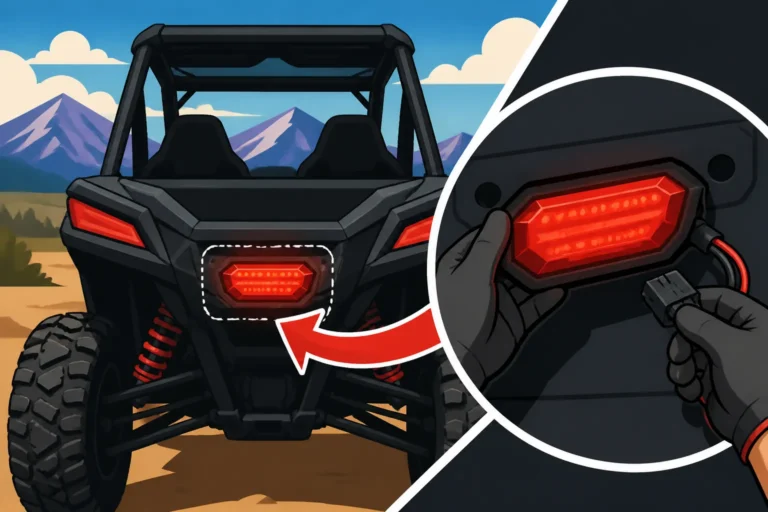
Getting your MPV titled and plated is a huge step, but it’s not the only one. Your machine must be equipped with specific safety features to be legal on public roads. This isn't just about common sense; it's about meeting Department of Transportation (DOT) standards. You'll need proper headlights, taillights, and functional brake lights that are clearly visible. Turn signals, both front and rear, are absolutely non-negotiable for indicating your intentions to other drivers.
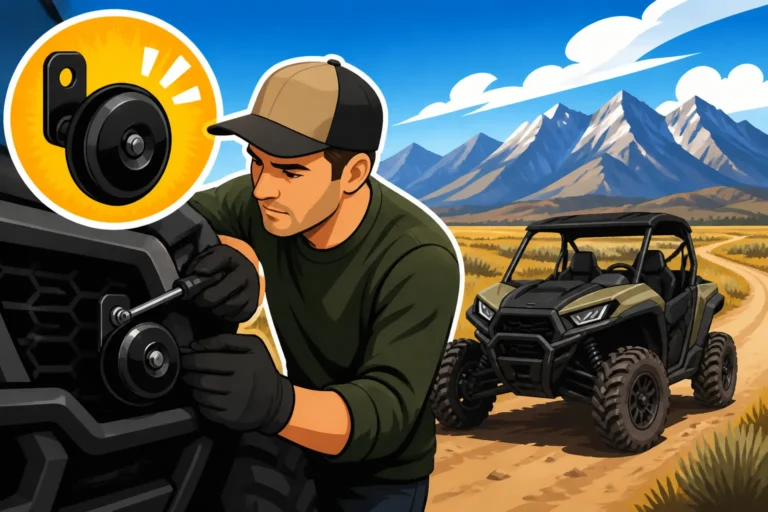
Then there are the mirrors. Wyoming requires at least one rearview mirror, and for an open-air machine like an MPV, it's highly recommended to have two – one on each side. A working horn is also mandatory for signaling warnings. And don't forget your tires; they must be DOT-approved, which means they are designed and rated for road use, not just off-road traction. Many aftermarket companies, like SuperATV, offer comprehensive conversion kits that include these essential components, making the upgrade process much smoother. You might even need a windshield and a speed-sensing speedometer. [Wyoming Lighting Requirements for ORVs], [Wyoming Mirror Requirements for Road Use], [Wyoming Horn Requirement on a Road Machine] It's a significant investment, but these additions are crucial for both your safety and legal compliance.
Navigating City Streets: Rules and Restrictions for MPVs
So, you've done all the hard work: your side-by-side or ATV now proudly carries an MPV title, a license plate, and all the required road-legal equipment. You might think you're ready to hit any city street in Wyoming, but there's still a crucial layer of regulation to understand: local ordinances and specific road designations.
Designated Routes and Local Ordinances
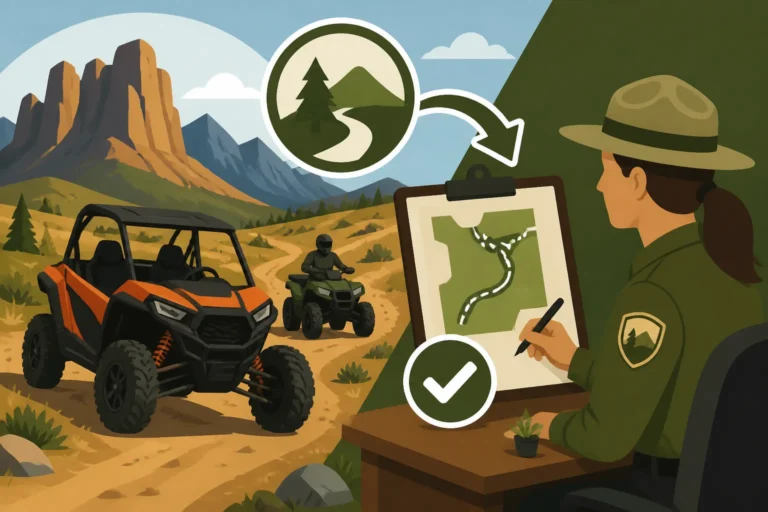
Here’s where it gets a little tricky. While your MPV is now considered a street-legal vehicle under state law, individual cities, towns, and even counties retain the power to restrict where MPVs can actually ride within their borders. Just because a machine is street-legal doesn't mean it's allowed on every street. Some cities might allow MPVs on certain collector roads or to cross specific intersections but prohibit them entirely from their busiest downtown areas or residential streets. Wyoming Rules for Riding a City Street
It's absolutely imperative that before you take your newly legalized MPV onto city streets, you contact the specific city's police department or municipal offices. Ask them directly about their ordinances regarding MPV use on city roads. Don't rely on hearsay or what you saw someone else do. Getting a definitive answer directly from the source can save you a lot of headache and potential fines. You might find that while county roads or forest service roads are wide open for your MPV, the city next door has a completely different set of rules, perhaps limiting you to only crossing certain state highways.
Driver Requirements and Safety Gear
Operating an MPV on a public road in Wyoming means you're operating a motor vehicle, plain and simple. Therefore, all the standard driver requirements apply. You must possess a valid driver's license. If you're planning on riding a true MPV, you'll likely need either an "M" (motorcycle) endorsement or an "MR" (multipurpose vehicle restricted) endorsement on your license. This isn't just a suggestion; it's a legal requirement that signifies you've passed the necessary tests to operate such a vehicle safely on the road. [Wyoming Driver's License Rules for ORVs], [Wyoming Motorcycle Endorsement for an MPV]
Insurance is another non-negotiable. Just like a car or truck, your MPV must carry liability insurance when operating on public roads. You should always have proof of this insurance with you, either physically or digitally. [Wyoming ATV Insurance Requirement] As for helmets, Wyoming law requires helmets for all riders and passengers under the age of 18 on public roads. Even if you're over 18 and not legally required to wear one, it's always a smart safety choice, especially on busy city streets. [Wyoming Helmet Law for ATV Riders]
Consequences of Non-Compliance
Trying to ride an unregistered ORV, or even a properly registered MPV, on prohibited city streets can lead to some pretty significant consequences. Law enforcement officers, whether they're city police or county sheriffs, are well-versed in these distinctions. The first thing you'll likely receive is a citation, which can carry substantial fines. These fines aren't just a slap on the wrist; they can be quite costly. [Wyoming Fines for Riding a Closed Road]
Beyond fines, your vehicle could be impounded. That means a towing fee, daily storage fees, and the hassle of trying to get your machine back. In some cases, repeated offenses or reckless behavior could even lead to more serious legal trouble. It's simply not worth the risk. The frustration of not being able to ride freely on every road is understandable, but ignoring the rules only makes things worse. Always err on the side of caution, do your homework, and stick to the designated or allowed routes. It ensures you can continue to enjoy the incredible riding opportunities Wyoming offers, legally and safely.
| Feature | Standard ORV (e.g., Trail ATV/UTV) | Wyoming MPV (Street-Legal) |
|---|---|---|
| Primary Use | Off-road, trails, unimproved surfaces | On-road and off-road |
| Registration | Wyoming ORV Decal (annual) | Wyoming MPV License Plate (annual renewal) |
| Titling | Generally no title required | Mandatory title from County Clerk |
| Weight | Varies, no specific limits for ORV classification | 300 to 3,000 pounds |
| Seat Height | Varies, no specific limits | At least 24 inches from ground to seat top |
| Lights | Basic headlights/taillights (often no brake lights) | DOT-approved headlights, taillights, brake lights, turn signals |
| Mirrors | Optional, typically none | At least one rearview mirror (often two recommended) |
| Horn | Optional, typically none | Required |
| Tires | Off-road specific | DOT-approved for road use |
| Driver's License | Not required for off-road trails (age limits apply) | Required (M or MR endorsement often needed) |
| Insurance | Not required for off-road trails | Mandatory liability insurance for road use |
| Helmet (Under 18) | Required on public lands | Required on public roads |
| City Street Access | Generally prohibited | Permitted where not restricted by local ordinance |
Disclaimer
This article is for general informational purposes only and does not constitute professional advice. Laws, prices and regulations vary by location and change over time. Consult a qualified professional for guidance on your specific situation.