Wyoming Rules for an Electric Machine on a Road
So, you've got yourself one of those fantastic electric ATVs or UTVs, maybe a sleek new model like a newer electric side-by-side, and you're dreaming of hitting the open roads in Wyoming. But then the nagging question pops up: can I actually drive this thing on the street? It's a common confusion point for electric machine owners, especially with all the evolving rules for off-road vehicles. This guide is here to clear up exactly what Wyoming law says about getting your electric machine street legal and out on the pavement.
Understanding Wyoming's Definition of a Road-Legal Machine
The biggest hurdle for any off-road vehicle, electric or gas-powered, looking to hit Wyoming's public roads isn't its fuel source—it's how the state classifies it. Wyoming has specific categories for vehicles that can legally operate on pavement, and your electric ATV or UTV needs to fit into one of these. This isn't just a formality; it dictates everything from the equipment you need to the roads you can travel. Trying to navigate this without understanding the classifications can lead to fines and frustration, so let's break it down.
The Multipurpose Vehicle MPV Designation
For most larger electric off-road machines, especially side-by-sides, the path to street legality in Wyoming runs directly through the Multipurpose Vehicle (MPV) designation. This is Wyoming's special class for vehicles that are designed for off-road use but can be modified and registered for limited on-road operation. It's not a blanket approval for all off-road machines, though. There are specific criteria your electric vehicle must meet to be considered an MPV.
The state defines an MPV with a few key characteristics. It needs to be a four-wheel vehicle with a minimum weight of 300 pounds and a maximum gross vehicle weight of 3,000 pounds. This covers a wide range of electric side-by-sides, which often fall comfortably within these parameters. Another crucial factor is seat height: the vehicle must have a seat or seats at least 24 inches off the ground, measured from the lowest point of the seat. This rule immediately disqualifies many traditional ATVs, which have straddle seats much lower to the ground. For more detail, you can look up [Wyoming's MPV Definition in W.S. 31-1-101].
If your electric side-by-side meets these weight and seat height requirements, and it has four wheels, you're on the right track. This MPV classification is critical because it's the gateway to getting a title and a license plate, which are absolute necessities for legal road use in Wyoming. Without fitting into this category, your electric machine remains an off-road vehicle, subject only to trail permits and off-road rules.
Why Most Electric ATVs Don't Qualify for Road Use
While many electric UTVs or side-by-sides can navigate the MPV classification, most electric ATVs face a different challenge: their fundamental design. An ATV, by definition, is an all-terrain vehicle with handlebars for steering and a seat designed to be straddled by the operator. This design, regardless of whether it's gas or electric, typically prevents it from meeting the "Multipurpose Vehicle" definition in Wyoming.
The primary sticking point for electric ATVs is almost always the seat design and often the steering. The MPV definition specifically calls for a vehicle with seats at least 24 inches from the ground and excludes vehicles designed to be straddled. Since virtually all ATVs feature a straddle-style seat, they simply don't make the cut. This means that even the most tricked-out, powerful electric ATV, no matter how many road-legal accessories you bolt onto it, cannot get an MPV title or a license plate in Wyoming. The state simply doesn't recognize it as a road-worthy vehicle type. [Why a Quad Cannot Qualify as an MPV] explains this in more detail.
This distinction is important because it means your electric ATV will remain an Off-Road Vehicle (ORV) in Wyoming's eyes. As such, it will require an annual ORV permit to ride on designated trails and off-road areas, but it will not be allowed on public roads designated for street-legal vehicles. While electric ATVs are fantastic for environmentally conscious trail riding, understanding this limitation is key to avoiding disappointment and potential citations. Make sure you check the specific rules for [Wyoming Rules for an Electric Machine on Trails] before you head out.
Essential Equipment for Street-Legal Electric Machines in Wyoming
So, you've determined your electric machine, likely a UTV, qualifies as an MPV. That's a huge step! But simply meeting the base definition isn't enough to legally cruise down Main Street. Just like any other vehicle on the road, your electric MPV needs to be properly equipped to ensure safety and compliance with traffic laws. This isn't just about aesthetics; it's about making sure your vehicle is visible, controllable, and communicates its intentions to other drivers, regardless of whether it runs on gasoline or batteries.
Lighting, Mirrors, and Safety Gear
When converting your electric MPV for road use, lighting is paramount. It's not enough to have basic trail lights. Wyoming law requires your street-legal MPV to be equipped with a headlight, a taillight, and a stop lamp. These must be fully functional and meet specific brightness and visibility standards. Beyond basic illumination, you'll need turn signals—both front and rear—to clearly indicate your intentions to other drivers. This is a critical safety feature that many off-road machines lack in their factory configuration.
Mirrors are also non-negotiable for road safety. At a minimum, your electric MPV must have at least one rearview mirror mounted on the left side of the vehicle, allowing the driver a clear view to the rear. Many riders opt for both left and right mirrors for enhanced visibility. A functional horn is also a must, used for signaling and warning. Finally, a red rear reflector, often integrated into the taillight assembly or mounted separately, ensures visibility even if your taillights fail. You can find comprehensive details in [Wyoming Lighting Requirements for ORVs], [Wyoming Mirror Requirements for Road Use], and [Wyoming Horn Requirement on a Road Machine].
Many aftermarket companies, like SuperATV, offer specific road-legal kits that include all the necessary lighting, mirrors, and horns to bring your electric UTV into compliance. Investing in one of these kits can save you a lot of guesswork and ensure you haven't missed any crucial components. Even if your electric machine comes with some lights, double-checking that they meet the road-legal standards for brightness and functionality is a smart move.
Driver Requirements and Insurance
It's not just the machine that needs to be ready for the road; the operator does too. Driving an electric MPV on public roads in Wyoming requires a valid driver's license. This isn't an "off-road permit" situation; it's the real deal. Generally, a standard Class C driver's license will suffice for an MPV, but it's always wise to check if your specific MPV's characteristics might warrant an M (motorcycle) or MR (motorcycle-related) endorsement on your license. The rules are clear in [Wyoming Driver's License Rules for ORVs].
Beyond having the proper license, you'll need to carry proof of liability insurance. Just like driving your car or truck, any vehicle operating on Wyoming's public roads must be insured. This protects you and others in the event of an accident. While many off-road machines might not require insurance for trail use, road use changes everything. Make sure your policy specifically covers your electric MPV for on-road operation. You can learn more about the requirements in [Wyoming ATV Insurance Requirement].
Finally, while helmets aren't universally mandated for all adult drivers of MPVs on the road, Wyoming law does require that anyone under the age of 18 riding in or on an MPV must wear a helmet. This applies to both drivers and passengers. Even for adults, wearing a helmet is a smart safety practice, especially on public roads where you'll be sharing the asphalt with much larger and faster vehicles. Always prioritize safety, and ensure everyone in your electric MPV is protected.
| Feature | Off-Road Vehicle (ORV) Permit (e.g., Electric ATV/UTV for trails) | Multipurpose Vehicle (MPV) Registration (e.g., Electric UTV for roads) |
|---|---|---|
| Legal Document | ORV Decal/Permit | Vehicle Title & License Plate |
| Primary Use | Designated trails, off-road areas | Public roads (where allowed), trails |
| Classification | Typically any ATV/UTV | 4-wheel, 300-3000 lbs, seat 24" high, non-straddle seat |
| Fuel Type Impact | None | None (electric or gas still need to meet MPV definition) |
| Headlights | Often standard (for trail visibility) | Required (DOT-compliant) |
| Taillights/Stop | Often standard | Required (DOT-compliant) |
| Turn Signals | Not typically required | Required |
| Mirrors | Not typically required | Required (at least left-side rearview) |
| Horn | Not typically required | Required |
| Driver's License | Not always required (age/supervision rules) | Required (standard Class C, M, or MR endorsement) |
| Insurance | Not required for trails | Required (liability) |
| Helmet (Under 18) | Often required for youth riders | Required for all riders/passengers under 18 |
Navigating Wyoming Roads with Your Electric MPV
Okay, your electric UTV is classified as an MPV, you've got all the right equipment, and you're properly licensed and insured. Now comes the exciting part: hitting the road! But hold on just a minute. Wyoming's rules for where MPVs can actually drive are quite specific. It's not a free-for-all, and understanding the nuances of designated roads and restrictions is absolutely crucial to enjoying your ride without running into trouble. This ensures you're riding safely and legally, honoring the intent of the MPV classification.
Designated Roads and Interstate Restrictions
The most important thing to remember is that your street-legal electric MPV can only be operated on roads that are "enrolled" or "designated" for such use. This isn't every road you see. State highways, county roads, Forest Service roads, and BLM roads can be designated, but they aren't automatically. Local jurisdictions and land management agencies make these decisions, and they are usually clearly marked with signage or indicated on official maps. You can find out more about the general types of routes in [Wyoming's Designated ORV Roads].
You'll often find that many rural county roads and Forest Service roads are open to MPVs, providing incredible access to some of Wyoming's most scenic backcountry. However, city streets might have their own ordinances, sometimes allowing MPVs, sometimes not. Always check with the local city or county offices for their specific rules, especially if you plan to ride within town limits. [Wyoming Rules for Riding a County Road] gives more context on this.
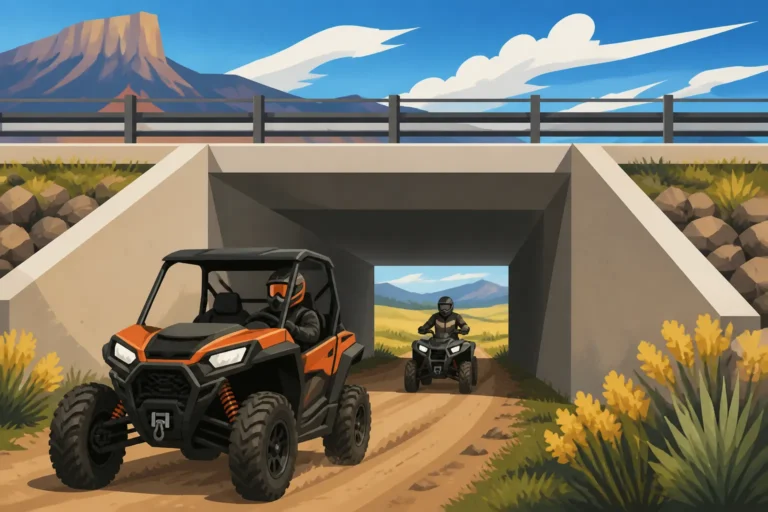
Interstate highways are a big no-go zone for electric MPVs, with very few exceptions. While Wyoming has made some provisions for crossing interstates at designated, grade-separated crossings (like overpasses or underpasses) or at specific, limited access points, you cannot generally ride your electric MPV on an interstate highway. These crossings are highly controlled and often have annual limits on the number of vehicles. Don't assume you can just hop on the freeway; check [Wyoming Rules for Crossing an Interstate] for the very specific and rare circumstances this might be allowed.
Registration, Titling, and Ongoing Compliance
Getting your electric MPV fully legal for the road involves a two-part process in Wyoming: titling and registration. The journey starts at your County Clerk's office, where you'll apply for a vehicle title for your electric MPV. This title establishes ownership and formally recognizes your machine as an MPV, provided it meets all the criteria we discussed earlier. The process usually involves presenting a bill of sale or other proof of ownership, and potentially a VIN inspection. [Titling a Multipurpose Vehicle in Wyoming] is a helpful resource here.
Once you have your MPV title, you'll take that to your County Treasurer's office to get it registered and obtain your license plates. This is the step that makes your machine street legal and allows you to put a plate on the back. You'll pay annual registration fees, just like any other car or truck, and these fees help fund road maintenance and other services. The treasurer's office handles the issuance of your plates, which you'll need to display clearly on the rear of your electric MPV. You can learn more about this step in [Plates From a Wyoming County Treasurer] and [Wyoming MPV Plate Requirements].
Remember, this MPV title and plate are entirely separate from any ORV permit you might get for trail riding. The ORV permit is for off-road access, while the MPV registration is for on-road use. Both are important, but they serve different purposes. Staying current with your annual registration and maintaining all the required equipment means you'll be able to enjoy the vast and beautiful landscapes of Wyoming from both the trails and the designated roads, offering maximum flexibility for your electric machine. Many riders find that a good road-legal kit from a brand like SuperATV ensures their machine has all the necessary components to pass inspections and stay compliant with these regulations.
Disclaimer
This article is for general informational purposes only and does not constitute professional advice. Laws, prices and regulations vary by location and change over time. Consult a qualified professional for guidance on your specific situation.