Who Pays to Build a Crossing
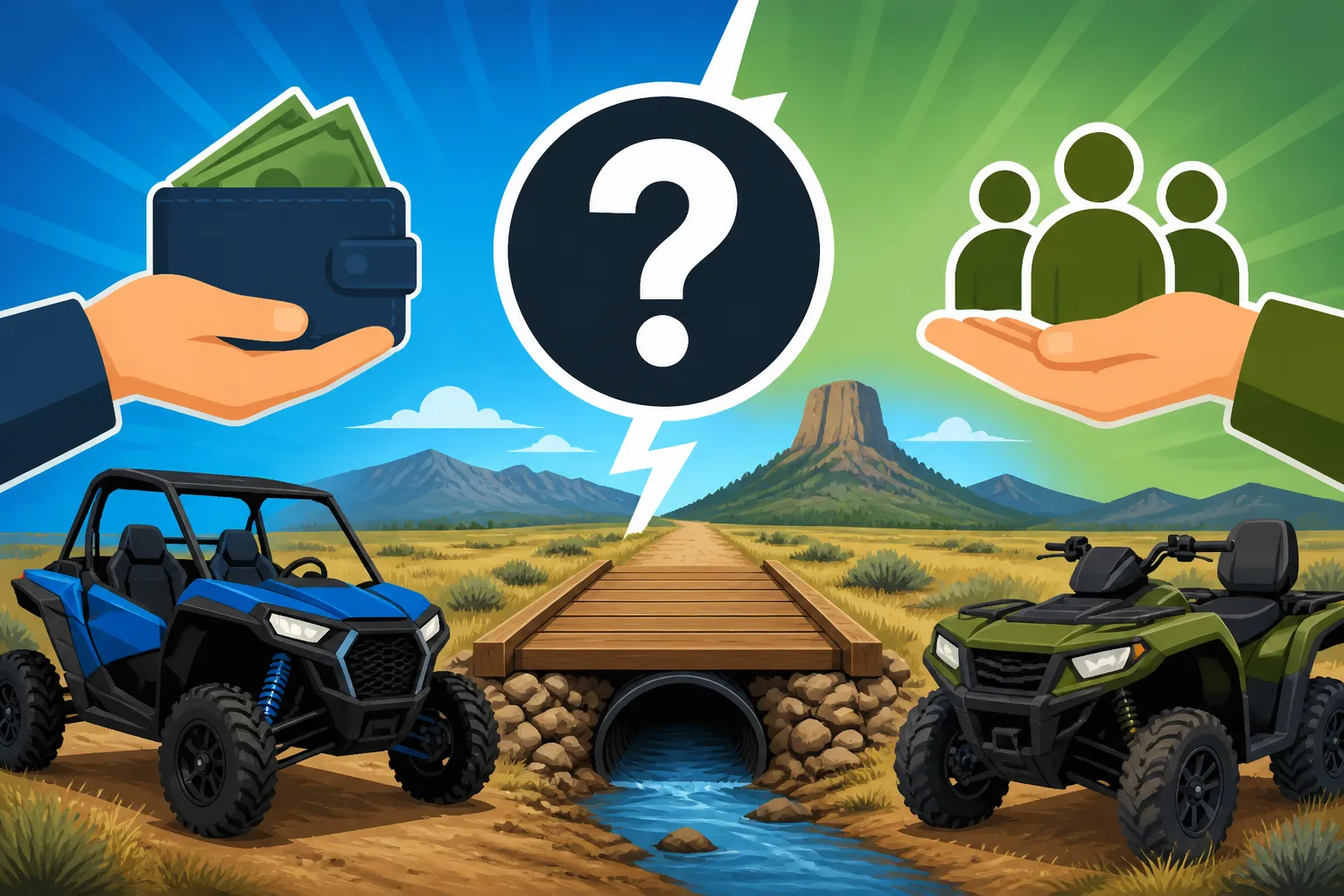
It's incredibly frustrating, isn't it? You've got a fantastic day planned, miles of open trail stretching out before you, only to be abruptly stopped by a roaring interstate or a busy highway, seemingly cutting off the very adventure you craved. This guide is all about shedding light on that exact problem, specifically in Wyoming, and answering the big question: who actually foots the bill to build those crucial crossings that connect our beloved off-road trails.
Understanding the Need for ORV Crossings in Wyoming
Wyoming is a vast state, absolutely brimming with incredible landscapes for off-road enthusiasts. From the rolling sagebrush steppes to the towering peaks of the Rockies, there's always a new vista to explore. But sometimes, these incredible natural playgrounds are sliced right in half by major roadways, creating frustrating barriers for riders. It's not just an inconvenience; it can be a real safety hazard if folks try to find "creative" ways to get across.
The Challenge of Divided Trails
Imagine heading out from Evanston, eager to hit some of the incredible trails that weave through the Uinta-Wasatch-Cache National Forest. You might find your path blocked by I-80, a massive ribbon of asphalt that just splits the landscape. Historically, this has been a huge headache, effectively cutting off communities and riders from prime recreational areas. [Evanston and the Interstate That Split It] is a prime example of how major infrastructure can isolate riding opportunities. These aren't just minor roads; these are often high-speed, multi-lane highways that are simply too dangerous to cross haphazardly. The idea isn't to make every road an ORV thoroughfare, but to create safe, designated points where riders can continue their journey without putting themselves or others at risk.
The sheer scale of Wyoming means that while there's abundant open country, many of our fantastic public lands – whether it's Forest Service, BLM, or state lands – are crisscrossed by state highways and interstates. These roads, while vital for commerce and travel, become literal roadblocks for recreational users trying to enjoy a continuous trail experience. You can be on a perfect two-track, feeling the wind in your hair, and then suddenly, there it is: a four-lane highway with no obvious way across. It's not only a physical barrier but an administrative one, requiring careful planning and funding to bridge the gap.
Safety and Access Considerations
Designated crossings aren't just about convenience; they are fundamentally about safety. Trying to dart across a highway on an ATV or UTV is incredibly dangerous, not only for the rider but for motorists. These crossings provide a safe, legal, and often engineered solution to a very real problem. They ensure that riders can continue their journey on [Wyoming's Designated ORV Roads] or connect to other parts of the trail system without risking life and limb. It's about creating a harmonious environment where everyone can use our public lands and transportation networks responsibly.
Without these safe access points, riders might feel compelled to take risks, leading to accidents or, at the very least, tickets for illegal crossings. Think about a family with younger riders; safety is paramount. A properly designed crossing might include clear signage, rumble strips, or even dedicated underpasses or overpasses. These features are expensive, but they're an investment in rider safety and the longevity of our recreational opportunities. Plus, continuous trails make for better, longer, and more enjoyable rides, which in turn boosts local tourism and the economy. Everyone benefits when trails are connected.
The Primary Funders: Wyoming's Trails Program
When it comes to building and maintaining off-road trails and the critical infrastructure like crossings, the unsung hero in Wyoming is almost always the State Trails Program. This program is the backbone of much of what we enjoy as riders, and its funding model is actually quite ingenious, relying directly on us, the users.
Where the Money Comes From
So, where does the money for all this come from? It's largely thanks to the annual ORV permit fees that every off-road machine needs to display. When you purchase that decal for your ATV, UTV, or dirt bike, a significant portion of that money goes directly into the Wyoming Trails Program. It's a user-pay, user-benefit system, which I personally think is a pretty fair way to do things. Your fifteen bucks isn't just a fee; it's an investment in the trails you love. [Where Wyoming ORV Permit Money Goes] details this further, showing how these funds are allocated. It ensures that the very people enjoying the trails are the ones contributing to their upkeep and expansion, including those vital crossings.
It's really important to understand that this isn't just money disappearing into a black hole. The funds collected through these permits are earmarked specifically for trail maintenance, improvement, and the creation of new access points, including crossings. It's a direct pipeline from your wallet to the ground you ride on. Imagine the impact if every rider in the state neglected to get their permit – suddenly, those critical projects, like a new grade-separated crossing under a major highway, wouldn't have the funding they need. That's why that little decal is so much more than just a sticker; it's a commitment to the future of off-roading in Wyoming.
The Grant Application Process
The Wyoming Trails Program doesn't just spontaneously decide where to build a crossing. Instead, it operates on a grant application basis. This means that counties, towns, state parks, and federal land management agencies (like the Forest Service or Bureau of Land Management) apply for these funds. They identify specific needs within their jurisdictions – maybe a critical trail segment is cut off by a road, or a new recreational area needs safe access – and then submit detailed proposals to the Trails Program. These proposals outline the project, its cost, and how it benefits the riding community. [Why the Trails Program Pays for Crossings] highlights this process, ensuring that the funds are directed to where they're most needed and impactful.
This process ensures that projects are community-driven and address actual, identified needs on the ground. For example, a local riding club might work with their county commission to identify a dangerous road crossing and advocate for a safer solution. The county would then apply for a grant from the Trails Program. The application would detail the engineering plans, cost estimates, and explain the positive impact on public safety and recreation. These projects aren't just dreamed up in an office; they come from real-world problems faced by riders like us. Sometimes, even the cost of surveying and designing the crossing, long before the first shovel hits the dirt, is covered by these grants.
Local Matching Funds and Contributions
While the Wyoming Trails Program is a major player, it's rare for them to be the sole funder of a large-scale project like a grade-separated crossing. Often, local entities, whether it's the county, a local municipality, or even passionate user groups, contribute matching funds or in-kind services. This could be anything from providing engineering staff, equipment for groundwork, or even volunteer labor to clear land or install signage. This collaborative approach stretches the grant money further and fosters a sense of local ownership over the project.
For instance, a county might contribute a percentage of the overall project cost from its own budget, seeing the value in increased tourism or improved safety for its residents. Or, a dedicated off-road club might raise funds specifically to help with a particular crossing, demonstrating their commitment and leveraging the Trails Program grants. It's not uncommon for [What the $100 Cross-State Ride Entry Covers] for an event like that to sometimes include a portion that goes back into trail infrastructure, showcasing how even event-specific funds can contribute to the larger goal of improved access. This multi-layered funding model ensures that projects are not only financially feasible but also have strong local backing and buy-in.
Collaborative Efforts and Federal Support
Building complex infrastructure like ORV crossings, especially over or under major highways, often requires more than just state and local funding. It's a team effort that brings together various agencies, each with their own area of expertise and responsibility.
Federal Land Management Agencies
Many of the trails we love to ride are on federal lands managed by agencies like the U.S. Forest Service or the Bureau of Land Management (BLM). When a crossing needs to be built on or adjacent to their property, or to connect two segments of federal trail, these agencies become critical partners. They might contribute funding from their own budgets, provide technical expertise, or manage the construction process itself. Their involvement is key because they are the stewards of vast tracts of land that are integral to Wyoming's off-road network.
These agencies have their own mandates for recreation and land management, and safe trail connectivity often aligns perfectly with their goals. For instance, if the Forest Service has a popular trail system that's currently bottlenecked by a state highway, they might partner with the Wyoming Trails Program and WYDOT to secure a safe crossing. Their expertise in environmental assessments, trail design, and public land use is invaluable. [Wyoming Rules on National Forest Ground] and [Wyoming Rules on BLM Ground] cover some of the regulations that might come into play when planning these projects, reinforcing the need for their active involvement and approval.
State Highway Department (WYDOT) Involvement
When we're talking about crossings over or under major state highways or interstates, the Wyoming Department of Transportation (WYDOT) steps into a starring role. They are the ultimate authority on state road infrastructure, and any project that impacts these roads requires their approval, engineering oversight, and often, significant financial contribution. Building a bridge or a tunnel for ORVs means adhering to stringent safety standards, traffic flow considerations, and long-term maintenance plans, all of which fall under WYDOT's purview.
It's a huge undertaking, often involving complex engineering, environmental studies, and meticulous planning to ensure the safety of both riders and motorists. WYDOT’s involvement ensures that these crossings are built to last, are safe for all users, and don't negatively impact the state's transportation network. This is especially true for projects like [Grade-Separated Interstate Crossings], where the costs and complexities are immense. A decision to open a road or create a crossing requires careful consideration and agreement from multiple parties, as explored in [Why a Road Opens Only When Two Agencies Agree].
Community and User Group Advocacy
While government agencies handle the big picture, the initial spark for many crossing projects often comes from the ground up: from local communities, passionate off-road clubs, and individual riders. These groups are the eyes and ears on the trails, identifying pain points, dangerous crossings, or missed opportunities for connectivity. Their advocacy, lobbying local commissioners, state legislators, and even directly approaching land managers, is absolutely crucial. They bring the human element to the funding equation, demonstrating the real need and passion behind these projects.
Many times, a petition, a series of public meetings, or even a determined individual can kickstart the process. These groups not only identify needs but can also organize volunteer efforts for initial clean-up, maintenance, or even fundraising to contribute to matching funds. Their persistent voices ensure that ORV access remains a priority when budgets are being discussed and projects are being planned. Without the sustained effort of the riding community, many of these vital crossings might never even make it onto a grant application.
The Different Types of Crossings and Their Costs
Not all crossings are created equal, and their complexity and cost can vary wildly depending on the specific location and the type of roadway being traversed. From simple at-grade intersections to elaborate tunnels, each option comes with its own set of challenges and funding requirements.
| Crossing Type | Description | Typical Cost Factors | Primary Funders (Common) |
|---|---|---|---|
| At-Grade | Designated intersection where ORVs cross a road at the same level. | Signage, pavement markings, safety barriers, possibly signals. | WY Trails Program, Local Gov. |
| Grade-Separated | ORVs pass over (bridge) or under (tunnel) the main roadway. | Engineering, excavation, materials, construction, land acquisition. | WYDOT, Federal Highway Funds, WY Trails Program. |
| Culvert/Underpass | Utilizing or expanding existing culverts or small tunnels under roads. | Modification, safety lighting, access ramps, drainage. | WY Trails Program, Federal Land Managers, Local Gov. |
Grade-Separated Crossings
These are the big ones: tunnels or bridges that allow off-road vehicles to pass either under or over a major highway without ever interacting with vehicular traffic. These are by far the safest option, eliminating any conflict points, but they are also exponentially more expensive and complex to build. We're talking about significant engineering challenges, massive excavation, and substantial material costs. [Grade-Separated Interstate Crossings] can easily run into the millions of dollars. The construction might involve temporary traffic diversions, specialized equipment, and extensive environmental assessments.
Funding for these types of projects often comes from a combination of federal highway funds, state transportation budgets (like WYDOT), and significant contributions from the Wyoming Trails Program. Because they directly enhance safety on state and federal roadways, they often qualify for broader infrastructure grants. The "who pays" for these often involves a complex web of agreements and shared responsibility, with federal and state agencies typically bearing the largest financial burden due to the scale and safety implications. Building one of these isn't a quick fix; it's a multi-year project from conception to completion.
At-Grade Crossings
An at-grade crossing is a simpler, less expensive option where ORVs are designated to cross a road at the same level as other traffic. These are typically found on less-trafficked state or county roads, or within communities where speeds are lower. While not as foolproof as a grade-separated crossing, they are a vast improvement over illegal crossings. The costs here usually involve clear signage, improved sightlines, pavement markings, and sometimes even flashing lights or minor traffic controls. [Wyoming Rules for Crossing a Highway] are very specific about how these are to be done safely.
These types of crossings are more likely to be fully funded or heavily supported by the Wyoming Trails Program, often in partnership with county or city governments. The focus is on making an existing crossing safer and legally designated for ORV use. While less costly than a tunnel, these still require careful planning to ensure maximum visibility for both riders and drivers, and often involve speed limit adjustments or specific right-of-way rules. It’s critical that riders treat these with the utmost respect and caution, as they are still interacting with live traffic.
Maintenance and Long-Term Funding
Building a crossing is one thing, but maintaining it over the years is another. Who pays for the ongoing upkeep, snow removal, repair of signage, or structural integrity checks? This responsibility typically falls to the entity that owns or manages the land or road where the crossing is located. For crossings on federal land, the Forest Service or BLM might handle it. For those impacting state highways, WYDOT often takes the lead. Local governments maintain county and city road crossings.
However, the Wyoming Trails Program often plays a role here too, providing grants for maintenance projects. This ensures that the investment made in building these crossings isn't wasted due to neglect. User groups and volunteers also contribute significantly, often organizing clean-up days or reporting issues to the relevant authorities. A product like a heavy-duty storage box from SuperATV can be invaluable for carrying tools or safety gear needed for minor maintenance or trail clearing near these crossings, allowing riders to contribute to keeping routes accessible. It's a continuous effort to keep our trails and their connecting infrastructure safe and open for all.
Disclaimer
This article is for general informational purposes only and does not constitute professional advice. Laws, prices and regulations vary by location and change over time. Consult a qualified professional for guidance on your specific situation.