Why Every Machine Needs a Wyoming Permit
A Wyoming ATV or UTV permit is tied to the machine, not the person riding it. That distinction can catch families, visitors and groups with multiple vehicles by surprise. Here’s when a permit is needed, why one decal cannot cover a whole fleet, what the permit does—and does not—authorize, and how to avoid arriving at a trailhead with the wrong paperwork.
What “every machine” means in practice
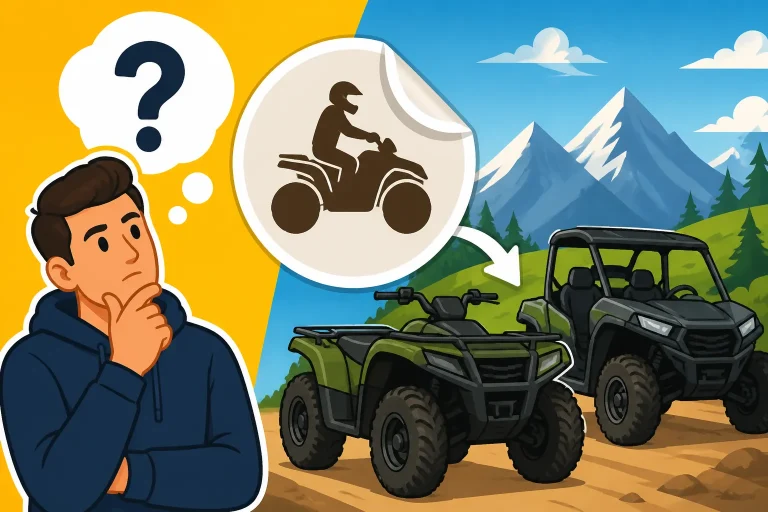
Wyoming’s off-road vehicle permit is generally a machine-by-machine requirement for riding where the state permit program applies. If you take two ATVs, both need their own permits. If a side-by-side and a dirt bike are in the trailer, each needs one too. A permit attached to one vehicle does not cover another just because they belong to the same person or are being used on the same trip.
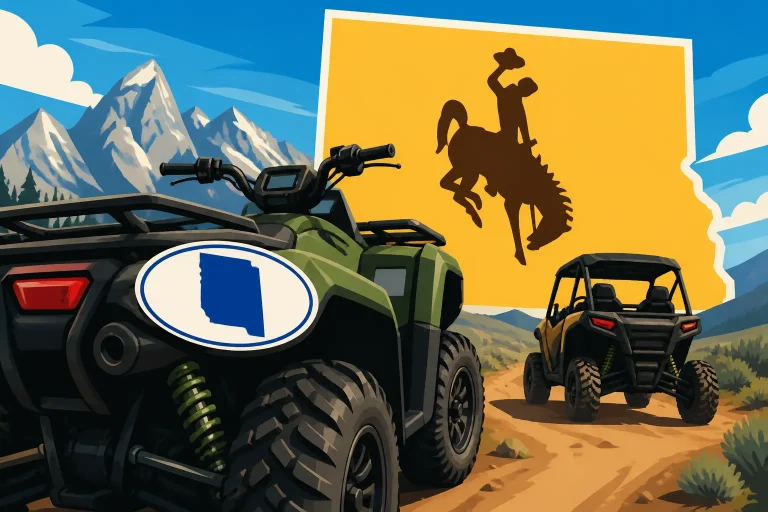
The permit is commonly shown as a decal attached to the vehicle. That makes it possible to identify the permitted machine at a glance, rather than relying on the rider to say they have paid for access. It also means the decal is not a household pass, a group pass or a rider’s personal license. The vehicle is the unit being permitted.
A practical way to think about it is:
| Situation | What to plan for |
|---|---|
| One person rides one ATV | A permit for that ATV where required |
| One person owns several machines | A separate permit for each machine used where required |
| A family brings several ATVs | Each ATV needs its own permit |
| A group shares a side-by-side | The side-by-side needs its own permit |
| You borrow a friend’s machine | Check that the machine itself has the required permit |
| You bring an out-of-state registration or sticker | Do not assume it substitutes for Wyoming’s permit |
The distinction is easy to miss because many documents are associated with a person: a driver’s license, a membership card or a recreation pass, for example. Wyoming’s ORV decal is different. It is associated with a particular machine, so buying one for yourself does not automatically make every vehicle you ride compliant.
This is one reason to identify every machine in your group before buying permits. Make a list of the vehicles you will actually take onto routes where the permit is required, including loaners and youth machines. Then confirm each one has its own current decal. For more background on the permit system, see Wyoming ORV Permits Explained.
Where the permit applies—and what it does not allow
A Wyoming permit is an access requirement for places where the state’s ORV permit rules apply. It is not blanket permission to ride anywhere in Wyoming. A valid decal does not override a seasonal closure, a route restriction, a landowner’s rights or a land manager’s travel rules.
That difference matters because public land is not the same as open land. A forest road, BLM route or trail may be closed to motorized use, limited to certain vehicle types, or open only during part of the year. A permit does not turn a closed route into an open one, and it does not authorize cross-country riding where that is prohibited. Before unloading, check the current travel map and signs for the specific area, then follow the more restrictive on-the-ground instruction if a sign indicates that a route is closed.
The phrase “every machine needs a permit” also does not necessarily mean every ATV or UTV needs a decal for every possible use. Riding only on private property with the owner’s permission is different from riding on a route covered by the permit program. Likewise, a machine parked at home or hauled through the state is not the same as a machine being ridden on a route where a Wyoming permit is required. If your plans involve a particular forest, trail system, state area or private property, verify the rules for that location rather than assuming the same requirement applies everywhere.
An ORV permit also is not a road license. It does not by itself make an ATV or UTV street legal, authorize travel on an ordinary public road, or replace any required vehicle registration, plate, insurance or driver qualification. If you are trying to use a machine on a road, that is a separate legal question; start with Why an ORV Permit Is Not a Road License and check the rules for the road and vehicle type.
The vehicle’s classification can matter too. Not every machine that looks like an ATV has the same status under Wyoming rules. Weight, design and intended use may affect how the machine is classified, and some vehicles may fall under a separate process. If you are unsure whether your machine counts as an ORV, review Which Machines Wyoming Counts as Off-Road Vehicles before assuming that a permit is or is not required.
A permit is not the same as route access
A decal answers one question: has the machine obtained the required permit for the places where that permit applies? It does not answer whether that particular route is open to that machine today.
For example, a route may be available to motorcycles but too narrow for a wide side-by-side. A trail might be closed during a wildlife protection period, while a nearby road remains open. An enrolled route could also have seasonal restrictions or other conditions. Your machine must meet both requirements: it needs the proper permit, and it must be allowed on the route you choose.
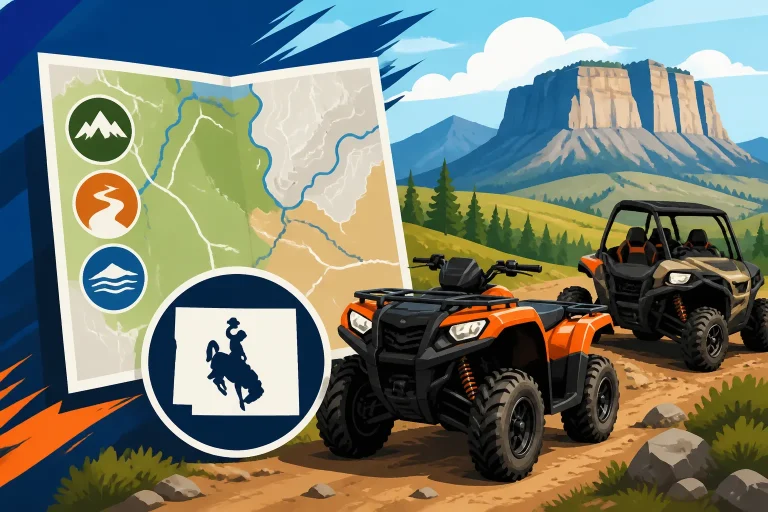
A reliable pre-ride routine is to check the trail or travel-management map for your planned area, look for current closures and restrictions, and pay attention to signs at the trailhead and along the route. If you are using a rental, ask the company which routes the machine may use and whether its permit is already in place. A permit on the machine does not mean the rental company has authorized every route.
Why Wyoming requires a separate permit for each vehicle
A vehicle-specific permit is easier to enforce and administer than a permit that follows a rider from machine to machine. The decal provides visible evidence that the individual vehicle has met the permit requirement. It also helps connect permit revenue to the machines using the recreation system, rather than treating one purchase as permission for an unlimited number of vehicles.
That approach can feel inconvenient when you own several machines, especially if you take only one out at a time. But the distinction is important: the permit is not a one-time purchase that gives the owner a personal riding credential. It is required for each eligible machine when that machine is used in a setting covered by the rules.
This also explains why a group cannot simply buy one decal and pass it around. Moving a decal between machines would defeat the vehicle-specific system and could leave the machine being ridden without the required permit. If you have a spare vehicle that might join the trip, plan for it separately rather than assuming another vehicle’s decal can be borrowed.
The permit program helps support trail and route recreation. Permit funds can contribute to trail work and related facilities, but the decal itself does not promise that a specific trail will be maintained, open or available for every kind of machine. For an explanation of how permit revenue is used, see Where Wyoming Permit Money Is Spent.
The requirement applies to nonresidents as well as Wyoming residents. Having a registration, permit or sticker from your home state does not automatically satisfy Wyoming’s requirement. Wyoming does not treat another state’s credential as a substitute for its own permit in places where the Wyoming permit is required. Visitors should plan to obtain the Wyoming decal for every machine they intend to ride in those areas. The visitor rules are covered in more detail in Wyoming ORV Permit for Nonresidents.
Insurance and permits are also separate issues. A permit does not provide insurance coverage, and having insurance does not replace the permit. Before you ride, consider what coverage you need for the machine and the kind of use planned; Wyoming ORV Permit and Insurance explains how to keep those questions distinct.
How to plan permits for a trip, family or fleet
The simplest way to avoid a last-minute scramble is to treat the permit as part of vehicle preparation—not as something you can sort out for the whole group at the trailhead.
- List the machines. Write down every ATV, UTV, dirt bike or other off-road machine that might be ridden. Include vehicles owned by other members of the group.
- Check where each one will be used. Identify the routes and recreation areas on your itinerary, then confirm the current permit and access requirements for those locations.
- Confirm the machine’s classification. If the vehicle is unusual, homemade, electric, especially small or heavy, or modified from its original configuration, do not rely on appearance alone.
- Buy a permit for each machine that needs one. Use an authorized purchase channel and keep the receipt or confirmation until the decal is attached and verified.
- Attach the decal as instructed. The permit should be visible and securely placed on the correct vehicle. Do not move it to another machine if plans change.
- Recheck access conditions before riding. A valid decal does not cancel a closure or route restriction.
If buying online, allow time for the decal to arrive and confirm how the provider handles delivery and proof of purchase. A confirmation on your phone may help document a transaction, but it is not safe to assume that a digital receipt replaces the required decal. Follow the current instructions from the permit provider. For ordering details, see Buying a Wyoming Permit Online and Where to Buy a Wyoming ORV Permit.
For a trip with multiple machines, keep a simple record with each vehicle’s identifying details, its permit status and where the decal is attached. A waterproof document pouch can keep receipts and trip notes together; if you shop on Amazon, look for a pouch that seals securely and is easy to open with riding gloves. The pouch is for paperwork, not a substitute for the decal.
Families often have a mix of full-size ATVs, youth machines and side-by-sides. Do not assume the child’s machine is covered by a parent’s permit, or that a decal on a parent’s ATV applies to a youth quad. Check each machine on its own and make sure the vehicle is appropriate for the route and rider. A separate article, Wyoming Permits for a Youth Machine, can help with that specific situation.
Rental fleets need the same vehicle-by-vehicle thinking. Ask the rental business whether the machine you are receiving already has the required permit, where the decal is located and which routes the rental agreement allows. Do not assume a permit is included simply because the vehicle is rented in Wyoming. If the decal is missing or the answer is unclear, resolve that before riding.
If you use a small organizer for your trip documents, Amazon is one place to look for a water-resistant folder or pouch; keep it separate from the permit decal itself. You might also carry a printed or offline copy of the relevant travel map, since cell service can be unreliable in riding areas. The map helps with route choices, but it does not replace checking for updated closures.
Common misunderstandings that leave a machine unprepared
“I paid for one permit, so I’m covered”
Not if you bring additional machines that require permits. Each vehicle needs its own decal. This catches people who own a quad and a side-by-side, or who bring a friend’s machine as a backup. The permit is not a rider pass that follows the owner.
“My home-state sticker should count”
Do not count on it. A sticker or registration issued elsewhere is not automatically accepted in place of Wyoming’s permit. If you are visiting, plan around the Wyoming requirement rather than assuming reciprocity. See Wyoming ORV Reciprocity Rules for the state’s approach to out-of-state credentials.
“The decal means I can ride any public route”
It does not. Land managers control access to their roads and trails. A route may be closed, restricted by vehicle width, limited to a season, or unavailable for another reason. Use the travel map for the area and obey signs on the ground.
“The permit is the same as road registration”
It is not. An off-road permit does not, on its own, provide a license plate, establish street legality or satisfy road-use requirements. If your plan includes riding on a public road, confirm the separate requirements before driving there.
“A receipt on my phone will be enough”
A receipt can help show that you made a purchase, but it may not satisfy a requirement to display the decal on the machine. Check the official instructions for what must be displayed and where. When the decal arrives, attach it properly and keep any purchase record as backup documentation.
“I can move the decal if I switch machines”
A vehicle-specific decal should stay with the machine for which it was issued. Do not treat it like a reusable permit. If the decal is damaged, lost or no longer readable, follow the official replacement process rather than transferring it to another vehicle. See Wyoming ORV Permit Replacement for next steps.
A small amount of preparation prevents most of these problems. Before departure, walk around each machine and confirm the correct decal is present, attached and readable. Amazon may be useful for a compact checklist pad or waterproof sleeve for your paperwork, but purchase the permit through an authorized channel and use the state’s instructions for the decal.
Timing, display and final checks
A permit is useful only if it is valid for the period when you ride and displayed as required. Wyoming’s permit schedule is not necessarily the same as a rolling twelve-month period from the day you buy it. Check the current permit term before planning a late-season ride or buying early for a future trip. For the timing details, read How Long a Wyoming ORV Permit Lasts.
Once you have the decal, follow its placement instructions rather than choosing a spot that is convenient but hidden by a fender, luggage or mud flap. Clean and dry the surface before applying it, and press it firmly so it stays attached through dust, water and vibration. A microfiber cloth from an outdoor or general retailer can help prepare the surface, but avoid solvents or coatings unless the decal instructions say they are safe. A poorly attached decal can peel away during transport or riding.
Before each trip, check the machines themselves, not just the group’s paperwork folder. A quick walk-around should confirm:
- Every machine that needs a permit has its own decal.
- Each decal is attached to the correct machine and can be seen.
- The permit is valid for the planned riding period.
- The route is open to that machine’s type and width.
- Any separate requirements—such as road-use rules, insurance or land-manager conditions—have been considered.
- The group knows where it is allowed to ride and where the route ends.
If a machine is borrowed, sold, replaced or added to the trip at the last minute, pause and verify its permit status. The presence of another vehicle’s decal, a friend’s receipt or a home-state registration does not settle the question.
The practical takeaway is straightforward: when Wyoming requires an ORV permit for the place you plan to ride, treat each machine as a separate permit item. Then check route access separately. That keeps the permit attached to the right vehicle and avoids mistaking a decal for permission to ride anywhere.
Disclaimer
This article is for general informational purposes only and does not constitute professional advice. Laws, prices and regulations vary by location and change over time. Consult a qualified professional for guidance on your specific situation.