Where Wyoming Permit Money Is Spent
Wyoming’s off-road permit is more than a sticker: its revenue helps support the trails and riding facilities people use across the state. But the connection between buying a permit and seeing work on the ground can be hard to follow. Here’s how the money generally moves, what it can support, what it does not pay for, and how to find out what is happening near your riding area.
The short answer: permit revenue supports off-road recreation
Wyoming’s off-road permit revenue is intended to support the state’s off-road vehicle and trail system. It helps fund eligible work such as maintaining or improving routes and trailheads, replacing signs, and supporting other approved recreation projects.
That does not mean every permit purchase pays for a particular trail, or that the money is spent immediately in the place where you bought the decal. The revenue passes through a program and funding process. Projects must be eligible, approved, and coordinated with whoever manages the land or route.
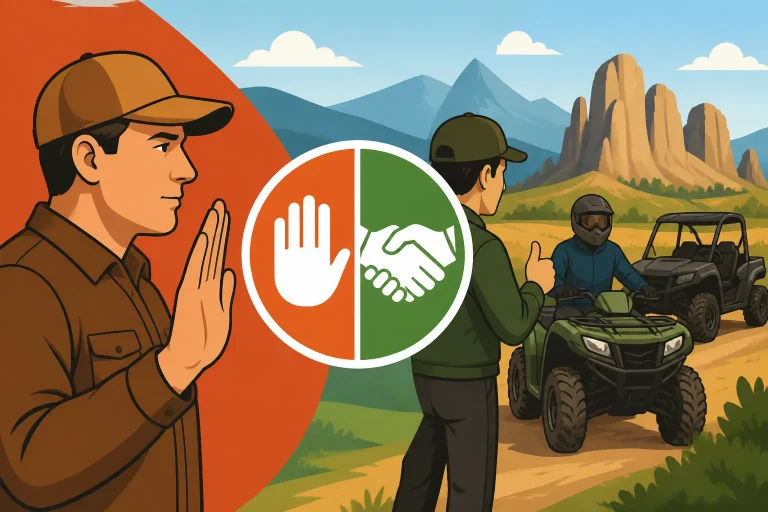
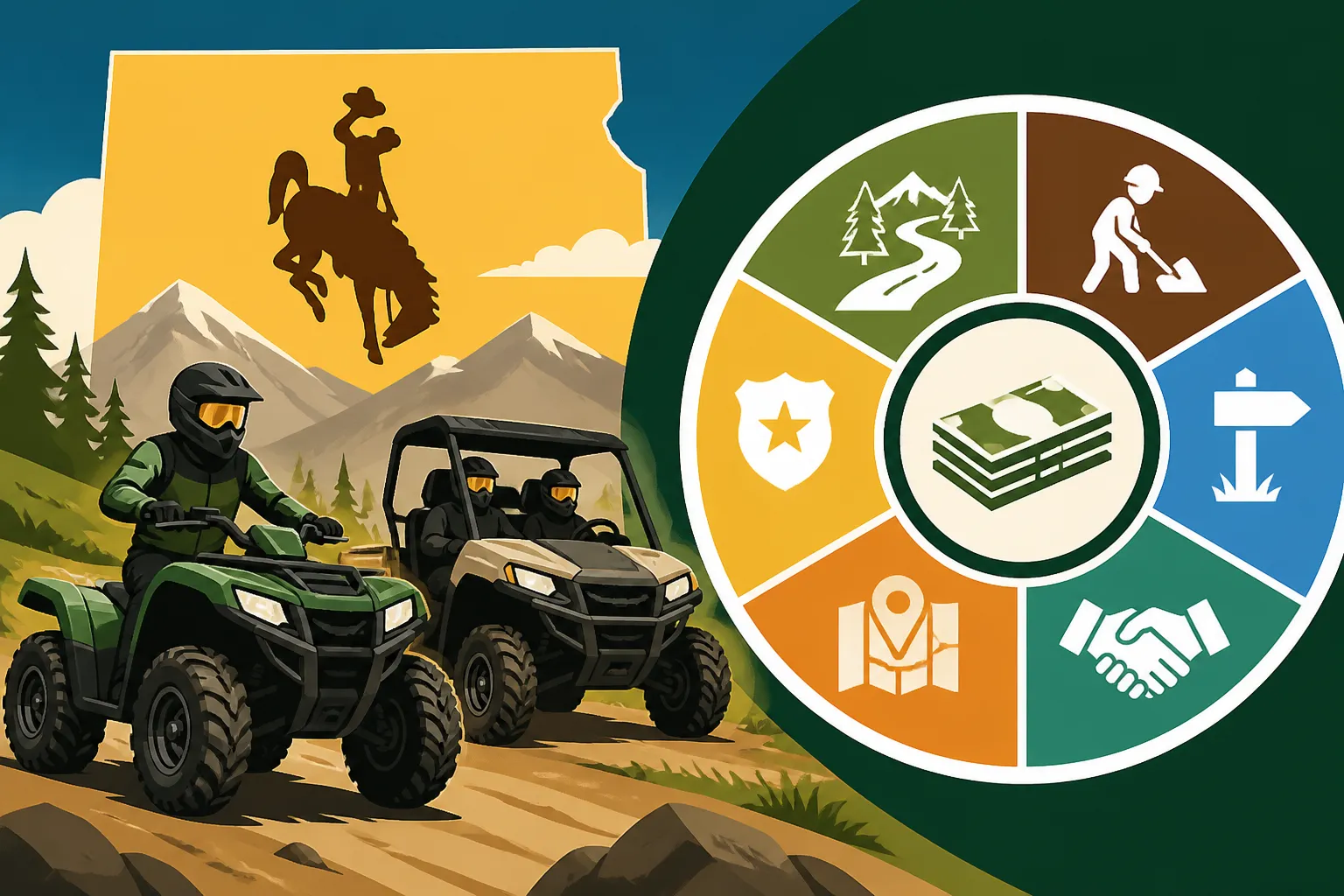
A useful way to picture it is as a connection between riders and the system that makes legal riding possible. Riders buy permits. The permit program uses its available revenue to support qualifying work. Public agencies, local governments, and other eligible project sponsors may then carry out work through approved projects or grants. The exact process and timing depend on the project.
The permit is also not a general travel pass. It does not make a closed route open, grant permission to cross private land, or replace a land manager’s rules. A route still has to be open to your type of machine. Check Wyoming’s Enrolled Roads and Trails and the applicable travel-management information before you ride.
For a broader overview of the permit program and its purpose, see Wyoming Permits and the Trails Program. If you want the short version of the funding destination, Where Wyoming ORV Permit Money Goes covers the same core question from another angle.
How the money moves from a permit purchase to a project
Buying a decal is the part riders see. The steps between that purchase and a completed trail project are less visible, and they can involve multiple organizations.
The sale is the starting point
Permits are sold through authorized channels. Depending on how you buy, the transaction may happen online or through a selling agent. The agent’s role is to handle the sale, not to decide which trail gets improved. For an overview of the different purchase options, see Where Wyoming Sells ORV Permits or Buying a Wyoming Permit Online.
A selling agent may keep an authorized portion of the sale for handling the transaction. That is different from the portion directed toward the permit program. The distinction matters when you are trying to understand why the full amount paid at a counter may not all appear as project funding. Why a Selling Agent Keeps $1 of Every Permit explains the agent’s share and how it differs from the program’s funding.
After the transaction, revenue intended for the program is handled through the state’s established processes. It is not a donation handed directly to a trail crew, and a rider generally cannot choose a project at the point of purchase.
A project needs a sponsor and approval
A trail or trailhead project usually needs someone to propose and manage it. That might involve a public agency, a local government, or another eligible organization with responsibility for the work. The sponsor must describe what needs to be done, where it will happen, why it is needed, and how the work will be completed and maintained.
The location is important. A project on federal land, for example, needs the relevant land manager’s involvement and approval. Permit funding does not override land ownership, environmental review, access rules, or other approvals. A proposed improvement might be useful to riders but still not be ready to fund if the sponsor lacks permission, the project plan is incomplete, or another requirement has not been met.
This is one reason an announced need and a completed project can be separated by time. A washed-out section might need technical review, a route might require coordination among agencies, or the work might depend on a suitable construction season. In a mountain area, snow, wet ground, fire restrictions, and wildlife closures can all affect when crews can safely and legally work.
Funding is not the same as finished work
Even after a project is approved, the money must be put to work. A sponsor may need to secure equipment, hire contractors, coordinate crews, obtain materials, or contribute other funding or in-kind support. The work may take place in stages rather than as one large construction job.
Some projects also need maintenance after the initial work is done. A sign installed today can be damaged or obscured later. A trail repaired after erosion may need another inspection after a heavy runoff season. Funding a project is therefore part of a longer effort, not a guarantee that a route will be permanently trouble-free.
For riders, the practical takeaway is simple: permit revenue supports a system, but there is no instant, one-to-one exchange between a decal purchase and a visible improvement. That is true even when the project is close to home.
What permit funding can support
The central purpose is supporting off-road recreation and the infrastructure that makes permitted riding possible. The exact activities a program can fund depend on its rules and approvals, but common needs include maintaining routes, improving access, and managing trailhead facilities.
Route work and repairs
Routes experience wear from weather, runoff, repeated use, and natural changes in the landscape. Work may include repairing damaged sections, improving drainage, addressing erosion, or making other approved changes that help keep a route usable and reduce avoidable impacts.
A route may also need work to protect it from damage rather than simply make it easier to ride. Better drainage can help prevent water from cutting deeper ruts. Rerouting an eroded segment may keep riders away from a sensitive area. A barrier or clearly marked boundary can make it easier to stay on the designated route.
The goal is not to make every trail suitable for every machine or riding style. Route design and maintenance have to fit the land, the authorized use, and any limits placed on the route. A narrow trail may remain narrow; a route may remain closed to a machine that exceeds its width limit.
Signs and route information
Signs help riders identify routes, understand restrictions, and avoid accidentally continuing into a closed or unauthorized area. They can also provide direction at junctions, clarify seasonal closures, or identify trailhead rules.
Signage is especially valuable where a route crosses different land-management areas or connects to other roads and trails. A map may show a network, but signs on the ground help riders navigate it. Neither source should be treated as an excuse to ignore the other: if a sign says a route is closed, stop and confirm the current status rather than assuming a map is more recent. For help using maps and route information, see Wyoming Trail Maps and MVUMs.
Trailheads and visitor facilities
Some projects may support facilities associated with riding areas. Depending on eligibility and approval, this can include improvements that help riders access and use a site responsibly. Examples might include trailhead improvements, visitor information, or facilities that address common impacts at a staging area.
That does not mean permit revenue pays for every amenity a rider might want. A campground, road, parking area, or restroom may be managed under a different program, have a different funding source, or fall outside the permit program’s eligible uses. If you are planning a trip around a particular facility, check the land manager’s current information rather than assuming it will be available or funded through ORV permits.
Planning, equipment, and other project needs
A successful project may involve more than visible construction. Planning, coordination, equipment, or other necessary costs may be part of an approved effort where program rules allow them. For example, a sponsor may need to assess a site before repairing a route or coordinate with the land manager before installing signs.
The important qualification is “eligible and approved.” A project’s connection to off-road riding does not automatically make every expense payable from permit revenue. A proposal still has to fit the program’s rules and go through the relevant review process.
| Potential project need | How it can help riders | What to keep in mind |
|---|---|---|
| Route repair or maintenance | Keeps an authorized route usable and addresses damage | Work must fit the land manager’s rules and project approvals |
| Drainage or erosion improvements | Helps reduce water damage and repeated trail deterioration | It may require design, coordination, and suitable working conditions |
| Signs and route markers | Helps riders navigate and recognize closures or restrictions | Signs do not replace checking current maps and notices |
| Trailhead improvements | Can support safer, more orderly access to a riding area | Not every facility or amenity is funded through permits |
| Planning and coordination | Helps prepare a project and secure needed approvals | Preparation can take time before visible work begins |
| Approved equipment or project costs | Can support the work needed to complete an eligible project | The expense must be allowed under the program and approved |
The table describes broad types of needs, not a promise that any particular project will receive funds. The best way to confirm an individual project is to ask the program or project sponsor.
Why money may stay connected to the area where it was collected
Wyoming’s permit program is designed to keep a connection between permit revenue and recreation in the areas where riders are using the system. That does not mean every dollar collected in one town is automatically handed to a crew working on the nearest trail. It means the geography of collections can matter when the program directs support and considers projects.
This local connection makes practical sense. Riding pressure is not evenly distributed. Some areas see heavy seasonal use, while others may have fewer riders but face costly access or maintenance challenges. A funding approach that considers where permits are sold can help keep revenue tied to the places generating use, while still relying on a program process to decide which eligible work moves forward.
There are several reasons you might not see an immediate local result:
- The project may not yet have an eligible sponsor.
- The sponsor may still need approval from the land manager.
- The project may be waiting for design, environmental review, or other preparation.
- The project may need to be coordinated across several jurisdictions.
- The work may be scheduled for a particular season.
- Available funds may need to be directed among multiple qualified needs.
- The project may have been completed in a form that is not obvious to casual visitors, such as drainage work or route planning.
The principle that revenue remains tied to its collection area does not mean the program is a simple cash register for local trail work. Nor does it mean that a rider can identify the exact destination of the money from the sales location alone. For more on this geographic connection, see Why Fees Stay Where They Were Collected.
It is also worth separating the place where a permit is purchased from the place where the machine is ridden. A visitor may buy a permit online before leaving home, or at a shop away from the riding area. The program’s accounting and allocation rules, not the rider’s assumption about the purchase location, determine how that revenue is handled. If you are curious about the program’s current approach, ask the state trails program how it tracks collections and how those funds are made available for projects.
What permit money does not do
Understanding the limits of the program helps set realistic expectations. Permit revenue supports eligible off-road recreation work, but it does not cover every cost associated with owning a machine, riding public land, or maintaining a particular piece of infrastructure.
It does not buy permission to ride anywhere
A permit is not authorization to ride on any road or trail you can reach. Routes may be open to some machine types and closed to others. Land managers can impose seasonal restrictions, closures, and route-specific conditions. A permit cannot override those rules.
Nor does the decal give access across private property. You still need permission where access depends on a private landowner’s consent. Public-land status also does not mean cross-country travel is allowed. Stay on routes that are open to your machine and follow the land manager’s current instructions.
It is not a road registration or license plate
An off-road permit and a road-vehicle registration serve different purposes. A permit for riding the designated off-road system does not automatically make an ATV or UTV road legal, and it does not replace any separate title, plate, equipment, driver, insurance, or road-use requirements that may apply.
If your plan involves riding from a public road to a trail, check the applicable rules before you go. Why an ORV Permit Is Not a Road License explains the distinction. Don’t assume that a machine carrying an off-road decal may travel on a public roadway just because the road leads to a trailhead.
It does not guarantee that a route will remain open
A route can close because of weather, fire danger, wildlife needs, maintenance, land-management decisions, or other safety and resource concerns. A closure does not mean permit funding has failed. Sometimes closing a route is necessary to protect the route or the area around it.
Likewise, a route that received maintenance may later need another closure. Heavy rain can damage a repaired surface; a fire restriction can limit access; snow can make travel unsafe. Check current conditions before departure, especially if your trip depends on one particular route. Wyoming Fire Restrictions That Close Trails is useful background when planning during dry conditions.
It does not pay every public-land expense
Federal, state, county, and local agencies manage different land and infrastructure. Each may have its own budgets, maintenance responsibilities, approvals, and funding sources. Permit revenue can support eligible off-road projects without becoming the sole funding source for all roads, public facilities, or agency operations.
This distinction also explains why a visible problem might be handled by a different organization or budget. A county road leading to a trailhead, for example, may not be maintained through the same program that supports an off-road route beyond the parking area.
It is not a direct gear subsidy
Your machine, trailer, fuel, helmet, tools, and personal supplies are your responsibility. A map sleeve, tire gauge, first-aid kit, or charging cable you buy from a local shop or Amazon is not funded by your permit. The distinction can be useful when you are budgeting for a trip: the permit contributes to the shared riding system, while the equipment you bring helps you manage your own ride.
How to find out what is happening near your riding area
The most reliable way to connect permit funding with a local improvement is to look for information about actual projects, not just general statements about program goals. A rider can start with the agency or organization responsible for the route and then ask whether the work is part of a permit-supported project.
Identify who manages the route
Before asking who paid for maintenance, confirm who manages the land and route. A route may be on federal, state, county, or private land, and a trail system can cross more than one kind of jurisdiction. The responsible land manager is often the best first contact for current closures, planned work, and route conditions.
Use the current travel map for the area, and compare it with notices posted by the land manager. If the route is on federal land, a motor vehicle use map or other travel-management document may be essential. For general guidance, see Wyoming Trail Maps and MVUMs.
Ask specific questions
A focused question is more likely to get a useful answer than “Where did my permit money go?” Try asking:
- Is this route or trailhead project supported by the ORV permit program?
- Which organization is sponsoring or managing the work?
- Is the project approved, proposed, or still being planned?
- What work is included, and what is outside the project?
- Is there a projected work season or a known reason for delay?
- Where can I find current closure or access information?
- Is there a public project summary or funding notice?
These questions help distinguish a project that is merely being discussed from one that has secured approval and is scheduled. They also avoid assuming the permit program is responsible for an issue managed by another agency.
Look for work that is easy to miss
Not all useful improvements look like a new trail or a freshly graded surface. Replacing a confusing sign, improving drainage, documenting a route, or fixing a small problem at a junction can prevent larger issues later. A project may also improve the rider experience by making access clearer or reducing damage to nearby land, without increasing trail mileage.
When you visit a riding area, note the signs, barriers, and route markings as well as the trail surface. If a map has been updated or a route has been clearly marked as closed, that information may reflect important management work even if the area looks much as it did on your previous trip.
Keep expectations realistic about timing
Project schedules are affected by factors riders may not see. A project might require coordination with a landowner or land manager, a suitable construction window, materials, an available contractor, or a review of potential impacts. Weather and fire conditions can also interrupt work.
If a project is delayed, ask whether the delay is related to approvals, scheduling, access, or funding. That is more informative than assuming no one is acting. A project sponsor may be able to explain what stage it has reached and what still needs to happen.
What riders can do to make the funding work better
Buying the required permit is the first step, but riders also influence how well the system works through the choices they make on the ground. Good riding habits protect the routes that permit revenue and other resources support.
Buy the correct permit before riding
Check the current permit requirements for your machine and where you plan to ride. Don’t assume that an out-of-state sticker, plate, or registration is accepted in place of Wyoming’s requirement. The rules and purchase options are explained in Wyoming ORV Reciprocity Rules. If you need help understanding the current permit price or what affects it, see Wyoming ORV Permit Cost and confirm current information through the official program before purchase.
Buying through an authorized channel helps ensure the transaction is handled correctly. Keep the permit or purchase confirmation in the way the rules require, and place the decal where it can be checked. If you order online, allow time for any delivery process and do not assume a receipt alone satisfies the display requirement without confirming the current instructions.
Follow route designations and closures
Stay on routes open to your machine. Riding around a closure, cutting a new path, or taking a shortcut across a hillside can damage land and create new management problems. It can also put continued access at risk for other riders.
A legal route can still have conditions: a width restriction, seasonal closure, direction of travel, or requirement to yield to other trail users. Check signs and maps, and stop to resolve a conflict rather than guessing. When map and ground information appear to disagree, contact the land manager if possible.
Leave the place usable for the next rider
Pack out trash, respect private property, close gates as directed, and avoid spinning tires or widening a route. Yield to other users and keep noise and speed appropriate to the setting. These actions do not replace public funding, but they reduce unnecessary wear and help protect the case for continued access.
At a trailhead, park where allowed and do not block gates, roads, or emergency access. If a facility is full, do not create a new staging area by driving into an unapproved spot. That can damage vegetation and turn one crowded day into a longer-term access problem.
Report problems with useful details
If a sign is missing, a route is damaged, or a closure marker is unclear, report the location to the managing agency or project sponsor. A useful report includes the route name or map location, what you observed, when you saw it, and whether the problem creates a safety concern. A photo can help if it is safe and lawful to take one.
A clear report is more actionable than a general complaint. It can help staff determine whether the issue is a maintenance need, a temporary condition, or a restriction that riders need to know about. Avoid moving signs, barriers, or markers yourself; those may be part of an active closure or safety plan.
Budget separately for your own ride
Permit funding supports shared infrastructure, but a well-prepared rider still needs personal supplies. Carry water, a basic repair kit, appropriate protective gear, and current route information. If you shop on Amazon for a phone mount or waterproof document pouch, treat those as personal gear expenses rather than part of the permit system.
For a remote trip, consider whether you need a paper map, offline navigation, extra layers, or a way to communicate beyond cell coverage. Amazon may have convenient options for some small items, but check that the product suits your machine and conditions before relying on it. A cheap accessory is not a substitute for testing equipment at home.
If you are comparing gear, Amazon can be one place to look for a compact first-aid kit or tire-pressure tool, while a local powersports shop may help you choose a machine-specific part. Either way, your safety equipment and trip supplies are separate from what permit revenue pays for.
The practical takeaway
Wyoming permit money supports an off-road recreation system, not a guaranteed improvement on the trail closest to your home. It can contribute to eligible, approved work such as route maintenance, signs, and trailhead or access projects. The money moves through a program and project process, and timing depends on sponsors, approvals, land-manager coordination, and conditions on the ground.
If you want to follow the money locally, identify who manages the route, ask whether the project is permit-supported, and find out whether it is proposed, approved, or underway. In the meantime, buy the correct permit, check current route information, and stay within designated access. Those steps help make sure that the system the permit supports remains usable for the next rider.
Disclaimer
This article is for general informational purposes only and does not constitute professional advice. Laws, prices and regulations vary by location and change over time. Consult a qualified professional for guidance on your specific situation.