Evanston and the Interstate That Split It
It's incredibly frustrating when progress, like building a major interstate, ends up creating barriers right in your own backyard. For folks in Evanston, Wyoming, the construction of Interstate 80 meant that many of their favorite off-road riding areas, once easily accessible, were suddenly cut off, requiring lengthy detours or becoming completely unreachable. This guide dives deep into the history of that challenge and explores how Wyoming has worked to bridge the divide, legally and practically, for ATV and UTV riders.
The Historical Challenge: Interstate 80 and Evanston's Trail Access
Imagine growing up with a network of trails just a short ride from your home, a place where you'd spend countless hours exploring on your ATV or side-by-side. Then, almost overnight, a massive ribbon of concrete and asphalt is laid down, severing those ties. This isn't just a hypothetical scenario for many towns; it's the very real experience that communities like Evanston, Wyoming, faced with the arrival of Interstate 80. This vital transportation artery, while connecting the country, inadvertently created a significant barrier for local off-road enthusiasts.
The Barrier of Progress: How I-80 Divided the Landscape
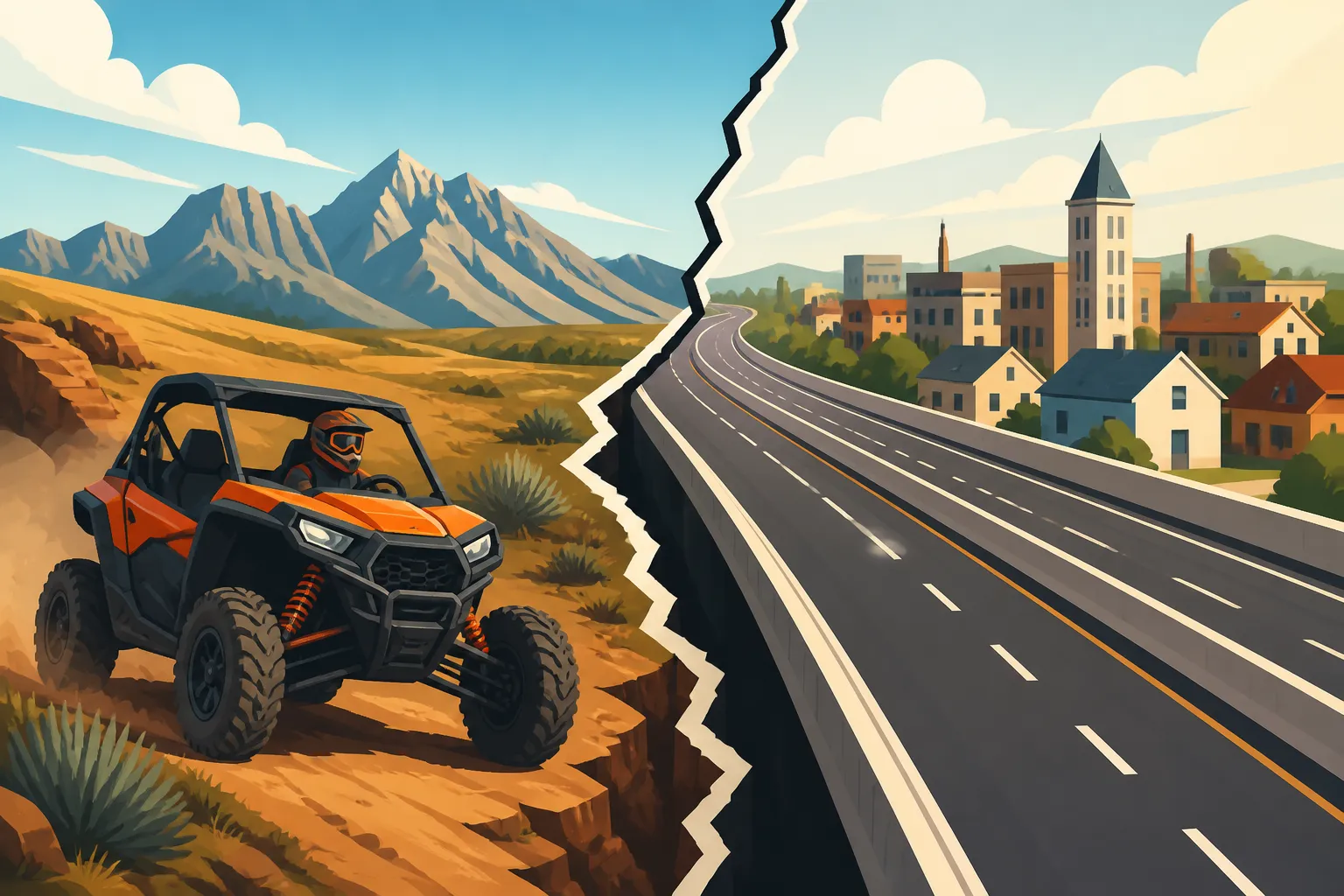
Interstate 80 slices through Wyoming, a crucial east-west corridor for commerce and travel. However, its construction involved creating massive divides across the landscape, often without much thought for local recreational access. For Evanston, this meant a physical and psychological split. The interstate became a formidable, impassable wall, separating residential areas and established trailheads from the vast public lands and designated riding areas that lay on the other side. You couldn't just hop on your machine and cross anymore; it was a matter of state and federal law, not just a physical obstacle. The sheer scale of the interstate, with its high-speed traffic and limited access points, made any informal crossing not only illegal but incredibly dangerous.
Before I-80, a local rancher might have simply ridden their quad across a two-track to check fences, or a family might have headed out for an afternoon trail ride. The interstate fundamentally altered this ease of movement. It wasn't just a road; it was a federal designation, a high-speed zone where recreational vehicles, by their very nature, didn't belong. This division forced riders to either abandon their preferred trails or find incredibly long, inconvenient, and often unpaved detours that might add hours to what was once a short trip. It chipped away at the spontaneous joy of hitting the trails and turned it into a logistical headache.
A Community's Frustration: Trails on the Other Side
The frustration in Evanston was palpable. Riders looked at their maps and saw prime riding territory – national forest lands, Bureau of Land Management (BLM) acreage, and vast stretches of open country – just beyond the concrete behemoth. But getting there became a monumental task. What was once a direct route now might require trailering your machine for miles, navigating through town, and using overpasses or underpasses that weren't designed with off-road vehicle access in mind. Many of these alternative routes were themselves subject to various restrictions, adding another layer of complexity.
Imagine planning a weekend ride, only to realize that half your day is spent just getting to the start of the trail system because an interstate has cut off your direct access. This wasn't just an inconvenience; it was a real impediment to enjoying the outdoors and a core part of the Wyoming lifestyle. The community, like many others across the state facing similar issues, began to push for solutions. They recognized that while the interstate wasn't going anywhere, there had to be a way to responsibly and safely reconnect their off-road community with the lands they loved. This collective voice highlighted a statewide issue: how do you balance essential transportation infrastructure with the public's right to access recreational lands, especially when those lands are fundamental to local culture and economy?
Wyoming's Legislative Response: Paving the Way for ORV Crossings
The challenges posed by the interstate weren't unique to Evanston. Communities across Wyoming grappled with similar issues, pushing lawmakers to acknowledge the dilemma. For years, the general rule of thumb was clear: off-road vehicles belong off-road, and highways, especially interstates, were strictly off-limits. This stance, while logical from a safety and traffic flow perspective, didn't account for the fragmented landscapes created by modern infrastructure. The call from frustrated riders and communities grew louder, demanding a practical, legal pathway to reconnect.
The Need for Legal Road Use: Why Traditional ORV Rules Fell Short
Traditional Wyoming ORV rules are designed to regulate how and where you can ride off pavement. They focus on things like annual permits, spark arresters, and designated trail systems. What they don't inherently cover is the use of these machines on public roads, let alone a high-speed federal interstate. If you've been riding for a while, you know the distinction between an off-road machine and a street-legal vehicle is usually pretty stark. An ORV permit allows you to ride [Wyoming's Designated ORV Roads] and trails, but it does not magically transform your quad or side-by-side into a street-legal vehicle capable of interstate travel.
This created a major gap for places like Evanston. Riders needed a way to briefly and safely traverse short segments of roadways, or more critically, cross the interstate, to access extensive trail networks on the other side. Without specific legislation, any attempt to use an ORV on a highway, even for a short crossing, was illegal and carried significant penalties. The legal framework simply hadn't caught up with the reality of recreational access in an increasingly developed landscape. The solution couldn't just be about "breaking the rules"; it needed to be a carefully crafted legal allowance that prioritized safety and public access. This necessity directly led to the development of the multipurpose vehicle (MPV) classification and the specific interstate crossing rules that many riders now rely on. To truly understand this, it's important to grasp [What Wyoming Law Says About ORVs on Roads] and how it differs from MPV regulations.
Crafting the Solution: The Interstate Crossing Rule
Recognizing the widespread impact on communities and the importance of outdoor recreation, Wyoming lawmakers, in collaboration with the Department of Transportation (WYDOT), State Parks, and local governments, began to craft a solution. This wasn't a quick fix; it involved careful consideration of safety, traffic management, and the practicalities of off-road vehicle design. The result was a nuanced legislative change that allowed for specific, limited interstate crossings under very strict conditions. This legislative effort truly embodies [Wyoming's MPV Path to the Road].
The new rules didn't just throw open the gates. Instead, they focused on controlled access points and emphasized "grade-separated" crossings – meaning riders wouldn't be sharing the main interstate lanes with high-speed traffic. This careful approach balanced the desire for trail access with the paramount need for safety on one of the state's busiest roadways. It involved establishing a process for designating these crossings, working closely with affected counties and federal land management agencies. This collaborative spirit was key to addressing the unique challenges presented by the interstate, ensuring that solutions were viable and acceptable to all stakeholders, from state troopers to local trail riders.
Understanding the Interstate Crossing Rule
The passage of legislation allowing for limited interstate crossings was a monumental step forward for Wyoming's off-road community. However, it's crucial to understand that this isn't a carte blanche invitation to take your side-by-side onto I-80 anytime you please. These rules are specific, designed with safety and environmental impact at the forefront. They require a clear understanding of what's allowed, where, and under what conditions. Ignorance of these details could lead to fines, citations, or worse, dangerous situations on the road.
The "Grade-Separated" Reality: Crossing Under or Over
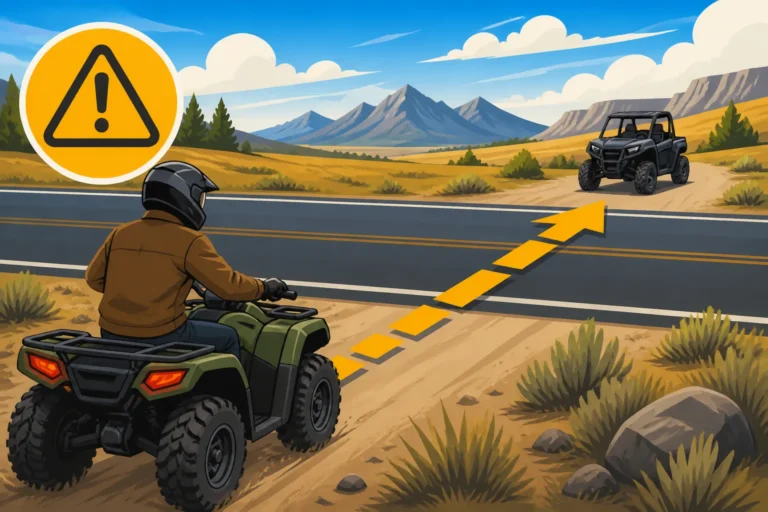
The core principle behind Wyoming's interstate crossing rule for off-road vehicles is the mandate for "grade-separated" crossings. What does this mean in plain language? It means your off-road machine is never, under any circumstances, to share the main travel lanes of the interstate with cars and trucks. Instead, you must utilize existing infrastructure that allows you to pass under or over the interstate without directly entering its traffic flow. Think of it as a bypass specifically for ORVs/MPVs.
These grade-separated crossings are typically existing bridges, underpasses, or culverts that have been officially designated and prepared for this purpose. They might be part of a county road that goes over the interstate, or an old ranch access tunnel that passes underneath. The key is that they are not part of the active interstate roadway itself. This is a critical distinction that ensures rider safety and prevents disruption to interstate traffic. Riders should always look for specific signage indicating an approved crossing, rather than assuming any overpass or underpass is fair game. This rule is designed to ensure safety, which is why [Grade-Separated Interstate Crossings] are such a crucial element of the entire system.
Annual Limits and Designated Crossings: The "Why" Behind the Cap
Another significant aspect of the interstate crossing rule is the implementation of annual limits on the number of crossings at specific locations. For instance, some designated interstate crossings have a cap of 1,000 machines per calendar year. This might seem restrictive to some, but there's solid reasoning behind it. The cap is in place to manage the impact of these crossings on the infrastructure, monitor safety, and gauge the overall effectiveness of the program. It allows WYDOT and other agencies to collect data, observe usage patterns, and make informed decisions about future access. It's a way to dip a toe in the water, so to speak, rather than opening the floodgates without understanding the potential consequences.
These limits also help to ensure that the integrity of the interstate system isn't compromised. While a grade-separated crossing might seem straightforward, increased use can lead to wear and tear, and each crossing point has its own unique characteristics and limitations. The cap is a proactive measure to prevent overuse and potential safety hazards. It also encourages responsible riding and planning, as riders need to be aware of which crossings are open and whether they are nearing their annual limit. If you're wondering about the specifics, you can learn more about [Why Each Interstate Crossing Is Capped at 1,000 Machines] and how it impacts your riding plans.
The Crucial Role of WYDOT and Local Authorities: Ensuring Safe Passage
These interstate crossings aren't simply self-designated by local rider groups. Their establishment and continued operation depend heavily on a collaborative effort between multiple agencies. The Wyoming Department of Transportation (WYDOT), which oversees the state's highways, plays a pivotal role in approving and maintaining these crossing points. They're the experts in highway engineering and traffic safety, and their sign-off is non-negotiable. However, they don't act alone. Local county commissioners, federal land management agencies (like the Forest Service or BLM), and even local communities must all be on board.
This multi-agency approval process ensures that every designated crossing is safe, clearly marked, and integrated into the broader transportation and recreational network. It means that [Why a Road Opens Only When Two Agencies Agree] is not just a suggestion, it's the law. If you're a rider, this translates to clear signage, maintained access points, and reliable information about where and how to cross. It also means that if you encounter a crossing, you can trust that it has gone through rigorous review. The Trails Program, funded in part by ORV permit fees, also plays a role, with some of [Why the Trails Program Pays for Crossings] going towards these critical infrastructure improvements. So, when you see a designated crossing, remember it's the product of careful planning and cooperation, all designed to keep you riding safely. You can also explore [Which Agency Must Consent Before a Road Opens] to understand the layers of approval.
The MPV Classification: A Key to Road Legality
For decades, the line between an off-road vehicle and a street-legal vehicle was distinct and rarely blurred. Your ATV or UTV was for the trails, and your truck was for the highway. But with the changing landscape of recreational access and the need to bridge gaps created by infrastructure like I-80, Wyoming introduced a crucial classification: the Multipurpose Vehicle, or MPV. This designation is what allows certain off-road machines to gain limited street-legal status, making interstate crossings and connection to distant trailheads a reality.
Beyond the Trail: What Makes an ORV a Multipurpose Vehicle
So, what exactly turns a regular ORV into a Wyoming MPV? It's not just a matter of slapping on a license plate; there are specific criteria outlined in Wyoming statutes, notably [Wyoming's MPV Definition in W.S. 31-1-101]. First and foremost, an MPV generally refers to a vehicle that fits certain dimensional and structural requirements, distinguishing it from a standard ATV. These machines typically have four wheels, a steering wheel (not handlebars like a traditional ATV), and a seat designed for an upright riding position. Think of many modern side-by-sides; they often fit this description.
Beyond the basic design, an MPV must meet specific weight and height requirements. For example, the machine must have a [Weight Between 300 and 3,000 Pounds]. This excludes lighter youth models or heavier, specialized industrial machines from the MPV category, ensuring that vehicles on public roads are within a manageable and predictable size range. Furthermore, the vehicle must have [A Seat at Least 24 Inches Up] from the ground, a measure designed to put the operator at a more visible and controlled position, similar to a small car, rather than the low-slung stance of some recreational ATVs. These specifications are not arbitrary; they are carefully chosen to ensure that MPVs can safely integrate, even briefly, into the flow of road traffic and interact predictably with other vehicles.
Equipping Your Machine for the Road: Safety and Compliance
Once your machine meets the fundamental MPV definition, the next step towards road legality involves equipping it with specific safety features required by Wyoming law. This is where your side-by-side or qualifying ORV needs to look a lot more like a traditional street vehicle. These requirements are non-negotiable and are crucial for both your safety and the safety of others on the road. For instance, your MPV will need proper [Wyoming Lighting Requirements for ORVs], including headlights, taillights, brake lights, and turn signals. Imagine trying to drive at dusk or signal a turn without these—it's just not safe.
You'll also need a rearview mirror, often a left-side mirror to provide visibility of traffic behind you, and a horn. These might seem like minor additions, but a clear, loud horn can be a lifesaver in an unexpected situation on a public road. Many riders turn to aftermarket providers like SuperATV for these kinds of accessories, as they offer a wide range of street-legal kits and individual components designed to meet state regulations. Whether you're upgrading your lighting system or installing a new horn, ensuring compliance means selecting durable, reliable parts. For specific guidance, you'll want to review what's needed for [Fitting a Horn to a Road-Legal Side-by-Side] and other essential equipment. It’s worth noting that while some machines come with basic lighting, often aftermarket upgrades are needed to meet the full spectrum of road-legal requirements, and companies like SuperATV specialize in providing these solutions to get you compliant and safe.
Navigating the System: Permits, Plates, and Practicalities
Getting your machine classified as an MPV and equipping it for the road is a significant hurdle, but it's not the final step. To truly operate legally on Wyoming's enrolled roads and, crucially, to make those interstate crossings, you need to navigate the state's administrative system. This involves a distinct process of titling, plating, and understanding the ongoing requirements for both your machine and yourself as the operator. It’s a bit different from simply buying an ORV permit, so paying close attention to the details is paramount.
The Permit and Plate Process: Making Your MPV Road-Ready
Unlike a standard ORV permit, which is a decal placed on your machine, an MPV requires both a title and a license plate, much like a car or truck. The first step typically involves obtaining a title for your MPV, a process handled by the [Titles From a Wyoming County Clerk] in your county of residence. This confirms ownership and establishes the vehicle's legal identity. You'll need to fill out specific paperwork, often including an MPV checklist form, to verify that your machine meets all the necessary dimensional and equipment requirements discussed earlier. This ensures that the vehicle physically qualifies for the MPV designation before it can proceed to registration.
Once titled, you'll then need to register your MPV and obtain a license plate. This step is handled by the [Plates From a Wyoming County Treasurer] in your county. The treasurer's office will issue a distinct license plate that signifies your machine's street-legal status. This plate must be displayed prominently on the rear of your MPV, just like any other road vehicle. Remember, the MPV plate and registration are separate from the standard ORV permit, though you'll still likely need the ORV permit for riding on designated off-road trails. The fees associated with titling and plating an MPV will differ from a basic ORV permit, so be prepared for those additional costs.
Riding Legally: Driver Requirements and Rules of the Road
Having a road-legal MPV is only half the battle; the other half involves you, the operator. When riding an MPV on any public road in Wyoming, including making those crucial interstate crossings, you must meet specific driver requirements. This isn't like riding on a private trail where a young, unlicensed rider might operate a machine under supervision. On public roads, Wyoming law requires you to hold a valid driver's license with the appropriate endorsement. For MPVs, this typically means a regular Class C driver's license with an "M" (Motorcycle) endorsement or an "MR" (Multipurpose Vehicle) restricted endorsement. Understanding [Wyoming Motorcycle Endorsement for an MPV] is crucial before hitting the road.
Beyond licensing, you are also required to carry proof of liability insurance, just like you would for any other motor vehicle operating on public roads. [Wyoming ATV Insurance Requirement] applies equally to MPVs, ensuring that you are covered in case of an accident. When operating your MPV on public roads, you must obey all traffic laws, including speed limits, stop signs, and signals. You are a vehicle in the flow of traffic, even if your machine is smaller and slower than others. This also means you need to be highly visible, and having quality mirrors and lighting, perhaps even enhanced with aftermarket additions from SuperATV, can significantly improve your safety margin. Always remember that riding an MPV on a public road is a privilege, not an inherent right, and it comes with serious responsibilities.
Evanston Today: Reconnecting the Riding Community
The legislative changes and the creation of the MPV classification have had a tangible impact on communities like Evanston. While the interstate remains a major thoroughfare, the designated grade-separated crossings have provided a lifeline, reconnecting riders with the vast network of trails that were once so frustratingly out of reach. For Evanston residents, this means less time spent trailering their machines and more time enjoying the spectacular Wyoming backcountry. It has helped revitalize the local riding culture and foster a sense of reconnection within the community.
These carefully planned crossing points and the ability to legally transition between off-road and road segments mean that a rider can now confidently plan a route that might involve a short jaunt over or under I-80 to access a favorite trail system. It’s a testament to the collaborative efforts of local advocates, state agencies, and lawmakers who recognized the unique challenges faced by off-road enthusiasts in a state where outdoor recreation is a way of life. While the initial frustration of the "split" caused by the interstate was significant, the innovative solutions implemented by Wyoming have gone a long way in healing that divide and ensuring continued access to the state's incredible riding opportunities for years to come.
| Feature | Standard ORV (e.g., trail-only ATV) | Multipurpose Vehicle (MPV) |
|---|---|---|
| Purpose | Off-road recreation only | Off-road and limited on-road use |
| Primary Identification | ORV Permit/Decal | Title, License Plate, ORV Permit (for trails) |
| Road Legality | Generally restricted to designated ORV routes; no interstate access | Can use enrolled public roads and designated interstate crossings |
| Interstate Access | No direct access | Permitted on designated grade-separated crossings only |
| Steering | Handlebars | Steering wheel |
| Seating | Straddle or bench | Upright, at least 24 inches high |
| Weight Requirement | No specific range for classification | 300 to 3,000 pounds |
| Mandatory Equipment | Spark arrester, muffler | Headlights, taillights, brake lights, turn signals, horn, mirrors, spark arrester, muffler |
| Driver's License | Not required for off-road operation (age restrictions apply) | Required (Class C + M or MR endorsement) |
| Insurance | Not required for off-road operation | Required for on-road use |
Disclaimer
This article is for general informational purposes only and does not constitute professional advice. Laws, prices and regulations vary by location and change over time. Consult a qualified professional for guidance on your specific situation.