Unlicensed Riders 15 and Under in Wyoming
One of the biggest head-scratchers for families who love hitting the trails in Wyoming is navigating the rules for younger riders, especially when it comes to riding ATVs and UTVs on public roads. It's easy to assume that if they can handle a machine on a dirt track, they're good to go anywhere, but that's a common trap many well-meaning parents fall into. This guide is here to untangle the specific laws and regulations regarding unlicensed riders aged 15 and under in Wyoming, making sure your family stays safe, legal, and stress-free on your next adventure.
The Core Rule: Licensing and Age on Wyoming Roads
It's a common scenario: you've got a fantastic side-by-side, your 14-year-old is a whiz behind the wheel on your private land, and you're planning a trip that involves a short hop on a county road to get to the trailhead. The question that immediately pops up is, "Can my kid drive the machine on that road?" The answer, as with most things related to state law, isn't a simple yes or no, but it almost always leans towards "no" without a valid driver's license.
Why a Driver's License Matters for Road Use
Think about it this way: when you drive your car on any public road, whether it's a bustling interstate or a quiet rural lane, you need a valid driver's license. This isn't just a formality; it's a way for the state to ensure that anyone operating a motor vehicle on public thoroughfares has demonstrated a basic level of knowledge, skill, and responsibility. Motor vehicle laws, at their heart, are about public safety. These laws cover everything from knowing traffic signs to understanding the rules of the road, and they apply across the board to most motorized vehicles, including ATVs and UTVs, once they touch public pavement or gravel designated for vehicle traffic.
The distinction between riding off-road and riding on a public road is crucial. An off-road trail, even one maintained by the Forest Service or BLM, has a different legal classification than a county road or a state highway. The skills needed for each, and the potential hazards, can be vastly different. On a public road, you're interacting with cars, trucks, and other licensed drivers who expect certain behaviors and legal compliance. It’s not just about managing your machine; it's about navigating a complex, regulated environment. While your child might be an expert at handling difficult terrain, the requirements for road use are rooted in a different set of legal and safety expectations. Many families plan trips to explore [Wyoming's Enrolled Roads and Trails] and it's essential to understand which segments are open to different types of vehicles and, crucially, to different types of drivers.
The 15-Year-Old Exception: What's Allowed and What Isn't
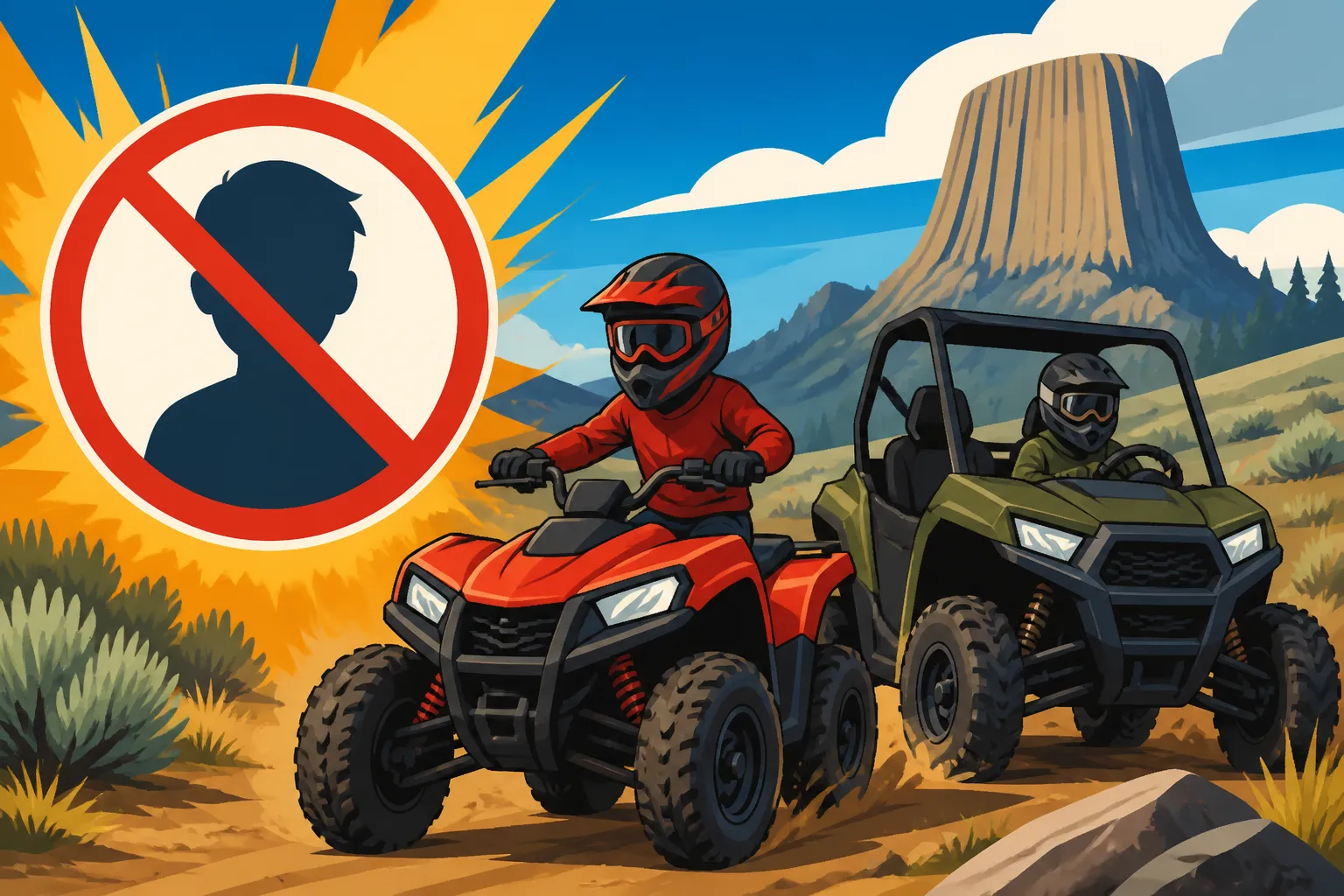
Now, let's talk about those specific rules for younger riders. In Wyoming, generally speaking, if you're riding an ATV or UTV on a public road that has been legally designated for ORV use (an "enrolled" road), the driver still needs a valid driver's license. This means that a 15-year-old, or anyone under the age of possessing a full driver's license, typically cannot operate an ATV or UTV on these roads, even if they're enrolled. The specific question of Unlicensed Riders 15 and Under in Wyoming highlights this exact dilemma.
There's a distinction here, however, when it comes to crossing public roads versus riding on them. Wyoming law does have provisions for ORVs to cross public roads, often at right angles, even if that road isn't enrolled for ORV use. In these limited circumstances, under specific conditions and supervision, an unlicensed rider might be able to make a direct crossing. However, this is far from giving them carte blanche to drive down the road. It's a very narrow allowance for connectivity between trails, not general road use. The ORV permit you need for your machine, which is required for riding on public land, does not act as a driver's license. It simply registers your machine for trail use. A rider still needs to meet the licensing requirements for the driver, separate from the machine's registration. So, while your machine might have its [Wyoming's Annual ORV Permit] decal proudly displayed, that doesn't confer driving privileges on an unlicensed minor for road segments.
Navigating Public Lands: Trails vs. Roads for Young Riders
When you think about riding ATVs and UTVs in Wyoming, images of vast open spaces and winding trails often come to mind. These areas are fantastic for all ages, but it's vital to understand the legal differences between riding on a designated off-road trail and attempting to use a public road, even if it's a dirt road or a gravel track. The rules for younger riders are heavily influenced by this distinction.
Designated Trails and Off-Road Vehicle Areas
Wyoming boasts an incredible network of designated trails and specific off-road vehicle (OHV) parks. These are the places where ORVs are truly in their element, and where regulations regarding age and licensing for riders are typically more permissive for minors, provided they are under appropriate supervision. For example, popular spots like [Killpecker Sand Dunes in Southwest Wyoming] near Rock Springs or the diverse terrain at [Poison Spider OHV Park Outside Casper] are designed specifically for off-road recreation. In these areas, the focus shifts from a driver's license to rider safety and competence, often with age-appropriate machine sizes and required adult supervision.
When riding on these designated trails, whether on National Forest land, Bureau of Land Management (BLM) property, or state parks, the emphasis is on the safe operation of the machine within the specified off-road environment. Most public land agencies, including the Forest Service and BLM, have rules that permit minors to operate ORVs on marked trails, usually with a responsible adult present and actively supervising. This is where a young rider can truly learn and hone their skills without the complexities and legal requirements of a public road. You'll find that [Wyoming Rules for Riding Federal Land] and [Wyoming Rules for Riding BLM Land] often outline these specific allowances for youth, emphasizing the need for proper safety gear and adult oversight rather than a driver's license. It's a fantastic environment for building confidence and experience, but it's important to remember that these privileges usually end where the designated trail meets a public road.
The Importance of Enrolled Roads
This brings us to the concept of "enrolled roads" in Wyoming, which can be a source of confusion. An enrolled road is a public road – often a county road, a Forest Service road, or a BLM road – that has been specifically designated by the relevant authority (e.g., the county commission, Forest Service, or BLM, often in conjunction with Wyoming State Parks, Historic Sites and Trails) as open for ORV use. This designation means you can legally operate your ATV or UTV on that road, treating it somewhat like a normal vehicle, but typically still under the state's motor vehicle code.
The critical point for unlicensed riders 15 and under is this: even if a road is "enrolled" for ORV use, the requirement for the operator to possess a valid driver's license often still applies. Enrolled roads are still, at their core, public roads. The enrollment simply grants ORVs the same access privileges as other licensed motor vehicles. Therefore, a 14-year-old who doesn't have a driver's license generally cannot drive an ATV or UTV on an enrolled road, even if it's a dirt track connecting two trail segments. This can be incredibly frustrating for families who simply want to get from one part of the trail system to another without trailering their machines for a short distance. Imagine you're deep in the Medicine Bow National Forest, and a section of your route involves a couple of miles on an enrolled forest road; if your child is driving, you could be risking a citation. The law treats that enrolled road segment much like any other public thoroughfare regarding who can legally operate a vehicle on it.
Supervision and Safety Gear for Young Riders
When it comes to allowing younger, unlicensed riders, especially those 15 and under, to operate ATVs and UTVs, Wyoming places a significant emphasis on adult supervision and proper safety equipment. This isn't just about avoiding a fine; it's about safeguarding lives and preventing serious injuries in an activity that carries inherent risks.
Required Supervision for Minors
Wyoming law is quite clear: if a minor is operating an ORV, particularly on public lands (trails, open play areas, or even just crossing a road), they generally must be under the direct supervision of a responsible adult. This isn't a passive supervision where the adult is back at camp reading a book while the kids tear around. "Direct supervision" typically means the adult is in a position to see, hear, and immediately respond to the actions of the young rider. Often, this means riding a separate machine in close proximity or, in the case of a multi-passenger UTV, being in the passenger seat.
For riders under 16, specifically when they are on an enrolled trail, the requirement is often for a licensed adult to be present and supervising. This ensures that an experienced and responsible individual can guide the young rider, enforce safe practices, and intervene if necessary. The specific language in [Wyoming Rules for Riding a Rider Under 16 on a Trail] elaborates on these guidelines, highlighting the responsibility that parents or guardians bear. It's about more than just pointing them in the right direction; it's about actively mentoring them in safe and responsible off-road operation. For instance, if your 12-year-old is on a youth quad, you should be right there with them, teaching them how to navigate obstacles, respect trail etiquette, and understand the capabilities of their machine. This direct involvement is paramount for safety and legal compliance.
Helmets and Essential Safety Equipment
Safety gear is non-negotiable for young riders, and Wyoming's laws reflect this. While specific helmet laws for adults on ORVs might vary depending on the location (e.g., trail vs. road), for minors, the rules are much stricter, especially when operating on or crossing public roads. In Wyoming, riders under the age of 18 are required to wear a helmet when operating an ORV on public lands or public roads that are open to ORVs. This isn't just a suggestion; it's a legal mandate designed to protect against head injuries, which are among the most serious and common types of injuries in ATV/UTV accidents. The details are clearly laid out in resources like [Wyoming Helmet Law for ATV Riders] and [Wyoming Helmet Law for Passengers], ensuring that everyone understands their obligations.
Beyond helmets, other essential safety equipment plays a crucial role. This includes eye protection (goggles or a face shield), sturdy over-the-ankle boots, long pants, and a long-sleeved shirt or jacket. These items protect against flying debris, scrapes, branches, and the elements. For UTV riders, who might feel a false sense of security due to the roll cage and seatbelts, remember that helmets are still critical, especially for minors. Reputable aftermarket brands like SuperATV offer a wide range of youth-specific safety gear and accessories, from smaller, more comfortable helmets to sturdy grab handles and harnesses designed for smaller passengers, ensuring that young riders are properly secured and protected. Investing in quality gear is just as important as the machine itself. Making sure your child is properly outfitted minimizes risk and maximizes enjoyment.
Understanding the Machine: ORV vs. MPV Classifications
The type of off-road vehicle your young rider is operating also plays a significant role in determining where they can legally ride and under what conditions. Wyoming has distinct classifications for various machines, and understanding these differences is key to staying within the bounds of the law, especially when considering public road access for unlicensed riders 15 and under.
Standard Off-Road Vehicles ORV
Most traditional ATVs (All-Terrain Vehicles) and dirt bikes fall under the "Off-Road Vehicle" (ORV) classification in Wyoming. These machines are primarily designed for off-highway use on trails, open play areas, and private property. They are robust, capable of handling rugged terrain, and built for adventure away from paved roads. For these ORVs, an annual permit is required for use on public lands, which you can learn more about in [Registering an ORV in Wyoming] and understanding [Why Wyoming Issues a Decal, Not a Plate] instead of a traditional license plate. However, obtaining this permit for the machine does not automatically grant road-legal status to the vehicle, nor does it override the driver's licensing requirements for public road operation.
The important takeaway here for our younger, unlicensed riders is that standard ORVs are generally not street legal in Wyoming. This means that a 15-year-old, even with an ORV permit affixed to their machine and under adult supervision, cannot legally operate a standard ATV or dirt bike on a public road in Wyoming. There are very limited exceptions for direct crossings between designated trails, but these are highly specific and do not constitute general road use. The primary domain for ORVs, particularly for youth, remains designated off-road trails and private property. Even if a particular road is enrolled for ORV access, the underlying requirement for the operator to be licensed for that type of public road driving remains firmly in place. This can be a point of confusion, as many assume that if the road is open to ORVs, any ORV operator is permitted. This is not the case for unlicensed drivers.
Multipurpose Vehicles MPV and Road Legal Conversion
Then we have the Multipurpose Vehicle (MPV) classification, which largely encompasses side-by-sides (UTVs) that meet certain criteria. Wyoming defines MPVs as having four wheels, a curb weight between 300 and 3,000 pounds, and a seat or seats at least 24 inches from the ground. Unlike traditional ATVs, MPVs can be made street legal in Wyoming by meeting specific equipment requirements (like headlights, taillights, mirrors, and horns) and undergoing a titling and plating process through the county clerk and treasurer. This opens up the possibility of riding these machines on many public roads, effectively bridging the gap between off-road adventure and on-road travel. You can dive deeper into this process with [Wyoming's MPV Path to the Road] and by understanding [Wyoming MPV Street Legal Requirements].
However, and this is a crucial distinction for our discussion of unlicensed riders 15 and under, even if a side-by-side (MPV) is fully street legal and plated for road use, the operator still must possess a valid driver's license. Making an MPV street legal in no way exempts the driver from standard motor vehicle licensing laws. This means that an unlicensed 15-year-old, regardless of how capable they are at driving an MPV off-road, cannot legally drive a street-legal side-by-side on public roads in Wyoming. The conversion process merely makes the vehicle compliant for road use; it doesn't alter the driver's qualifications. For families looking to enhance their MPV's road-legal capabilities, companies like SuperATV offer a range of essential accessories, from DOT-approved windshields and mirrors to turn signal kits, that help meet those stringent street-legal requirements, but remember, the driver's license is still key.
Penalties and Best Practices for Riding with Youth
Understanding the rules and classifications is one thing, but knowing the potential consequences of not following them, and adopting best practices for riding with younger individuals, is equally important. It's not just about avoiding legal trouble; it's about fostering a culture of safety and responsibility within your riding family.
Consequences of Non-Compliance
Ignoring Wyoming's regulations regarding unlicensed riders, especially those 15 and under, on public roads can lead to a range of undesirable outcomes. The most immediate and common consequence is a citation or fine from law enforcement, whether it's a game warden, Forest Service officer, or county sheriff's deputy. These fines can vary, but they can quickly put a damper on a fun outing. For example, operating a machine without the proper permit, or operating it on a restricted road, can lead to penalties, and allowing an unlicensed minor to drive on an enrolled public road where a license is required falls squarely into this category. Resources like [Wyoming Fines for Riding Without a Permit] give you an idea of the costs associated with common violations, and an unlicensed driver on a public road is often considered a serious infraction.
Beyond monetary penalties, there are more significant risks. If an accident were to occur while an unlicensed minor was operating an ORV on a public road, the legal ramifications for the supervising adult could be severe. This could include liability issues, insurance complications, and even criminal charges depending on the nature of the incident and any injuries sustained. Your insurance policy might not cover incidents that occur due to illegal operation. Ultimately, the greatest consequence is the potential for injury or worse. Laws are put in place to ensure public safety, and bypassing them, especially with vulnerable younger riders, significantly increases the risk of accidents. No scenic ride is worth putting a child's safety, or your family's well-being, at risk.
Tips for Safe and Legal Riding with Kids
So, how can you ensure your family rides safely and legally in Wyoming, especially with those energetic young riders 15 and under? It all starts with preparation and a commitment to responsible riding.
- Know Before You Go: This cannot be stressed enough. Before heading out, research the specific rules for the area you plan to ride. Not all trails are open to all machines, and not all roads are open to ORVs, let alone unlicensed drivers. Check with the local Forest Service, BLM office, or Wyoming State Parks for maps and current regulations. These agencies can provide invaluable, up-to-date information on designated routes and any seasonal closures or restrictions.
- Emphasize Training and Skill: Encourage your young riders to take an ATV or UTV safety course. While not always legally mandated for trail use in Wyoming, these courses teach essential riding skills, risk assessment, and responsible behavior. Even if they're naturally skilled, formal training can reinforce good habits and introduce techniques for various terrains.
- Age and Machine Appropriateness: Ensure your child is riding a machine that is appropriate for their age, size, and skill level. A youth quad designed for smaller riders is vastly different from a full-sized adult machine. Never put a child on a machine that is too powerful or too large for them to safely control.
- Constant, Direct Supervision: When a minor is riding, especially on any public land, maintain direct and active supervision. This means being able to see, hear, and immediately assist them if needed. Lead by example in wearing all required safety gear and following all rules.
- Utilize Designated Areas: Take full advantage of Wyoming's fantastic designated off-road vehicle parks and trails. These are the safest and most appropriate places for young, unlicensed riders to enjoy their machines without the complexities of road regulations.
- Equip for Safety: Always ensure your child has the proper safety gear, including a DOT-approved helmet, eye protection, sturdy footwear, long pants, and long sleeves. For UTVs, ensure seatbelts are always worn. Brands like SuperATV also provide specialized accessories like safety flags, mirrors, and fire extinguishers that are good additions for any off-road machine, further enhancing safety for all riders.
- Teach Trail Etiquette: Instill good trail manners, such as yielding to horses and hikers, staying on marked trails, packing out what you pack in, and respecting wildlife and private property.
By following these best practices, you can create a safe, enjoyable, and legally compliant riding experience for your entire family, allowing your young riders to develop a lifelong love for the sport responsibly.
| Scenario | Rider Age 15 & Under | Driver's License Required | ORV Permit Required (for machine) | Helmet Required (for rider) | General Legality for Driver |
|---|---|---|---|---|---|
| Private Property (Owner Permission) | Yes | No | No | Recommended | Generally Permitted |
| Designated Off-Road Trail (Public Land) | Yes (with supervision) | No | Yes | Yes | Generally Permitted (with supervision) |
| Enrolled Public Road (ORV Allowed) | No | Yes (for driver) | Yes | Yes | Not Permitted (if unlicensed) |
| Crossing a Public Road (Non-Enrolled) | Yes (briefly, with supervision, specific conditions) | No (for direct crossing, specific conditions) | Yes | Yes | Highly Restricted, Specific Rules Apply |
| Street-Legal MPV on Public Road | No | Yes (for driver) | Yes (plated as MPV) | Yes | Not Permitted (if unlicensed) |
Disclaimer
This article is for general informational purposes only and does not constitute professional advice. Laws, prices and regulations vary by location and change over time. Consult a qualified professional for guidance on your specific situation.