Wyoming Stage Restrictions in a Dry Summer
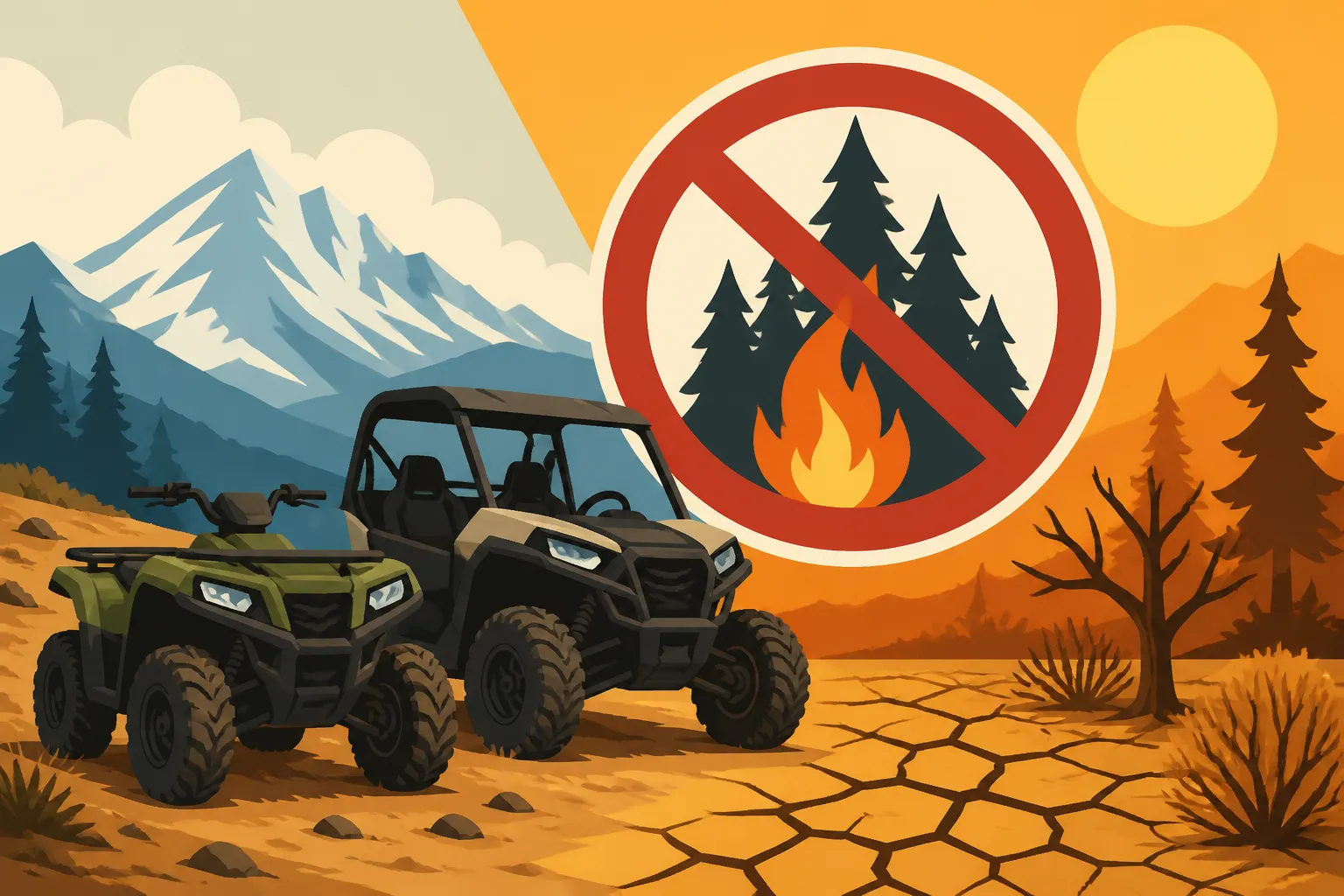
Dry summer conditions can change a Wyoming ATV or UTV ride with little notice. A fire restriction may limit campfires, smoking, equipment use, or travel in certain areas, but the rules depend on who manages the land and what the order says. Here’s how to check the restrictions, understand what they may mean for your machine, and avoid assuming your permit gives you access.
What Wyoming fire stages mean for ATV and UTV riders
Fire restriction stages are a way for authorities to describe escalating limits during periods of elevated fire danger. They are not one statewide rulebook: the restrictions that apply can differ by county, land manager, and specific area. A stage number alone does not tell you exactly what you may do on a trail.
An order might limit activities such as building a campfire, smoking, or operating certain equipment. It may also restrict vehicle use or close specific roads and trails. Those limits are separate from an ATV or UTV permit. A permit does not override a fire order, a route closure, or a land manager’s access rules.
It also helps to distinguish a fire-danger rating from a restriction. A high danger rating is a warning about conditions; an official restriction or closure is the rule you must follow. Check the order itself rather than relying on a general fire-danger map or an old post about conditions in the area.
| What you see | What it tells you | What to check before riding |
|---|---|---|
| Fire-danger rating | Conditions may be dry or hazardous | Whether an official restriction or closure is in effect |
| Stage restriction | Some activities are limited under a local order | The exact activities, location, dates, and exceptions listed |
| Road or trail closure | A particular route or area is closed | Whether your planned route enters or crosses the closed area |
| Permit or decal | The machine has met a registration or access requirement | Whether the route is open and your use is allowed under current orders |
The word “stage” does not guarantee the same restrictions from one place to another. One order might focus on open flames, while another may include equipment or vehicle-related limits. Even when two areas use the same stage label, read each order separately.
Dry vegetation, wind, and heat can make a small ignition difficult to control. A machine’s hot exhaust or a mechanical problem can add risk, especially when you stop in dry grass or ride through vegetation. Restrictions may be intended to reduce ignition risk, but their exact requirements come from the local order. Review Wyoming Rules for Riding During Fire Season and Wyoming Fire Restrictions That Close Trails when planning around changing conditions.
How restrictions can affect your machine and route
A fire restriction can affect more than where you camp. Depending on the order, it may prohibit particular activities, limit equipment use, or close routes altogether. Do not assume that a trail remains open just because it appears on a map, or that riding is allowed because other people are using it.
Check the order, not just the stage number
Read the current notice for the place you plan to ride. Look for:
- The area covered, including named roads, trails, forests, or other boundaries.
- The start date and any end date or review condition.
- Which activities are prohibited or limited.
- Whether vehicle travel or access is restricted.
- Any stated exceptions and the conditions attached to them.
- Where updates or closure notices are posted.
If the notice is unclear, contact the land manager or local authority responsible for the route before you go. Avoid relying on a restriction from a neighboring county or a different public-land unit; its boundaries and terms may not apply to your destination.
Know who controls each part of the ride
A day’s route may cross land managed by more than one agency or owner. A county road, a federal route, and private property can each have different access rules. Check the restrictions and closures for every part of the planned ride, not only the trailhead.
For national forest routes, start with the relevant forest’s current travel information and orders. Wyoming Rules for Riding a National Forest explains why route access depends on the land manager’s designations. If your route uses Bureau of Land Management ground, check the applicable BLM notices as well; Wyoming Rules for Riding BLM Land covers the separate access considerations.
A travel map is useful, but it may not reflect a new temporary closure. Compare it with current signs and notices. If a sign on the ground says a route is closed, do not treat an older map or an open-looking track as permission to continue. Wyoming Trail Maps and MVUMs offers more context on using maps for route planning, while When a Sign on the Ground Says Closed addresses a common map-versus-sign question.
Treat equipment requirements as a separate check
A restriction may call out equipment or activities, but baseline requirements still matter. Make sure your machine is in good working order and follow any applicable spark-arrester and sound rules. A spark arrester is not a substitute for checking whether a route is open, and having one does not cancel a specific restriction.
Avoid stopping where a hot machine could contact dry grass or brush. Use established pullouts where available, and do not park over vegetation if you can safely choose a bare, durable surface instead. This is sensible fire prevention, not a replacement for the order’s actual requirements.
Do not assume that a machine’s permit or decal is a fire-season authorization. It addresses a separate requirement. Wyoming’s Enrolled Roads and Trails explains why riding access depends on designated routes, while Why Wyoming Honors No Other State’s Registration covers the separate permit issue for visitors. Neither a permit nor an out-of-state registration makes a closed route open.
A practical pre-ride check during a dry summer
Conditions can change between planning a trip and reaching the trailhead. Build a short verification step into your routine, especially if the ride crosses several jurisdictions or you plan to camp.
- Mark the whole route. Identify the trailhead, planned roads and trails, fuel or rest stops, and any area where you might camp. Note which authority manages each segment where possible.
- Check current restrictions and closures. Look for official orders from the relevant land managers and local authorities. Confirm that the information covers your destination and planned dates.
- Read the wording. Find out whether the order affects only activities such as fires or smoking, or also limits equipment, vehicle access, or route use. Do not infer permissions from the stage label.
- Compare the order with the map. Check whether a closure overlaps your route. Be ready to turn around or choose a different open route if the status is uncertain.
- Recheck before departure. A restriction can be updated after you first plan the trip. Check again close to the ride, then observe signs and posted notices on site.
- Have a backup plan. Choose an alternative route or riding area that you have also checked. If a closure blocks your plan, do not try to bypass it on an unmarked track or across private property.
A phone can make notices easier to check, but do not count on having a reliable signal at the trailhead or along the route. Save useful maps and contact details before leaving service, and follow posted signs even if a downloaded map shows the route as open.
If an order seems to conflict with a sign or other notice, stop and verify with the responsible authority rather than guessing. A restriction may cover a smaller area than a broad map suggests, or the map may not yet show a temporary change. When you cannot confirm that your route is open, choose a route whose status is clear.
Keep fire prevention in mind even when no special restriction is posted. Carry out trash, avoid parking over dry vegetation, and do not leave a machine running unattended. If you see smoke or a new fire, move to a safe place and report it through the appropriate emergency or land-management channel. Do not ride toward a fire to investigate.
Common mistakes to avoid
Assuming the same stage means the same rules everywhere. Stage labels are not enough to determine what is allowed. The order’s location, dates, and specific terms matter.
Confusing a fire warning with a closure. A warning signals elevated danger; a closure or restriction imposes limits. Check for an official order and read it fully.
Treating a permit as permission to ride anywhere. Permit requirements and land access are different questions. A valid decal does not authorize travel on a closed route or across land where access is not allowed.
Relying only on an old map or a trailhead conversation. Maps and informal reports may not reflect current conditions. Check official notices and obey signs on the ground.
Continuing when the route status is unclear. Turning around is safer than trying to interpret an ambiguous boundary while riding. Use a confirmed open alternative or postpone the ride.
Dry-summer rules are local and can change as conditions evolve. A few minutes spent checking current orders, route status, and signs can prevent a long detour or an avoidable violation. For broader context on seasonal access, see Wyoming Fire Season and Trail Access.
Disclaimer
This article is for general informational purposes only and does not constitute professional advice. Laws, prices and regulations vary by location and change over time. Consult a qualified professional for guidance on your specific situation.