Wyoming Rules for Opening a Gate
There's nothing quite like the open expanse of Wyoming, the hum of your ATV or UTV beneath you, and a vast horizon calling your name. But as you explore the backcountry, whether on designated trails, forest roads, or wide-open plains, you're bound to encounter gates. And let's be honest, those gates can be a real head-scratcher. What do you do when you come across one? Can you open it? Do you close it behind you? It’s a common source of confusion that can quickly turn a relaxing ride into a moment of anxiety or, worse, a dispute with a landowner or a citation from a ranger. This guide is here to clear up the mystery, helping you navigate Wyoming’s gates with confidence and respect for the land and its people.
Understanding Gates in Wyoming's Backcountry
Wyoming is a state deeply rooted in ranching, agriculture, and a strong tradition of public land use. When you're out riding your machine, you'll inevitably encounter various types of fences and gates. It’s not always immediately clear what purpose they serve or who owns the land they enclose. This ambiguity is a source of frustration for many riders who just want to enjoy the trails without stepping on anyone's toes or breaking any unwritten rules.
Gates Don't Always Mean Private Land
One of the biggest misconceptions riders have is that a fence or gate automatically signifies private property and therefore an impassable boundary. In Wyoming, that's simply not always the case. You'll find gates on federal lands administered by the Bureau of Land Management (BLM) and the Forest Service, on state trust lands, and of course, on private property. The presence of a gate is often more about managing movement—of livestock, wildlife, or even water—than it is about definitively marking private versus public access.
Imagine you're cruising along a perfectly legal, enrolled trail on BLM ground. Suddenly, you come to a sturdy wooden gate, perhaps with a "Please Close Gate" sign. Your first thought might be, "Oh no, did I take a wrong turn? Am I trespassing?" But more often than not, you're exactly where you're supposed to be. These gates are crucial for [Wyoming Rules for Riding a Grazing Allotment], helping ranchers keep their cattle or sheep contained within their leased areas, preventing them from wandering onto highways or into areas where they shouldn't be. It's a system that balances public access with the needs of the agricultural community.
Why Gates Exist in Wyoming's Landscape
There are several vital reasons why gates are such a common sight in Wyoming's vast open spaces, and understanding these reasons helps to explain the rules around them.
- Livestock Management: This is perhaps the most prevalent reason. Wyoming is ranch country, and gates are essential for rotational grazing, separating different herds, and keeping animals off roads or out of sensitive areas. A simple gate can be the difference between a rancher's livelihood and a lost herd.
- Wildlife Management: Sometimes, gates or fences are strategically placed to help manage wildlife, such as elk, deer, or pronghorn. They might direct animals to specific migration corridors or keep them out of areas where they could conflict with human activity or agriculture.
- Property Boundaries: While not exclusively indicating private land, gates often mark a change in land ownership or management responsibility. It might be the boundary between a national forest and private ranch land, or between two different grazing leases.
- Controlling Access: In some cases, gates are used to control vehicle access for various reasons. This could be for seasonal closures to protect roads during muddy conditions, to allow for wildlife birthing seasons, or to prevent motorized travel into wilderness study areas. You might also find them on forest roads that are only open during specific times of the year.
Knowing these reasons helps foster a sense of shared responsibility. When you encounter a gate, it's not just an obstacle; it's a functional part of the working landscape. Treating it with respect means understanding its purpose and adhering to the guidelines set forth by land managers and landowners.
The Golden Rule: "Leave Gates As You Find Them"
If there's one piece of advice you take away from this entire guide, let it be this: Leave gates as you find them. This simple mantra is the bedrock of responsible backcountry travel in Wyoming, especially when you're on an ATV or UTV. It shows respect for private property, public lands, and the hard work of those who live and work the land.
Always Close a Gate You Opened
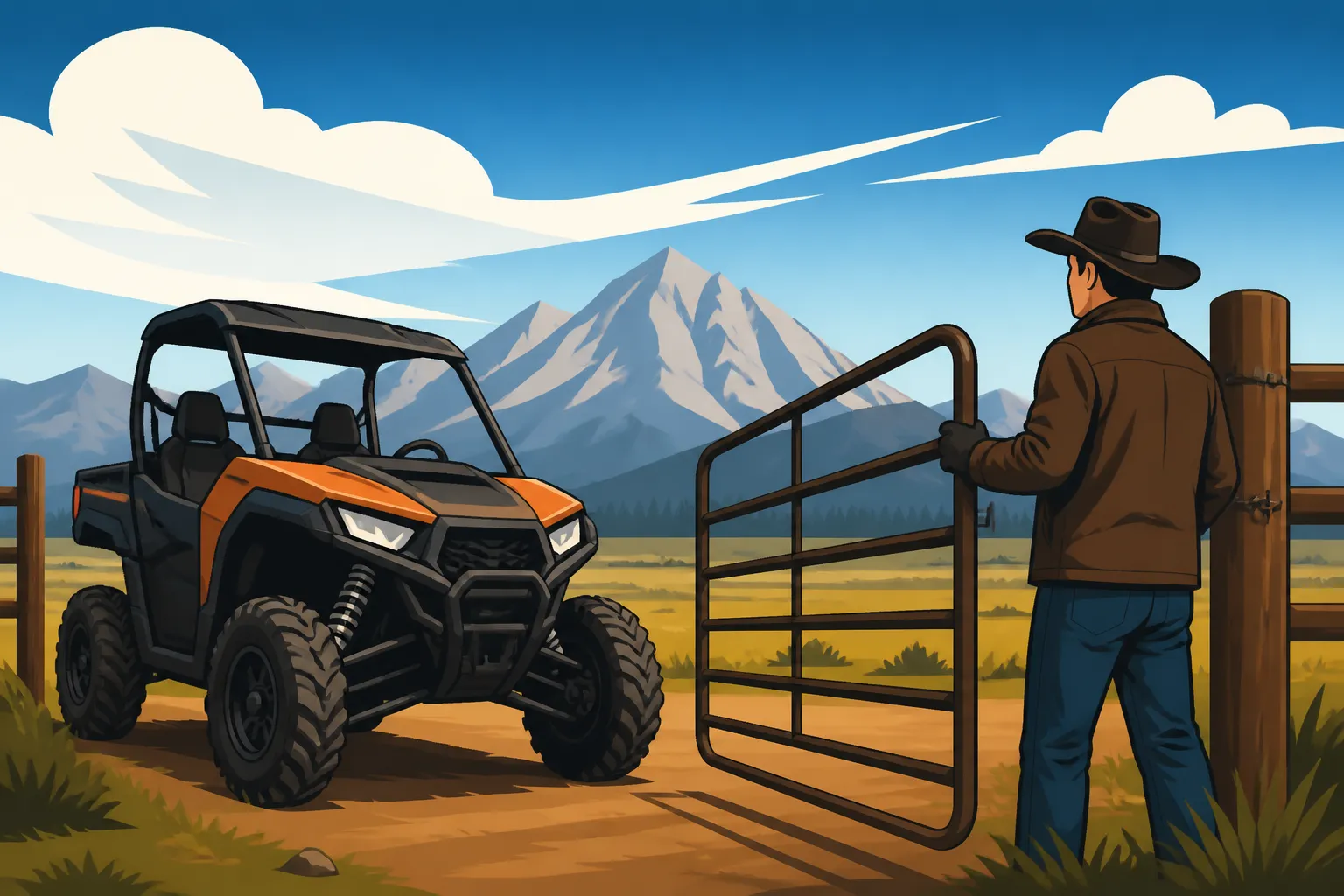
This is the most crucial part of the golden rule. If you arrive at a gate that is closed, and you open it to pass through, you must close it securely behind you. There are no exceptions to this rule. Imagine riding along a dusty two-track, you open a gate, pass through, and continue on your way, forgetting to latch it. Just an hour later, a rancher's prize-winning Hereford bull could wander out onto a highway, causing a serious accident, or mingle with another herd, disrupting breeding programs and causing economic loss. The ripple effect of a single unclosed gate can be devastating.
The consequences for leaving a gate open can range from a strongly worded conversation with an upset rancher to legal repercussions for property damage or livestock loss. It also gives all off-road riders a bad name, potentially leading to stricter access rules or even closures of routes that were once open. Every rider's actions reflect on the entire community. Make it a habit: open, ride through, stop, close, latch, and double-check. Don't leave a weak latch or a gate that could easily swing open with the next gust of wind.
What if a Gate is Already Open?
Now, here's the flip side: if you come across a gate that is already open, the general rule is to leave it open. There's a reason it's open, and you closing it could cause just as much trouble as leaving a closed gate open. Perhaps it's part of a daily cattle movement, or a rancher is actively working in the pasture and needs constant access. Maybe it's a seasonal gate that's been opened for summer grazing.
However, use your common sense. If an open gate looks out of place—say, it's a robust livestock gate along a clear boundary, and there's no visible activity nearby, or it looks like it's been forced open—you might pause. In such rare situations, if you genuinely believe a gate should be closed and it looks like an accidental oversight, you could consider closing it. But this is a judgment call that requires a good understanding of the local area and its typical practices. When in doubt, stick to the "leave it as you find it" rule. It's usually the safest bet.
Locked Gates and "No Trespassing" Signs
This is where the rules become crystal clear and absolutely non-negotiable. If a gate is locked, or if there's a "No Trespassing" sign (especially if accompanied by purple paint on posts or trees, which also indicates private property in Wyoming), you do not proceed. Attempting to cut a lock, climb a fence, or force entry onto land clearly marked as private is trespassing, and it's illegal. [Wyoming Trespass Rules for Riders] are serious, and violations can lead to hefty fines, legal action, and the loss of riding privileges.
Always respect these boundaries. No trail is worth breaking the law or infringing on someone's property rights. If your route on a map shows a public trail through what turns out to be a locked gate on private land, it's possible the map is outdated, the access has changed, or you've misinterpreted the markings. Turn around and find an alternative route. This is where planning your ride beforehand, perhaps with a quality GPS unit with preloaded maps or paper maps, can really help you avoid these situations.
Navigating Different Land Types and Gates
Wyoming's landscape is a patchwork of federal, state, and private lands, each with its own set of rules and nuances when it comes to gates. Understanding these distinctions is key to being a responsible rider.
Gates on Federal Lands (BLM, Forest Service)
Federal lands like those managed by the Bureau of Land Management (BLM) and the U.S. Forest Service make up a significant portion of Wyoming. These lands are often used for multiple purposes, including recreation, grazing, and timber harvesting. It’s very common to encounter gates on these public lands.
These gates are primarily for [Wyoming Rules for Riding a Grazing Allotment], ensuring that cattle or sheep remain in their designated pastures. They might also be used to close off areas seasonally, preventing damage to wet roads in spring or protecting sensitive wildlife during calving season. The rule of "leave gates as you find them" applies absolutely here. A Forest Service Ranger or BLM Law Enforcement Officer will hold you accountable for not securing a gate.
When riding on federal land, always carry a travel management map for the specific area you're in. These maps clearly mark open routes and any seasonal closures, which might be indicated by a closed or locked gate. If a gate is clearly marked as closed for the season, even if it's not locked, you should respect that closure. Driving around a gate, even if it seems easy, is considered riding off-route and can lead to fines and environmental damage. Gear up properly with robust equipment from brands like SuperATV, ensuring your machine can handle the designated routes without needing to deviate. Their durable accessories can help you clear minor obstacles on an open trail, but never for bypassing a closed gate.
Gates on State Trust Land
Wyoming's State Trust Lands are managed by the Office of State Lands and Investments (OSLI) with a primary directive to generate revenue for public education and other state institutions. These lands are often leased for grazing, mineral extraction, or other commercial purposes, but they also offer recreational opportunities.
To legally recreate on State Trust Lands, including riding your ATV or UTV, you typically need to purchase a [Wyoming State Trust Land Permit Cost]. This permit acts as your permission to be there. Just like on federal lands, gates on State Trust Lands are primarily for livestock management. The "leave gates as you find them" rule is paramount. Disregarding a gate on State Trust Land can not only put you in violation of the permit's terms but also negatively impact the rancher leasing the land, potentially affecting their ability to generate income for the state. Always ensure you have your permit with you and understand the specific rules for the area you're visiting.
Gates on Private Land
This is the simplest, yet most frequently misunderstood, category. If you encounter a gate that is unequivocally on private land, you need explicit permission from the landowner to open it and pass through. Period. Even if a private road appears to connect two public routes, you cannot assume you have access.
Ranchers in Wyoming are generally friendly and understanding, but their livelihood often depends on the integrity of their fences and gates. Approaching them respectfully and asking for permission, if you truly need to cross private land to access public ground, is always the best approach. However, understand that they are within their rights to deny access. Many private landowners will post clear signs or keep gates locked to prevent unauthorized entry. Always look for "No Trespassing" signs, purple paint, or locked gates as strong indicators that you should not proceed. [Wyoming Landowner Permission Rules] are designed to protect private property, and riders must respect them. Violating these rules is a serious matter.
Practical Tips for Encountering Gates
Riding through Wyoming's backcountry means being prepared for anything, and that includes encountering gates. Having a strategy and the right mindset can make all the difference.
Safety First When Opening Gates
Before you even touch a gate, think about safety. Stop your machine in a safe spot where it won't roll or block traffic (if any). If you're on a hill, apply the parking brake. Look around for livestock, other vehicles, or any hazards. You don't want to open a gate only to have a stampede of cattle rush out, or another rider come around a blind corner.
Disembark from your machine carefully. Wear gloves, as gate latches can be rusty, sharp, or covered in mud and grime. Many gates are heavy and might swing unexpectedly. Keep children and pets away from the gate opening. When you open it, secure it so it doesn't swing back and hit you or your machine. Walk through, move your machine, and then walk back to close and latch the gate securely. This process might seem slow, but it's essential for safety and ensuring the gate is properly secured.
Equipment for Gate-Heavy Rides
When you're planning a ride in an area known for gates or grazing allotments, a little preparation goes a long way.
- Gloves: As mentioned, durable gloves are a must. They protect your hands from splinters, rust, and dirt.
- Tools: A small multi-tool or a pair of pliers can sometimes be helpful if a latch is stiff or bent, though you should never attempt to force or alter a gate's mechanism if it's truly stuck.
- Maps and GPS: Carrying detailed paper maps (like Forest Service MVUMs or BLM maps) and/or a reliable GPS unit with updated trail data is invaluable. Knowing your planned route and being able to identify land ownership can help you anticipate gates and avoid private property.
- Winch: While not for opening gates, a sturdy winch from a brand like SuperATV can be a lifesaver for other trail obstacles. If a tree has fallen across a trail before a gate, and it's a legal, open route, your SuperATV winch could help clear it, ensuring you don't have to ride off-trail to bypass it. This is about being prepared for other challenges on a gate-filled ride, not about bypassing gates themselves.
Respecting Property and People
The vast majority of issues concerning gates boil down to respect—respect for the land, respect for landowners, and respect for other users. When you encounter a gate, remember that someone built it, maintains it, and relies on it for their livelihood.
- Be Polite: If you encounter a rancher or land manager near a gate, offer a friendly wave and a greeting. A little courtesy goes a long way.
- Stay on Designated Routes: Don't ever drive around a closed gate, even if it looks like an easy bypass. This creates new, unauthorized trails, causes erosion, and undermines the rules designed to protect the landscape. [Wyoming Rules for Riding a Designated Route] are there for a reason.
- Mind Your Manners with Livestock: If you see cattle, sheep, or horses in a pasture near a gate, proceed slowly and quietly. Don't harass or disturb them. [Wyoming Rules for Riding Near Livestock] dictate that you give animals a wide berth and keep noise to a minimum. Remember, their welfare is often directly tied to those gates.
- Report Issues: If you find a gate that is damaged, broken, or clearly left open by someone else in a way that seems problematic, consider reporting it to the appropriate land management agency (BLM, Forest Service) or, if you know the landowner, directly to them. This helps everyone keep the trails and pastures safe and functional.
By embracing these practical tips and adhering to the "leave gates as you find them" principle, you'll not only enjoy your Wyoming ATV and UTV adventures more but also contribute positively to the riding community's reputation.
Wyoming Gate Rules at a Glance
Here's a quick summary of how to approach gates you encounter while riding in Wyoming:
| Scenario | Action to Take | Reason/Context |
|---|---|---|
| Gate is Closed | Open, pass through, and securely close it behind you. | Prevents livestock escape, maintains property boundaries, respects land managers. |
| Gate is Open | Leave it open. | Likely open for a reason (e.g., active grazing, seasonal access). |
| Gate is Locked | Do NOT attempt to open or bypass. Turn around. | Signifies private property or a hard closure. Trespassing is illegal. |
| "No Trespassing" Sign/Purple Paint | Do NOT proceed. Turn around immediately. | Clear indication of private property; entry is strictly prohibited. |
| Gate is Damaged/Broken | Do not try to fix or use if unsafe. Report to authorities. | Safety concern, may not hold livestock. Avoid creating further damage. |
Remember, the vast majority of gates are there for a reason, and respecting them is a core part of being a responsible off-road enthusiast in Wyoming.
Disclaimer
This article is for general informational purposes only and does not constitute professional advice. Laws, prices and regulations vary by location and change over time. Consult a qualified professional for guidance on your specific situation.