Wyoming Rules for Riding a Ditch
It's a common sight out here in Wyoming – a wide-open landscape, often with a ditch running alongside a road, perhaps looking like an inviting shortcut or a fun, less-trafficked route for your ATV or side-by-side. The temptation can be real, especially when you're just trying to get from one section of public land to another, or maybe just wanting to explore a little off the beaten path. But that innocent-looking ditch often hides a complex web of regulations, and mistaking it for a legal riding area can lead to significant headaches, fines, and even dangerous situations. This guide is here to clear up that confusion, diving deep into what Wyoming law says about riding your off-road vehicle in ditches, along shoulders, and what your legal, safer alternatives are.
The Allure and Legal Reality of Ditch Riding in Wyoming
There's no denying the appeal. You're out on your machine, perhaps a powerful side-by-side with a SuperATV lift kit, and you see a ditch running parallel to the highway or a county road. It looks like a less congested, more adventurous alternative to riding directly on the pavement, or a way to bypass busy intersections. Many riders, especially those new to the state or just passing through, might assume that because it’s not the main road, it’s fair game for off-road vehicles. Unfortunately, in most cases, this assumption is incorrect and can lead to trouble with local law enforcement or game wardens.
The fundamental issue is that ditches, while appearing separate, are generally considered part of the highway or road right-of-way. They serve crucial functions like drainage, snow storage, and containing utility lines. They are not typically maintained or designated for recreational vehicle traffic, and as such, riding an ATV or UTV in them is usually prohibited. This isn't just about technicalities; it's about safety, infrastructure protection, and managing public lands effectively. It’s important to understand that Wyoming has very specific rules about where off-road vehicles can and cannot operate, and "the ditch" rarely falls into the "can operate" category. Even if the ditch looks like a simple dirt path, it's generally still under the same jurisdiction and rules as the adjacent road.
Understanding Wyoming's Definition of "Roadway" and "Shoulder"
To fully grasp why ditches are largely off-limits, we need to understand how Wyoming law defines the various parts of a road. When we talk about roads and highways, it's not just the paved or graveled surface in the middle. The "roadway" includes the portion of a highway that is ordinarily used for vehicular travel. Then there are "shoulders," which are the unpaved or less developed areas immediately adjacent to the main roadway. Ditches often run beyond the shoulder.
Wyoming's statutes, specifically under its motor vehicle code, categorize these areas very deliberately. A ditch, while visually distinct, is generally considered part of the larger road corridor, maintained by the same agency responsible for the road itself – be it the state, county, or a local municipality. For an ORV to legally operate on or adjacent to a road, that specific section of road must be explicitly "enrolled" or "designated" for ORV use by the responsible agency. This means there will be clear signage, and it will be marked on official maps, like Travel Management Maps issued by the Forest Service or BLM. Without such designation, even riding on the shoulder is often illegal, let alone venturing into the ditch. You can learn more about specific regulations in articles like [Wyoming Rules for Riding a Highway Shoulder] or [Wyoming Rules for Riding a County Road]. These designated routes are where your ORV, perhaps with some robust SuperATV suspension components to handle the varied terrain, can truly shine without legal worries.
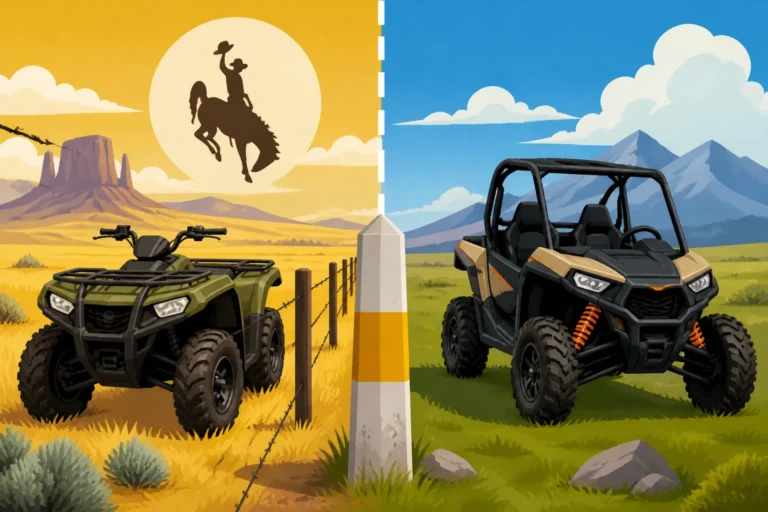
Here's a quick comparison of common road-adjacent areas and their typical legality for ORVs:
| Area Type | Typical Legality for ORVs in Wyoming (General Rule) | Key Considerations |
|---|---|---|
| Ditch | Generally Illegal | Often part of the road right-of-way, unsafe, not designated for travel. |
| Highway Shoulder | Generally Illegal (unless enrolled) | Treated as part of the road, intended for emergencies or specific vehicles. Check local rules carefully. |
| Roadway (Paved/Gravel) | Varies: Illegal unless "Enrolled" or "Designated" | Requires specific state/county/federal designation; [Wyoming's MPV Path to the Road] rules apply to street-legal machines. |
| Two-Track Road | Varies: Often Legal on public land | Common in forests/BLM; always check MVUMs or local signage. See [Wyoming Rules for Riding a Two-Track]. |
| Designated Trail | Generally Legal (with permit) | Clearly marked, requires a valid [Wyoming's Annual ORV Permit]. |
| Private Land | Legal with Owner's Permission | Owner's explicit permission required. Trespassing laws apply. |
It’s crucial to understand that simply being unpaved does not automatically make an area legal for ORV use. Many ditches and shoulders are unpaved, but they are still managed as extensions of the roadway.
The Risks and Consequences of Illegal Ditch Riding
Riding your ATV or UTV in a ditch isn't just a legal grey area; it comes with significant safety risks and potential legal ramifications.
Safety Concerns
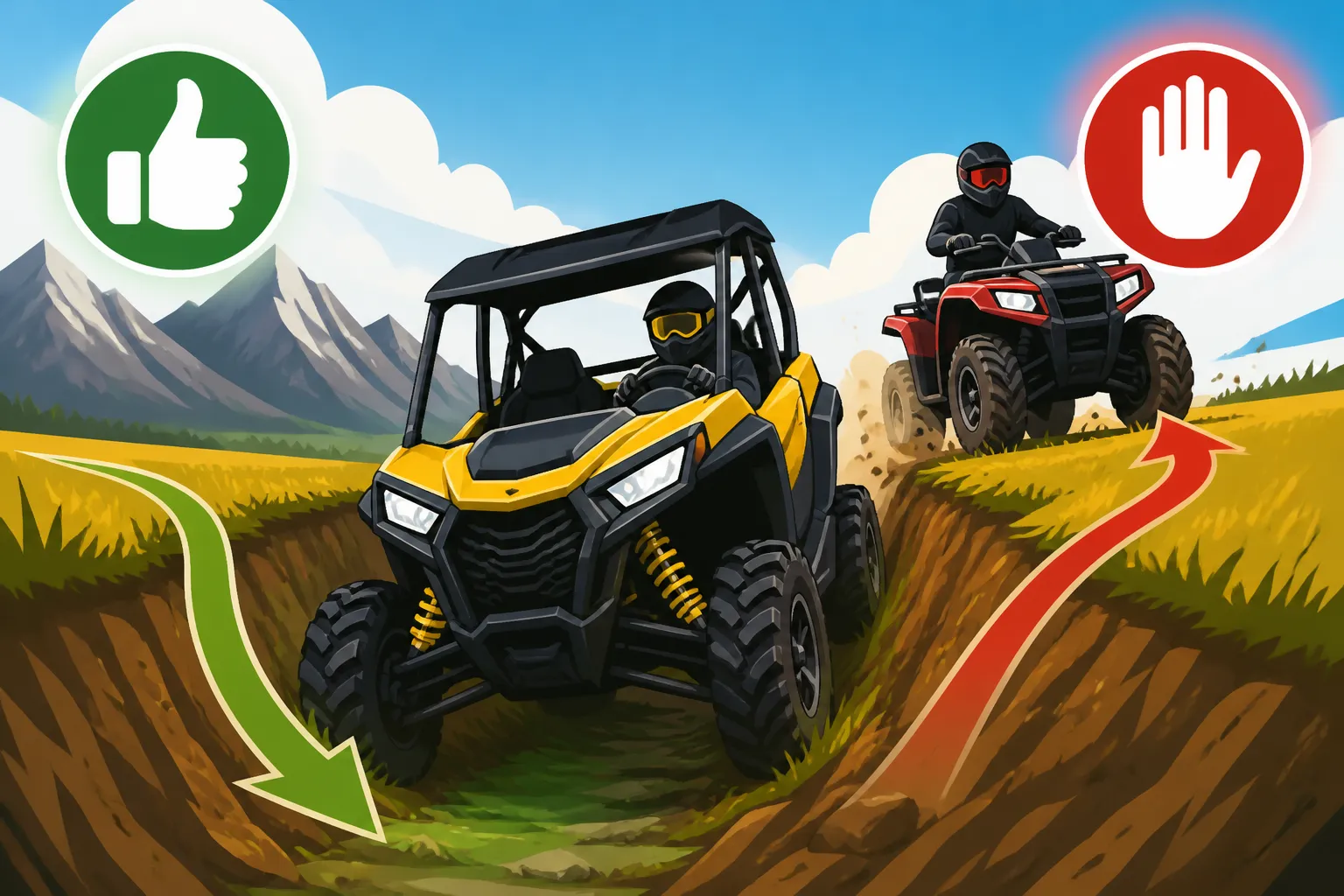
Ditches are inherently dangerous for ORV operation. They are often uneven, filled with hidden obstacles like rocks, debris, or even discarded trash. They can have steep, unstable banks that are prone to erosion, leading to rollovers. Water accumulation can create deep, unseen mud holes or swift currents that can sweep a machine away. Furthermore, ditches are often close to active roadways, meaning riders are in close proximity to high-speed vehicle traffic. This increases the risk of accidents, either by swerving into the road or causing distractions for drivers. Visibility can also be an issue; a driver on the main road might not expect an ORV to suddenly emerge from a ditch. All these factors contribute to a much higher risk of injury or even fatality compared to riding on designated trails. Even if your machine is equipped with heavy-duty protection from a brand like SuperATV, the unpredictable nature of ditch riding can still be incredibly dangerous.
Legal Penalties and Fines
Wyoming law enforcement takes illegal ORV operation seriously. If you're caught riding in a ditch that isn't a designated ORV route, you could face citations and fines. These fines can vary depending on the specific statute violated and the discretion of the officer, but they are certainly an unwelcome expense. Beyond the initial fine, there could be additional penalties for things like operating an unregistered vehicle (if you haven't obtained your [Wyoming ORV Permits Explained]), or other infractions related to operating an ORV in an unauthorized area. Repeat offenses can lead to more severe penalties, and in some cases, your machine could even be impounded. Articles like [Wyoming Fines for Riding Without a Permit] or [Wyoming Fines for Riding a Closed Road] can give you an idea of the financial consequences you might face. These are not just minor inconveniences; they can significantly impact your wallet and your enjoyment of riding.
Environmental Impact
Beyond safety and legal issues, riding in ditches can also have a negative environmental impact. Unauthorized ORV use can cause soil erosion, damage vegetation, and disturb wildlife habitats. This is particularly true in sensitive areas or during certain seasons. Land management agencies work hard to minimize these impacts on designated trails, but off-trail or off-route riding undermines these efforts, leading to environmental degradation that can take years to recover. Respecting designated routes helps preserve Wyoming's natural beauty for everyone.
Finding Legal Places to Ride Your ATV or UTV in Wyoming
So, if ditches are mostly off-limits, where can you legally ride your ATV or UTV in Wyoming? The good news is that Wyoming boasts an incredible array of legal and well-maintained trails and designated routes for off-road enthusiasts. The key is knowing where to look and understanding the local regulations.
Designated Trails and Enrolled Roads
The vast majority of legal ORV riding in Wyoming happens on designated trails within national forests, BLM lands, state parks, and on specific county roads that have been "enrolled" for ORV use. These areas are clearly marked and are often shown on Travel Management Maps (MVUMs) provided by the land management agencies.
- National Forests and BLM Lands: These federal lands offer thousands of miles of trails and roads open to ORVs. Always consult the most current MVUM for the specific area you plan to visit, as routes can open or close seasonally or due to conditions. [Wyoming's Enrolled Roads and Trails] is a great place to start your research.
- State Parks and Trails: Some state parks and state trail systems also offer ORV access. Check the Wyoming State Parks, Historic Sites & Trails website for information on specific locations.
- County Roads: Certain county roads are designated for ORV use, especially those that provide access to trails or connect legal riding areas. However, these are often marked, and riders must adhere to specific rules, including sometimes having a street-legal designation for their vehicle (an MPV) and appropriate licensing. For more on this, check out [Are ATVs Street Legal in Wyoming?] and [Wyoming's MPV Path to the Road].
Private Property with Permission
Of course, if you own private land, you can ride your ORV on your own property. You can also ride on private land owned by someone else, provided you have explicit permission from the landowner. This is absolutely critical. Riding on private land without permission is trespassing, which carries its own set of legal consequences. Always ask first, and get that permission in writing if possible, especially if you're going to be riding there regularly.
Essential Riding Etiquette and Preparation
When riding in any legal area, always remember to:
- Obtain a Permit: Every ORV operated on public land in Wyoming requires a valid [Wyoming's Annual ORV Permit]. Non-residents also need one; Wyoming does not honor out-of-state registrations.
- Stay on Marked Trails: It's not just a suggestion; it's a rule. Riding off-trail damages sensitive ecosystems and can lead to fines.
- Carry a Map: A current Travel Management Map is your best friend. Many ORVs even have GPS systems preloaded with trail maps or you can use your phone with a reliable app.
- Know the Rules: Familiarize yourself with speed limits, helmet laws (like [Wyoming Helmet Law for ATV Riders]), and other regulations specific to the area you're riding in.
- Be Prepared: Carry essential gear, including water, a first-aid kit, tools, and a way to communicate in case of emergency. Even if you've got top-of-the-line components from SuperATV on your machine, unexpected issues can still arise in the backcountry.
- Respect Others: Yield to hikers, horses, and mountain bikers. Be mindful of noise, and always pack out what you pack in.
While the idea of riding in a ditch might seem like a small shortcut or an adventurous detour, the reality in Wyoming is that it's generally illegal, unsafe, and comes with potential fines. Instead of risking it, embrace the incredible network of designated trails and enrolled roads that Wyoming proudly offers. With a little planning and adherence to the rules, you can enjoy countless miles of legal, safe, and exhilarating off-road adventures across this magnificent state.
Disclaimer
This article is for general informational purposes only and does not constitute professional advice. Laws, prices and regulations vary by location and change over time. Consult a qualified professional for guidance on your specific situation.