Stopping Before the Shoulder
It can be incredibly confusing out there when you're trying to figure out where you can and can't ride your ATV or UTV in Wyoming, especially when it comes to roads. Many riders, myself included, have pulled up to a paved or graveled public road, paused, and wondered: "Can I even cross this? Do I need to stop and look like I'm not going to ride on it? What if a warden sees me?" This guide is all about clearing up that specific confusion, focusing on the critical rule of "stopping before the shoulder" and navigating Wyoming's road regulations for off-road vehicles.
Understanding Wyoming's Road Rules for Off-Road Vehicles
Wyoming's vast, open landscapes are a paradise for off-road enthusiasts, but it's crucial to understand that not all roads are created equal when it comes to your ATV or UTV. The state has very specific distinctions between trails, designated ORV roads, and public highways where off-road vehicles are generally prohibited unless they meet strict "multipurpose vehicle" (MPV) requirements. Simply having an ORV permit doesn't grant you carte blanche to ride on any road you please. It's a common misconception that can lead to fines, citations, and even accidents.
The "Street Legal" Myth vs. Reality
Let's get one thing straight right away: having a Wyoming ORV permit, that little decal you stick on your machine, does not make your ATV or UTV street legal. Not even close. That permit is specifically for riding on [Wyoming's Enrolled Roads and Trails], which are designated routes on public lands managed by agencies like the Forest Service, Bureau of Land Management (BLM), or Wyoming State Parks. These are not your typical county roads or state highways. The ORV permit simply registers your machine for off-highway recreational use within the state's specific trail system.
For your ATV or UTV to be considered "street legal" in Wyoming, it must meet a very different set of criteria and be registered as a Multipurpose Vehicle (MPV). This process involves a title from the county clerk and a license plate from the county treasurer, which means your machine must be equipped with specific safety features like headlights, taillights, brake lights, turn signals, a horn, and mirrors. You'll also need a valid driver's license with the proper endorsement and proof of insurance. It's a completely separate pathway from simply obtaining an ORV permit, and one that is often misunderstood. The state provides a clear [Wyoming's MPV Path to the Road] for those looking to take their machine on public roads.
Navigating Intersections and Crossings
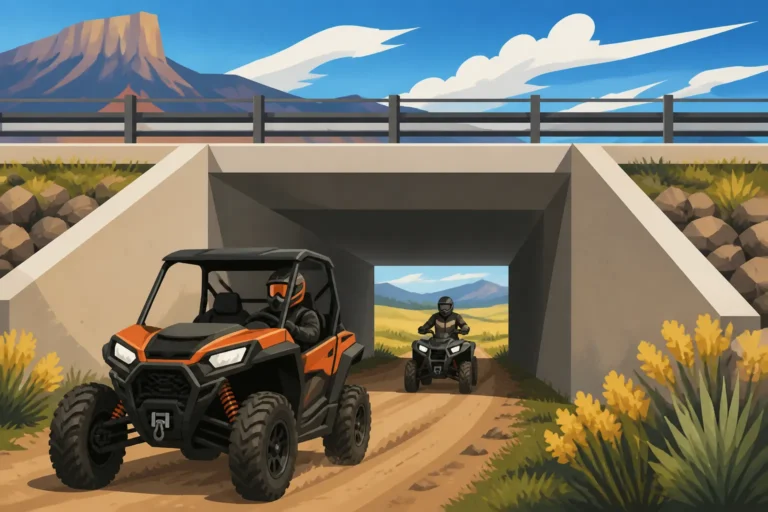
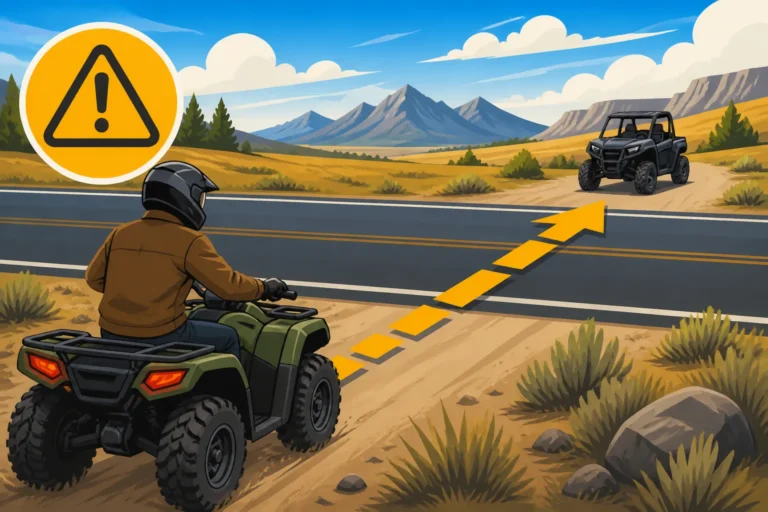
Here's where the "stopping before the shoulder" rule becomes paramount for non-MPV off-road vehicles. If you are riding on a designated ORV trail or road and encounter a paved or graveled public road that is not a designated ORV route, you are generally allowed to cross it. However, this crossing must be done with extreme caution and in a specific manner to ensure safety and comply with the law.
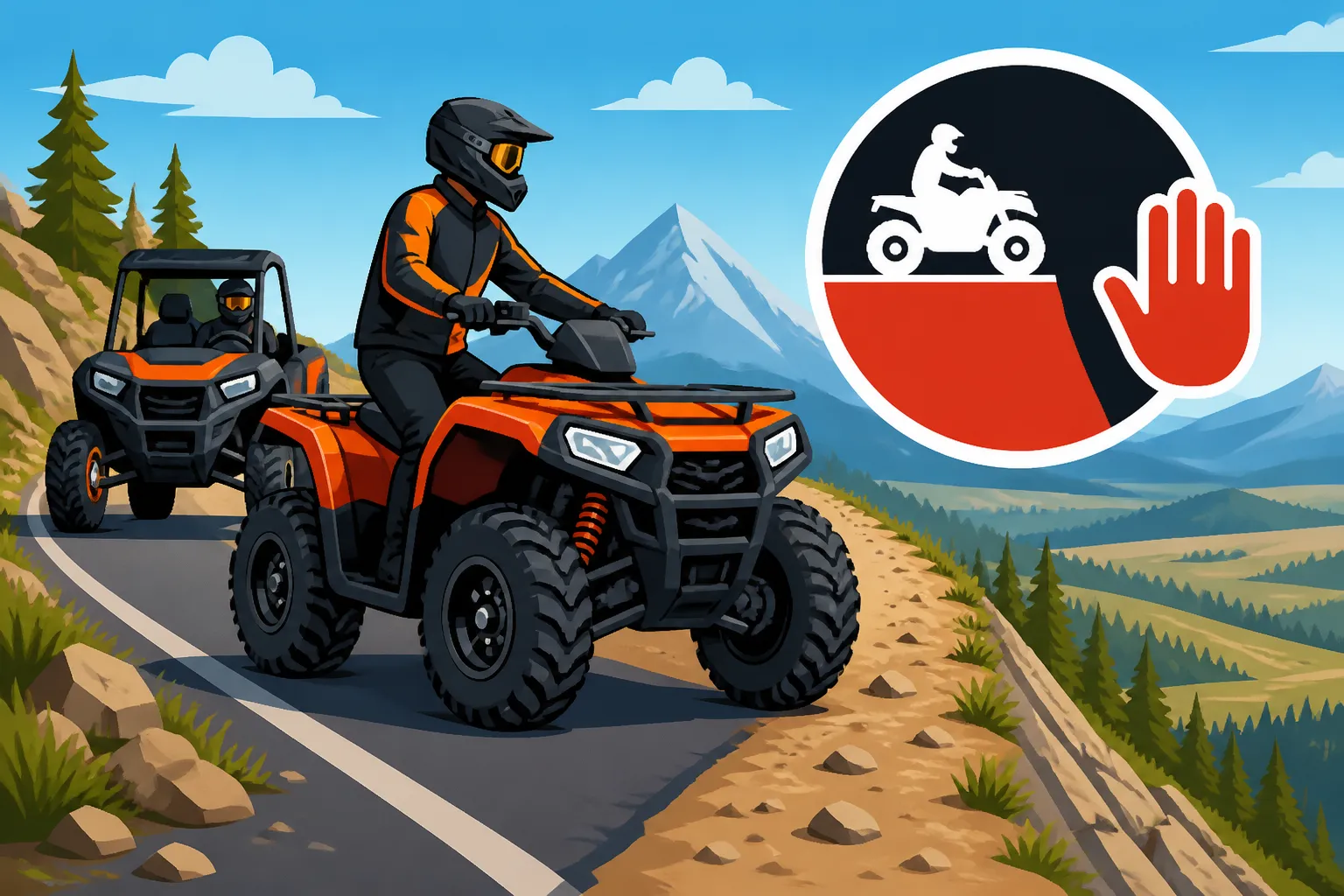
The rule typically dictates that you must come to a complete stop before entering the shoulder or roadway. This isn't just a suggestion; it's a legal requirement designed to prevent collisions and indicate your intent to other drivers. You're signaling that you're not joining the flow of traffic but simply traversing the road. Imagine you're driving a car and come to a stop sign – you wouldn't roll past the white line into the intersection, right? The same principle applies here, but often with the added challenge of visibility, dust, or uneven terrain. Before proceeding, you must yield to all traffic on the public road, ensuring the way is completely clear. You're looking both ways, listening for vehicles, and making sure you can cross quickly and safely to the designated route on the other side. This is particularly important for [Wyoming Rules for Crossing a Highway], where safety is paramount.
The Importance of Designated Routes and Signage
Knowing where you can and can't ride your off-road vehicle in Wyoming often comes down to understanding the signage and maps provided by the various land management agencies. Wyoming has a comprehensive system of designated ORV routes, but if you stray from them, even accidentally, you could face significant penalties. It's not enough to simply guess; you need to be sure.
Reading Maps and Understanding Signs
Before you even load up your machine, it's a good idea to consult Motor Vehicle Use Maps (MVUMs) for national forests and BLM lands. These maps are the official word on where motorized travel is permitted. They clearly mark open trails, roads, and areas where off-road vehicles are allowed. Don't rely solely on outdated paper maps or general knowledge; conditions and designations can change. When you're out on the trail, always pay attention to physical signs. These signs will often indicate if a trail is open or closed, what types of vehicles are allowed, and whether you're approaching a section of public road where special rules apply. Sometimes, a sign on the ground might indicate a temporary closure or a different rule than what’s on an older map, so always defer to the most current information available on site.
The reality is that different agencies manage different lands, and what's allowed on Forest Service land might differ slightly from BLM land or state parks. This is why [Why a Road Opens Only When Two Agencies Agree] is so important. Often, a county, a federal agency, and the Wyoming State Trails Program must all be on board before a particular road or segment of road is officially designated for ORV use. This layered approval system exists for safety and environmental protection, and it means riders must do their homework. Remember, a road that looks like a perfectly good place to ride might actually be off-limits for your ORV, especially if it leads into private property or an undesignated area. You can often find an [Finding an Enrolled Road on a Forest Map] on the respective agency's website or at local ranger stations.
Penalties for Non-Compliance
Riding an off-road vehicle on a non-designated public road or failing to follow proper crossing procedures, like stopping before the shoulder, can lead to serious consequences. Law enforcement, whether it's a game warden, forest ranger, or county sheriff, takes these rules seriously because they're in place for public safety and resource protection. A citation might involve a substantial fine, and depending on the severity and location, could even result in your machine being impounded. These aren't minor infractions; they're violations of traffic and land use laws.
Beyond the legal ramifications, there's the risk of personal injury or property damage. An ATV or UTV on a paved road presents a different dynamic than an automobile. Drivers of cars might not expect an off-road vehicle to appear suddenly, especially without proper lighting or signaling. Adhering to the "stop before the shoulder" rule minimizes this risk by creating a clear visual break and allowing you to assess traffic conditions thoroughly. Ignoring these rules isn't just inconvenient; it can be dangerous for you, other riders, and motorists. So, if you're ever in doubt, err on the side of caution and always adhere to what the signs and maps indicate. After all, the cost of a fine for [Wyoming Fines for Riding Without a Permit] or on a closed route is far less than the cost of an accident.
Equipping Your Machine for Road Sections (If Applicable)
While the primary focus is on staying off non-designated roads, there are times when you might need to cross one, or perhaps you're one of the savvy riders who has gone the extra mile to make your UTV an MPV. In either scenario, enhancing your machine's visibility and safety features, even beyond minimum requirements, is a smart move. Companies like SuperATV offer a wide range of accessories that can make your machine safer and more compliant, whether you're converting it to an MPV or simply want to be more visible when making a quick crossing.
Mirrors and Visibility
For any machine, but especially an MPV, proper mirrors are not just a convenience; they're a necessity. Wyoming law, for an MPV, generally requires at least one left-side mirror. This mirror provides a crucial view of traffic approaching from behind, allowing you to make safer decisions, whether you're merging, changing lanes (if on an MPV-legal road), or simply assessing traffic before crossing. Even if your machine isn't an MPV, having a good set of side mirrors can dramatically improve your ability to see oncoming traffic when you're stopped at the edge of a road, waiting to cross. SuperATV offers various durable, wide-angle mirrors designed to withstand the rigors of off-road use while providing excellent visibility. Checking [The Left-Side Mirror Wyoming Wants] is key for MPV conversions.
Lighting and Signaling
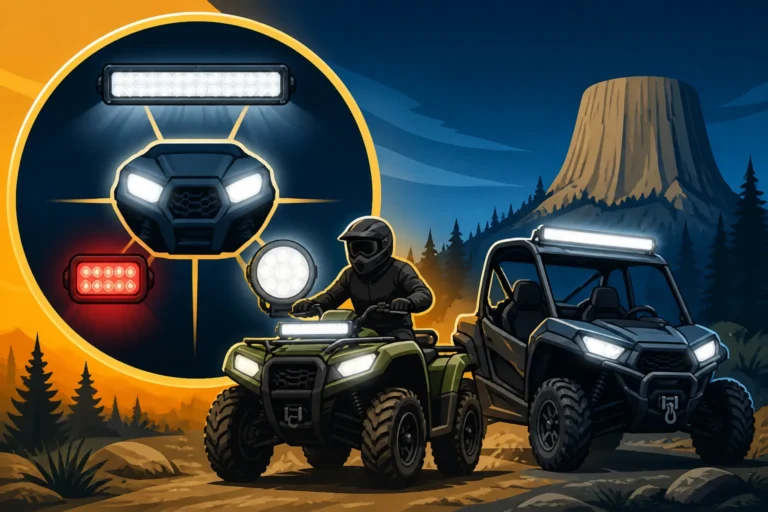
For MPVs, the list of required lighting is extensive: headlights, taillights, brake lights, and often turn signals. These are the basic requirements to be seen and communicate your intentions to other drivers. High-quality, bright LED lights can significantly enhance your visibility, especially during dawn, dusk, or in challenging weather conditions. Even for non-MPV machines, if you're frequently crossing roads, ensuring your stock headlights and taillights are clean and functioning optimally is crucial. Adding a bright LED whip or even additional auxiliary lights can make your machine much more noticeable to approaching traffic, reducing the risk during those critical crossing moments. It’s not just about meeting the minimum; it’s about being as visible as possible. You can find many options, from full turn signal kits to LED light bars, from brands like SuperATV, which are essential for meeting [Wyoming's Road Equipment Rules Come From] and staying safe. Ensuring your machine has a [Headlight, Taillight and Stop Lamp] is vital.
Responsible Riding Practices
Beyond the specific rules and regulations, being a responsible off-road rider in Wyoming means adopting a mindset of caution, courtesy, and respect for the land and others. The vastness of Wyoming often means you're sharing trails and remote areas with hikers, equestrians, wildlife, and even working ranchers.
Situational Awareness
Wyoming's landscape is dynamic and can change quickly. A clear, sunny morning can turn into an afternoon thunderstorm, or a dusty trail can become slick mud in minutes. Always be aware of your surroundings, the weather, and potential hazards. Wildlife, from deer and elk to antelope and even moose, can appear suddenly on trails or near road crossings. Keep your speed appropriate for the conditions and your visibility. Unexpected twists in a two-track or blind corners can hide oncoming traffic (even other ORVs) or animals. Staying alert means you're better prepared to react safely, whether that's stopping for an animal or waiting for a vehicle to pass before crossing a road.
Planning Your Route
One of the best ways to avoid headaches and stay compliant is to plan your route thoroughly before you leave. Use those MVUMs, talk to local rangers, and check online resources for current trail conditions and closures. Know exactly where the designated trails are, where they might intersect or cross public roads, and where you might need to exercise extra caution. Don't venture off marked routes unless you are absolutely certain it's permitted and safe. Understanding your entire journey, including where you might encounter public roads, ensures you're prepared to execute that "stop before the shoulder" rule effectively.
Consider the following comparison table for a quick overview of the distinctions between ORVs on designated trails/crossing roads and MPVs on public roads:
| Feature/Requirement | Off-Road Vehicle (ORV) on Designated Trail / Crossing Road | Multipurpose Vehicle (MPV) on Public Road |
|---|---|---|
| Registration | Wyoming ORV Permit (decal) | Wyoming Title and License Plate |
| Road Use | Allowed to cross non-designated public roads with full stop, yield, and caution. | Allowed to operate on designated public roads (except interstates) if fully compliant. |
| Designated Routes | Mandatory for all riding. Must stay on enrolled trails/roads. | Also required for off-road use; can use enrolled trails/roads. |
| Driver's License | Not required for ORV trail use (age restrictions apply). | Required (valid driver's license with M or MR endorsement). |
| Insurance | Not typically required for trail use. | Required for road use. |
| Equipment | Spark arrester, muffler, working brakes. Lights often recommended for visibility but not always road-specific. | Headlights, taillights, brake lights, turn signals, horn, at least one left-side mirror, seatbelts, DOT tires. |
| "Stop Before Shoulder" | Critical rule when encountering non-designated public roads to cross. | Not applicable in the same way; operates as a road vehicle. |
| Brand Focus | Focus on performance, durability (e.g., SuperATV lift kits, winches for trails). | Focus on compliance, safety, and road-legal accessories (e.g., SuperATV mirrors, signal kits). |
Ultimately, riding your ATV or UTV in Wyoming is an incredible experience, but it comes with the responsibility of understanding and respecting the rules. The "stopping before the shoulder" rule is a small but significant detail that exemplifies the difference between off-road recreational use and legal street travel. By educating yourself and riding responsibly, you ensure your safety, protect the environment, and help maintain access to Wyoming's stunning backcountry for everyone.
Disclaimer
This article is for general informational purposes only and does not constitute professional advice. Laws, prices and regulations vary by location and change over time. Consult a qualified professional for guidance on your specific situation.