Proof of Insurance on a Wyoming Road
It's easy to get tangled up in the rules when you're dreaming of taking your trusty ATV or side-by-side from the dirt trails onto Wyoming's paved roads. Many riders assume that if a machine is technically capable of road speeds, that's enough, but the reality is far more complex, especially when it comes to something as crucial as insurance. This guide will walk you through exactly what Wyoming expects from you regarding proof of insurance when your off-road machine hits the pavement.
Why Your Off-Road Machine Needs Insurance on Wyoming Roads
You might be thinking, "It's an ATV, I only ride it off-road, why would I need insurance for the street?" And that's a perfectly valid question. For pure off-road trail riding on designated routes, Wyoming doesn't mandate liability insurance. You need an [Wyoming's Annual ORV Permit] and a spark arrester, sure, but personal liability insurance isn't a state requirement for off-road use. This is where the distinction between an Off-Road Vehicle (ORV) and a Multipurpose Vehicle (MPV) becomes absolutely critical, and it’s the hinge point for insurance requirements.
The Critical Shift: From ORV to MPV
The moment you decide to legally operate your ATV or UTV on a public road in Wyoming, your machine, if it meets certain criteria, stops being just an ORV in the eyes of the law and starts falling under the definition of a Multipurpose Vehicle (MPV). This isn't just a fancy name change; it triggers a whole new set of responsibilities, including the big one: insurance. The state considers an MPV on its roads to be much like any other motor vehicle, requiring the same basic protections for everyone else on the road.
Imagine you're cruising down a county road, perhaps heading to a different section of trail, and an unforeseen incident occurs. Without proper insurance, you're not just facing potential fines; you're looking at a mountain of personal liability for damages, medical costs, and legal fees that could financially devastate you. The shift to MPV status means acknowledging that you're now sharing the road with cars, trucks, and motorcycles, and the risks involved are significantly different than navigating a dirt trail. It’s about protecting yourself and others when your ride becomes part of the wider traffic ecosystem.
Why Wyoming Requires Insurance for Road-Legal Machines
Wyoming, like most states, has a fundamental interest in ensuring that anyone operating a motor vehicle on its public roads can financially cover damages they might cause in an accident. This isn't about punishing off-road enthusiasts; it's about public safety and economic responsibility. When your machine is registered as an MPV and you’ve gone through the process of [Wyoming's MPV Path to the Road], you're effectively declaring it roadworthy, and with that comes the obligation of carrying liability insurance.
Think of it this way: if a car driver causes an accident, their insurance kicks in to cover the other party's damages. The same principle applies to an MPV. The state isn't going to differentiate between a sedan and a side-by-side when it comes to who pays for a bent fender or a broken bone on a public highway. This requirement helps to keep insurance costs manageable for everyone and ensures that victims of accidents aren't left holding the bag. It's a common-sense measure designed to protect all road users and provides a crucial safety net for those unexpected moments that can happen even to the most careful riders.
Understanding Wyoming's MPV Classification for Road Use
Before we delve deeper into the proof of insurance itself, it's vital to grasp what makes your off-road machine eligible to even be on a Wyoming road and thus subject to insurance requirements. Not every ATV or UTV can simply be made street legal. Wyoming has a very specific definition for what qualifies as a Multipurpose Vehicle (MPV), and these rules are non-negotiable if you want to ride legally on the asphalt. This classification is the gateway to road legality, and consequently, to mandatory insurance.
The Specifics of Wyoming's MPV Definition
Wyoming Statute 31-1-101 lays out the precise criteria for what constitutes a Multipurpose Vehicle. This isn't some vague guideline; it's a clear checklist your machine must meet. Generally, it's geared towards side-by-sides, as most traditional ATVs (quads) don't typically fit the bill. The key elements include: having four wheels, a steering wheel, non-straddle seating (meaning you sit in it, not on it), and a curb weight between 300 and 3,000 pounds. It also needs a seat that's at least 24 inches from the ground to its lowest point.
So, if you have a traditional ATV, chances are it won't qualify as an MPV because of the straddle seating and often the weight. However, if you're rocking a side-by-side, many models from brands like SuperATV, known for their aftermarket accessories that can help with road-legal conversions, often fall within these parameters. Before you even think about insurance, you need to ensure your machine can be an MPV. You'll need to submit an [What the MPV and ORV-MC Checklist Form Asks] to your County Clerk to verify your machine meets the [Wyoming MPV Title Requirements] before you can even get a title and then a license plate.
Why MPV Registration Triggers Insurance Mandates
The act of registering your machine as an MPV with the county clerk and subsequently getting a license plate from the county treasurer fundamentally changes its legal standing. It transforms it from an off-highway recreational vehicle into a legitimate, albeit specialized, motor vehicle capable of operating on designated public roads. This legal reclassification is exactly what triggers the requirement for liability insurance. It’s the state’s way of saying, “If you want to use our roads, you need to play by our road rules.”
Without MPV registration, you can't get a license plate, and without a plate, you can't legally ride on most public roads in Wyoming, even if your machine physically could handle it. The entire process, from meeting the physical criteria to titling, plating, and insuring, is a linked chain. Each step builds on the last, ensuring that any vehicle on Wyoming's roadways, regardless of its origin, adheres to a baseline of safety and financial responsibility. It's not enough to simply add a turn signal kit; you need to follow the full legal pathway. [Titling a Multipurpose Vehicle in Wyoming] is your first big step after confirming your machine meets the physical specifications.
What Counts as Proof of Insurance for Your Wyoming MPV
Okay, so you've got your side-by-side, it meets the [Wyoming MPV Weight Limits] and [Wyoming MPV Seat Height Rule], you've got it titled and plated, and now you know you need insurance. But what exactly does "proof of insurance" entail? It's not just a handshake and a promise; Wyoming has specific expectations for what documents are acceptable to show a law enforcement officer that you're covered.
Acceptable Forms of Proof
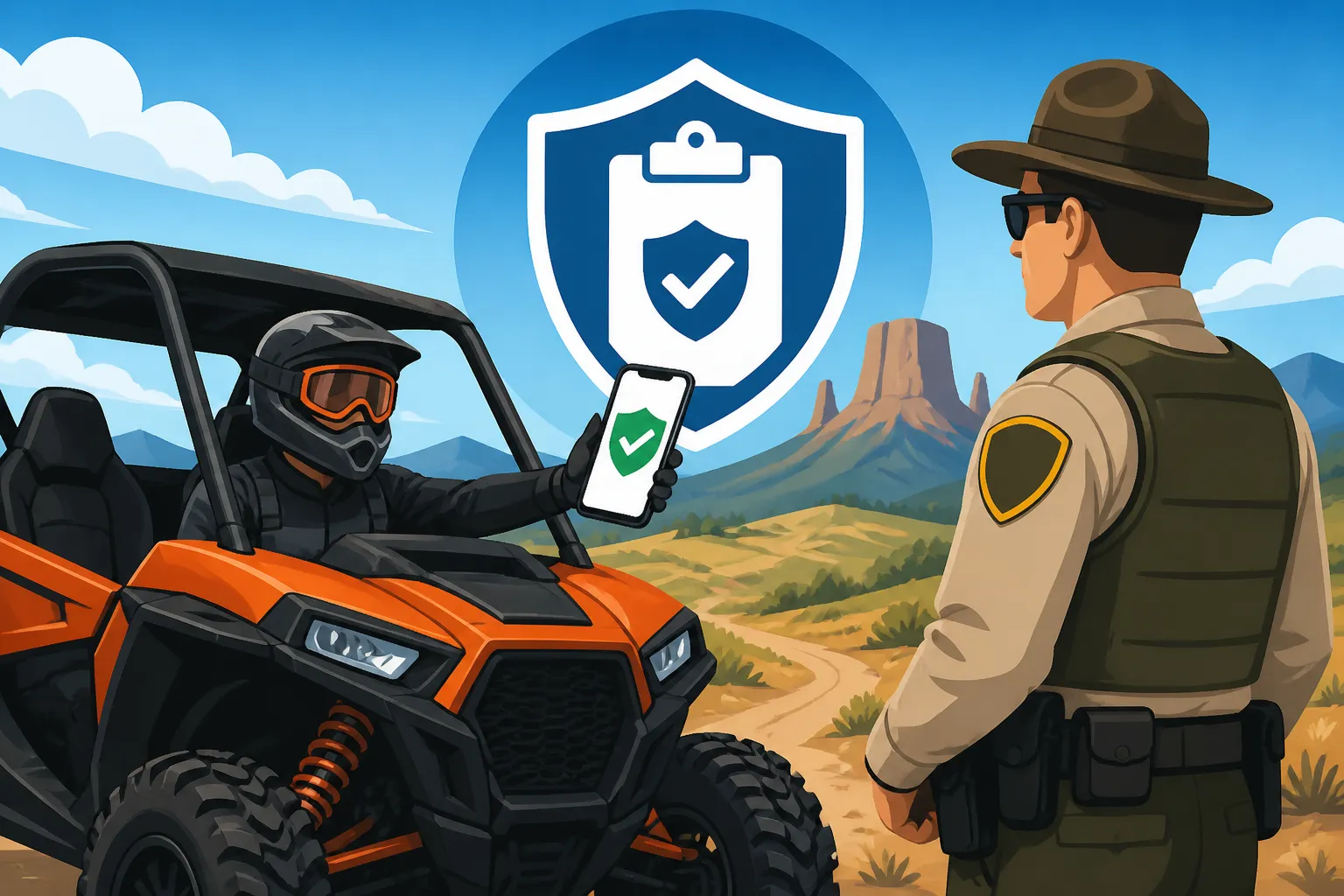
When a Wyoming Highway Patrol trooper or a county sheriff pulls you over and asks for proof of insurance for your MPV, they're looking for something tangible and official. The most common and widely accepted form is your insurance identification card. This is the little card your insurance provider sends you, typically with your vehicle information, policy number, effective dates, and coverage limits clearly printed on it. It’s what you carry for your car, and it’s what you need for your road-legal MPV.
Beyond the card, other forms can be accepted, though they are less common for roadside checks. These might include a copy of your insurance policy, which shows all the specific details of your coverage, or a binder, which is a temporary proof of insurance issued when you first purchase a policy. However, for everyday riding, the card is king. Make sure whatever document you carry is current and clearly shows your MPV's information and that the policy is active. Don’t rely on an expired card or a policy that hasn’t yet taken effect; that’s as good as having no proof at all.
Minimum Coverage Requirements for Wyoming Roads
Just having some insurance isn't enough; it needs to meet Wyoming's minimum liability coverage requirements. These are the same basic liability minimums that apply to all other motor vehicles operating on public roads in the state. Typically, this means you need coverage for:
- Bodily Injury Liability: A minimum amount per person and per accident for injuries you cause to others.
- Property Damage Liability: A minimum amount for damage you cause to another person's property.
These figures are established by state law and are designed to provide a basic level of financial protection. While these minimums are legally sufficient, many riders opt for higher coverage amounts for greater peace of mind, especially given the rising costs of medical care and vehicle repairs. It’s worth discussing your options with your insurance agent to understand what level of coverage is appropriate for your specific situation and the value of your assets. [Wyoming ATV Insurance Requirement] is a serious consideration when you plan to ride on public roads.
| Proof of Insurance Type | Key Information Displayed | Acceptance for Roadside Stop | Best Practice for MPV |
|---|---|---|---|
| Insurance ID Card | Policy #, Dates, Vehicle | Yes, Most Common | Always Carry |
| Copy of Policy | Full Details, Coverage | Yes, but cumbersome | Keep at Home/Digitally |
| Binder (Temporary) | Temporary Policy #, Dates | Yes, for new policies | Carry until Card Arrives |
| Digital Card (on phone) | Policy #, Dates, Vehicle | Yes, if legible and accessible | Have a Charged Phone |
Practical Tips for Carrying Your Proof of Insurance
Having the right insurance is one thing; being able to prove you have it when asked is another. It's a common oversight to have all your ducks in a row for the paperwork, but then forget the practicalities of carrying that documentation on a machine not designed with a glove box in mind. The dusty, bumpy, and sometimes wet conditions of off-road riding, even on road-legal sections, mean you need a robust plan for your proof of insurance.
Secure and Accessible Storage Options
Your MPV isn't a sedan with a dashboard compartment, so you need to get creative about where you stash your insurance card. The goal is two-fold: keep it secure so it doesn't fall out or get lost, and keep it accessible so you're not fumbling around when a law enforcement officer asks for it. Many riders opt for a waterproof pouch or a small, hard-shell case. This can then be tucked into a cargo box, a fender bag, or even a specialized small tank bag designed for ATVs/UTVs.
Some UTVs, especially those that come with more amenities from the factory or have aftermarket additions like those from SuperATV, might have small, weather-resistant storage compartments that work perfectly. The key is to protect the paper card from moisture, dirt, and wear and tear. You don't want a faded, illegible card to be your only proof, as that could lead to unnecessary delays or citations. Think about how you’d protect your wallet or phone—your insurance card deserves similar consideration.
Digital Proof and Backup Copies
In this day and age, many insurance companies offer digital insurance cards that you can display on your smartphone. Wyoming law typically allows for digital proof, which can be a convenient option. However, there's a caveat: your phone needs to be charged, and you need to be able to access the document easily, even in areas with spotty cell service. A dead phone battery is not an excuse for lacking proof of insurance.
It’s always a good idea to have a backup. Even if you rely primarily on a digital card, carry a physical copy in a waterproof bag. You could even laminate a copy of your card for extra durability. Leave a spare copy at home or with someone trustworthy who could send you a photo in a pinch. The goal is to avoid any situation where you're unable to produce valid proof of insurance on demand. Remember, the peace of mind of being prepared is invaluable when you're out enjoying the open road or a multi-day trip. [Wyoming ORV Permit and Insurance] are both non-negotiable for road use.
What Happens If You Don't Have Proof of Insurance in Wyoming
Riding an MPV on a public road in Wyoming without proof of valid liability insurance is not just a minor oversight; it's a serious offense with tangible consequences. The state takes uninsured motorists very seriously, regardless of whether they're driving a pickup truck or a road-legal side-by-side. Understanding these repercussions can help emphasize why it's so important to always carry your proof.
Fines and Penalties for No Proof
If you're stopped by law enforcement on a Wyoming public road and cannot produce valid proof of insurance for your MPV, you're likely to receive a citation. This isn't just a slap on the wrist. Fines for operating an uninsured motor vehicle can be substantial, often running into hundreds of dollars for a first offense. These fines are designed to deter uninsured driving and reflect the gravity of the potential financial risk an uninsured driver poses to others.
Beyond the monetary penalty, there could be other administrative consequences. For repeat offenses, penalties can escalate, potentially including the suspension of your driving privileges or even the impoundment of your vehicle. While specific details can vary, the general principle is clear: Wyoming wants its road users to be insured, and there are significant disincentives for failing to comply. It's far cheaper and less stressful to simply ensure you have coverage and carry the proof. A small error can lead to [Wyoming Fines for Riding Without a Permit], or much worse, for no insurance.
The Financial Burden of an Accident Without Insurance
The fines and administrative penalties, while unpleasant, are often the least of your worries if you cause an accident while uninsured. If you're involved in a collision and found to be at fault, and you don't have liability insurance, you will be personally responsible for all damages and injuries. This could mean paying out of pocket for:
- Property damage: Repairing the other vehicle, fences, guardrails, or any other property damaged in the incident.
- Medical expenses: Covering the costs of injuries to anyone else involved, which can quickly climb into tens or even hundreds of thousands of dollars.
- Legal fees: If the injured parties decide to sue you (and they likely will), you'll be on the hook for your own legal defense, which can also be incredibly expensive.
Imagine a scenario where your MPV, perhaps equipped with high-performance parts from SuperATV, inadvertently causes damage to another vehicle or injures a pedestrian. Without insurance, your personal assets – your savings, your home, future earnings – could all be at risk. This is the ultimate reason why insurance is a requirement: to shield individuals from catastrophic financial ruin and to ensure victims are compensated. It’s a protection not just for others, but for you too.
Common Misconceptions About ORV Insurance and Road Use
There's a lot of folklore and misunderstanding floating around about off-road vehicles and road legality, especially when it comes to insurance. Many riders make assumptions based on how their cars are insured, or on rules that apply in other states, leading to potential legal pitfalls in Wyoming. Let's clear up some of these common misconceptions.
"My Homeowners Policy Covers My ATV on the Road"
This is a dangerously common misconception. While some homeowners' or renters' insurance policies might offer a very limited amount of coverage for your ATV or UTV while it's on your private property (e.g., if it's stolen from your garage), they almost universally exclude coverage for vehicles operated on public roads. Homeowners' insurance is designed for your home and personal belongings, not for the liability risks associated with operating a motor vehicle.
The moment your MPV rolls onto a public road, it requires specific motor vehicle liability insurance. Do not assume your existing homeowners' policy will magically extend to cover an accident on a Wyoming street or highway. Always confirm directly with your insurance provider. If you're planning to make your machine road legal, you need to call your agent and ask for a dedicated MPV or ATV/UTV policy that specifically covers road use. It’s a separate, distinct type of coverage from what protects your house.
"I Only Need Insurance If I'm Traveling Long Distances on the Road"
Another myth is that insurance is only necessary for extended road trips, but not for short jaunts—say, riding a few miles down a county road to get to another trail system. This is absolutely false. The requirement for liability insurance is triggered by the act of operating a registered MPV on a public road, regardless of the distance or duration of your travel. Whether you're riding for 50 feet or 50 miles, the legal requirement for insurance is the same.
Wyoming law doesn't make exceptions for "short trips." If you're on a road, you need to be insured and have proof. A quick crossing of a state highway, a short ride along a two-track, or even riding a designated [Wyoming's Enrolled Roads and Trails] segment that's technically a public road, all necessitate valid insurance. Any time your MPV is on a road where the public has access, you're expected to comply with motor vehicle insurance laws. There's no grace period or distance exemption.
"My Out-of-State Insurance Is Valid in Wyoming"
This can be a tricky one. Generally, if your MPV is legally titled and plated in another state and you're just visiting Wyoming, your existing out-of-state liability insurance should be honored, provided it meets the minimum coverage requirements of your home state. This is because most states have reciprocity agreements for auto insurance.
However, if you're a Wyoming resident or if you're registering your MPV in Wyoming as an MPV, then you must adhere to Wyoming's specific insurance laws and requirements. Don't assume that if you just moved to Wyoming, your old policy from Montana or Colorado automatically fulfills your new state's requirements for your MPV's road use. It’s always best to switch to a Wyoming-compliant policy once you establish residency. Furthermore, even if your out-of-state policy is honored, you still need to carry valid proof of that coverage, just as you would in your home state. Always double-check with your insurance provider and review Wyoming’s specific requirements.
Wyoming's Comprehensive Approach to Road-Legal MPVs
Wyoming isn't alone in recognizing the growing popularity and versatility of ATVs and UTVs. The state has developed a structured approach to integrate these machines onto its public roads, but with that integration comes a clear set of responsibilities. It’s all part of ensuring a safe and enjoyable experience for everyone, whether they're on a dirt trail or a paved county road.
Why All the Rules? Balancing Access and Safety
The array of rules, from the [Wyoming MPV Definition in W.S. 31-1-101] to specific equipment requirements like horns and mirrors, and of course, mandatory insurance, isn't meant to deter riders. Instead, it's about striking a balance. Wyoming wants to provide access to its incredible landscapes and allows for the convenience of using your MPV on certain roads. But this access can't come at the cost of public safety.
Each rule, including the insurance mandate, is a piece of a larger puzzle designed to protect both the rider and the general public. It ensures that MPVs, while distinct from traditional cars, operate with a similar baseline of safety and accountability when sharing the same infrastructure. This comprehensive framework is what allows you to confidently ride your SuperATV-equipped side-by-side from your cabin to the trailhead, or even through small towns where [Wyoming Rules for Riding a City Street] allow it.
Your Role as a Responsible MPV Operator
Ultimately, the responsibility falls on you, the rider, to understand and adhere to these regulations. This means:
- Knowing Your Machine: Confirming your ATV or UTV truly meets the MPV criteria.
- Proper Registration: Going through the process to [Registering a Side-by-Side as a Wyoming MPV] and getting your plate.
- Equipping for the Road: Ensuring your machine has all the [Wyoming's Road Equipment Rules Come From] necessities, like proper lighting, mirrors, and a horn.
- Getting Insured: Securing the appropriate liability insurance that meets Wyoming's minimums.
- Carrying Proof: Always having your current insurance identification card or accepted digital proof on hand when operating on public roads.
By taking these steps, you not only avoid potential fines and legal headaches, but you also contribute to the safe and responsible integration of MPVs into Wyoming's road system. It ensures that the privilege of riding your machine on the road continues to be available for years to come.
Disclaimer
This article is for general informational purposes only and does not constitute professional advice. Laws, prices and regulations vary by location and change over time. Consult a qualified professional for guidance on your specific situation.