Wyoming Rules for a Slow Machine on a Road
You've probably felt that itch—the desire to take your trusty ATV or UTV just a little further, maybe down a short stretch of paved road to connect to another trail, or even across town to grab some supplies. But then the nagging question sets in: Is my "slow machine" even allowed on a public road in Wyoming? It's a common dilemma, and the rules around off-road vehicles on public thoroughfares can feel like a tangled web, especially when you consider their typical speed versus highway traffic. This guide is here to untangle that web, helping you understand Wyoming's specific regulations for operating what you might consider a "slow machine" on its roads, so you can ride confidently and legally.
Understanding Wyoming's Definition of "Slow Machine" on Roads
When you talk about a "slow machine" in the context of road use, it's easy to assume the speed itself is the primary legal hurdle. While speed certainly plays a role in how safely you can integrate with other traffic, Wyoming's laws focus much more on the classification and equipment of your vehicle than just its top speed. For most off-road enthusiasts, their ATV or UTV starts its life as an Off-Road Vehicle (ORV), designed purely for dirt, rock, and mud. But to touch pavement legally, a fundamental shift in its legal identity needs to occur.
This distinction is crucial because a simple ORV permit, while essential for Wyoming's vast trail system, does not grant you permission to ride on public roads. That's a common misconception that can lead to unexpected fines. Wyoming recognizes a separate class of vehicle, the Multipurpose Vehicle (MPV), which is specifically designed to bridge the gap between trail and tarmac. It’s this MPV designation that unlocks the potential for your "slow machine" to navigate roads, provided it meets stringent criteria.
The Core Difference: ORV vs. MPV
Let's clear this up right away: your standard ORV, whether it's a nimble sport quad or a utility side-by-side, is primarily intended for off-highway use. You'll need a Wyoming ORV permit, which is a decal affixed to your machine, to legally ride on designated public lands like National Forests or BLM areas. This permit funds trail maintenance and access, but it explicitly does not grant you street legal status. Think of it as your pass for the backcountry, not the blacktop.
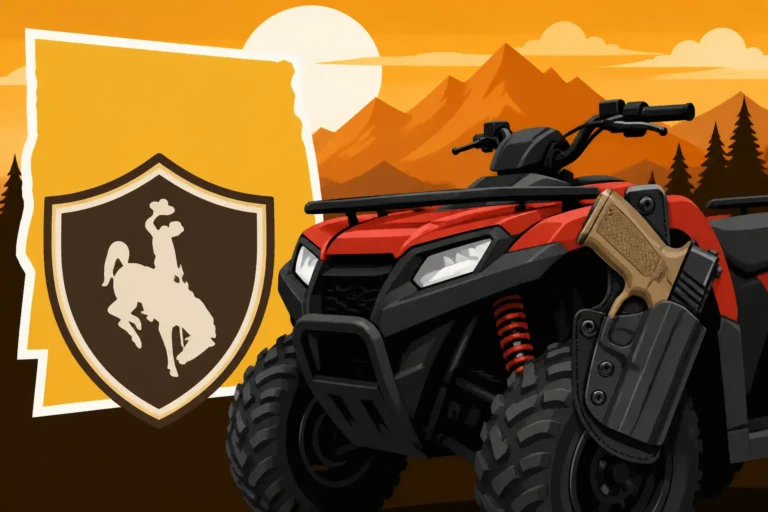
The game changes when your machine qualifies as an MPV. An MPV in Wyoming is essentially an ORV that has been modified and equipped to meet specific highway safety standards, allowing it to be titled and registered for limited road use. This is the official pathway to getting your side-by-side or certain ATVs on paved or gravel roads. The requirements for an MPV are laid out in Wyoming statutes and involve everything from weight limits and seat height to specific safety equipment. Without achieving this MPV status, your "slow machine" remains an ORV, confined to trails and private property, regardless of how slowly or carefully you might try to drive it on a road. You can dive deeper into this transformation by reading [Wyoming's MPV Path to the Road].
When "Slow" Doesn't Matter as Much as "Legal"
It's tempting to think, "My machine is slow, so surely it won't be a hazard if I just stick to the shoulder." However, the legal framework in Wyoming doesn't make exceptions based on your perceived speed or caution. The term "slow" can be a bit of a red herring because even if your machine could go faster, its legality on the road still hinges on its classification as an MPV and its full compliance with all associated equipment, licensing, and registration requirements.
Picture this: you're driving a brand new, powerful side-by-side that can easily hit 60 mph, but it's only registered as an ORV. From a legal standpoint, it's no different than a small utility quad that tops out at 30 mph; neither is street legal without the MPV designation. The rules aren't about the potential speed of your machine, but rather its legal status as a vehicle fit for public roads. This means focusing on meeting all the [Wyoming MPV Street Legal Requirements] is far more important than worrying about whether your machine is "too slow" to keep up with traffic—though that's a practical safety consideration we'll definitely touch on later.
Equipping Your Machine for Road Use: Beyond Just Speed
So, you've grasped that the key isn't just speed, but legal classification as an MPV. Now, let's talk about what that MPV classification demands in terms of equipment. Transforming your off-road warrior into a road-worthy machine isn't just about bolting on a license plate; it involves a comprehensive upgrade to meet safety standards that ensure you're visible and can communicate with other drivers. Many of these components are designed to compensate for the fact that an ATV or UTV might be a "slow machine" compared to typical road traffic.
This is where investing in quality, purpose-built accessories becomes essential. You can't just rig something up with duct tape and hope for the best; the equipment needs to be robust and reliable. Brands like SuperATV offer a vast array of aftermarket parts that specifically cater to making UTVs and ATVs compliant with various road laws, including those in Wyoming. Their kits and individual components are designed to integrate seamlessly, providing the functionality and durability needed for consistent road use.
Essential Lighting and Reflectors
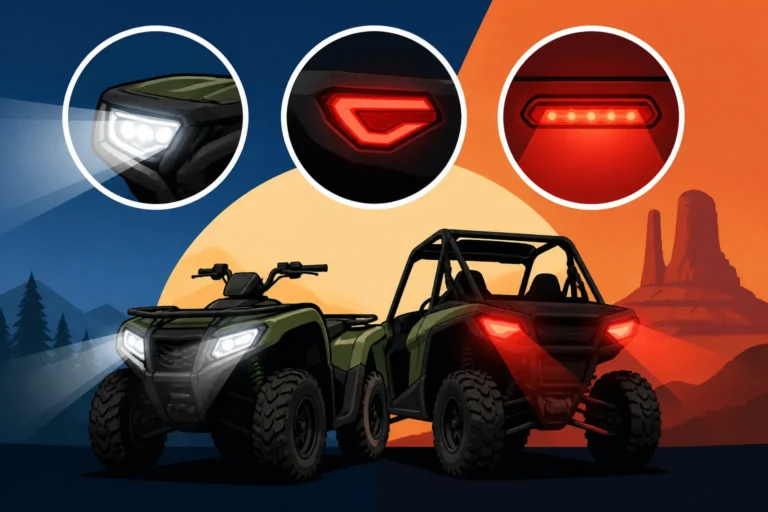
When your machine is moving slower than other vehicles on the road, visibility becomes paramount, especially during dawn, dusk, or in inclement weather. Wyoming's MPV laws are quite clear on the lighting requirements. You'll need a proper headlight system, featuring both high and low beams, to adequately illuminate the road ahead and make you visible to oncoming traffic. These aren't just for seeing the trail; they're about being seen on the highway.
In addition to headlights, functional taillights are a must, visible from a specific distance to the rear. Crucially, you'll need brake lights that activate when you apply the brakes, signaling to vehicles behind you that you're slowing down. Perhaps one of the most often overlooked requirements, but absolutely critical for road safety and legality, are turn signals—both front and rear. These allow you to clearly indicate your intentions to change lanes or turn, preventing dangerous misunderstandings with other drivers. Finally, a red rear reflector is typically required, ensuring some visibility even if your taillights fail. If you're looking to upgrade your lighting to meet these standards, exploring options from SuperATV, which offers complete turn signal kits and robust LED lighting, can make the process much easier. For more details on what's expected, check out [Wyoming Lighting Requirements for ORVs].
Mirrors, Horns, and Other Safety Gear
Beyond lights, there are several other pieces of equipment your MPV will need to have before it can legally hit the road. One of the most critical is a left-side mirror. This isn't just for convenience; it's a safety device that allows you to monitor traffic approaching from behind without constantly turning your head. Many side-by-sides come with a rearview mirror, but a dedicated left-side mirror (and often a right-side mirror for better visibility) is essential for highway travel.
Another non-negotiable item is a working horn. Just like in a car, a horn is your primary way to alert other drivers or pedestrians to your presence, or to signal a potential hazard. This is particularly important for "slow machines" that might be less expected on public roads. Depending on the design of your machine and the specific MPV regulations, other safety gear like a windshield might be required, especially if it offers significant protection from road debris and weather. While seatbelts are standard on most modern UTVs, ensure they are in good working order and always used. SuperATV provides a range of mirrors and horn kits that are easy to install and meet legal specifications, making your machine both safer and compliant. Don't forget to review [Wyoming Mirror Requirements for Road Use] and [Wyoming Horn Requirement on a Road Machine] for the exact specifications.
The Slow-Moving Vehicle Emblem
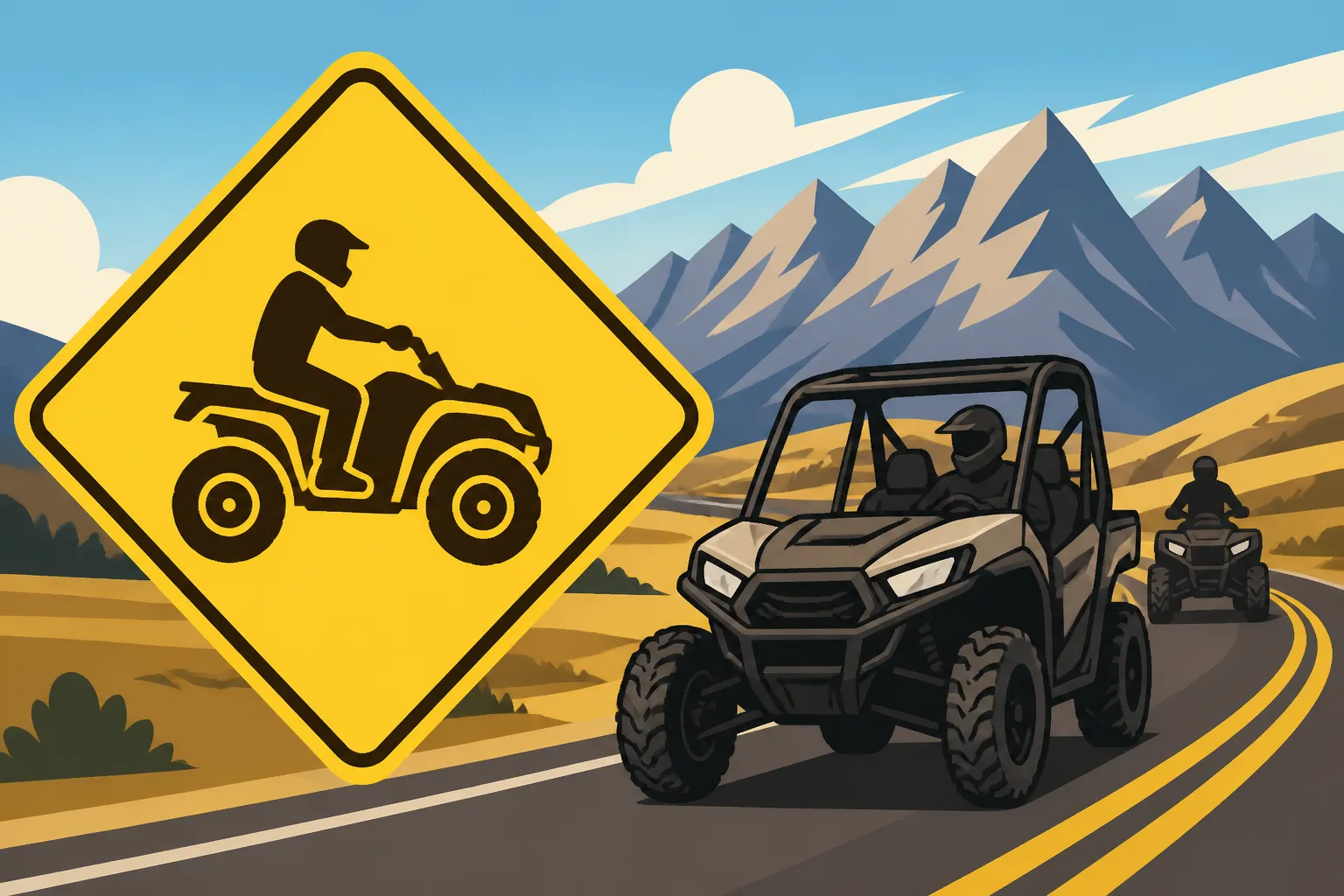
For machines that are truly "slow" and may not be able to maintain the posted speed limit, Wyoming, like many other states, has a specific requirement: the slow-moving vehicle (SMV) emblem. This is the distinctive reflective orange triangle with a red border that you often see on farm equipment or horse-drawn buggies. Its purpose is unmistakable: to visually warn drivers approaching from behind that the vehicle ahead is operating at speeds significantly lower than typical traffic.
If your ATV or UTV, even as an MPV, cannot maintain a certain speed (often 25 mph or 30 mph, depending on the specific road and circumstances, so always check the latest statutes), then this emblem becomes mandatory. It must be prominently displayed on the rear of your machine, clearly visible to any following vehicles. This is a critical safety feature, as it helps prevent rear-end collisions by giving other drivers ample warning and time to react. Ignoring this requirement not only puts you at risk but can also lead to citations. It's a small but vital piece of equipment for any "slow machine" venturing onto Wyoming's roads. To ensure you're placing it correctly and understand its full implications, refer to [Wyoming Slow-Moving Vehicle Emblem Rules].
Navigating Wyoming's Roads: Where Can You Ride?
Even if your machine is fully equipped and registered as an MPV, you can't just hop on any road you please. Wyoming has specific designations for where MPVs are permitted, and understanding these rules is just as crucial as having the right equipment. This isn't like driving a car where you generally assume all public roads are fair game. For MPVs, especially those that might be considered "slow machines," knowing the allowed routes is essential for both legality and safety.
The state has put a lot of effort into delineating which roads are open and which are not. This involves cooperation between state agencies, counties, and federal land managers like the Forest Service and the Bureau of Land Management (BLM). It means that a road that looks perfectly fine for your MPV might actually be off-limits, while a less obvious route could be entirely legal. Always remember that signs on the ground will override any map you might have, so pay close attention to posted regulations.
Enrolled Roads vs. Restricted Areas
Wyoming operates under an "enrolled road" system for MPVs. This means that only specific county, state, and federal roads have been formally designated and opened for MPV use. You cannot assume that because a road is public, it's open to your side-by-side or ATV. The designation process involves various agencies, and it’s critical for riders to consult official maps to identify these enrolled routes. Many counties have their own ordinances, and what's allowed in one county might be prohibited in another.
Forest Service and BLM lands often have Travel Management Plans (TMPs) that specify which roads and trails are open to which vehicle types. While many of these federal roads are enrolled for MPV use, it's not universal, and some might only be open seasonally or to narrower machines. City streets are another category altogether; generally, city ordinances will dictate if MPVs are allowed within city limits, and many municipalities choose to restrict them. The best practice is always to check the specific jurisdiction's rules. For a comprehensive overview of where you can ride, always consult [Wyoming's Enrolled Roads and Trails] and look for current maps from land management agencies.
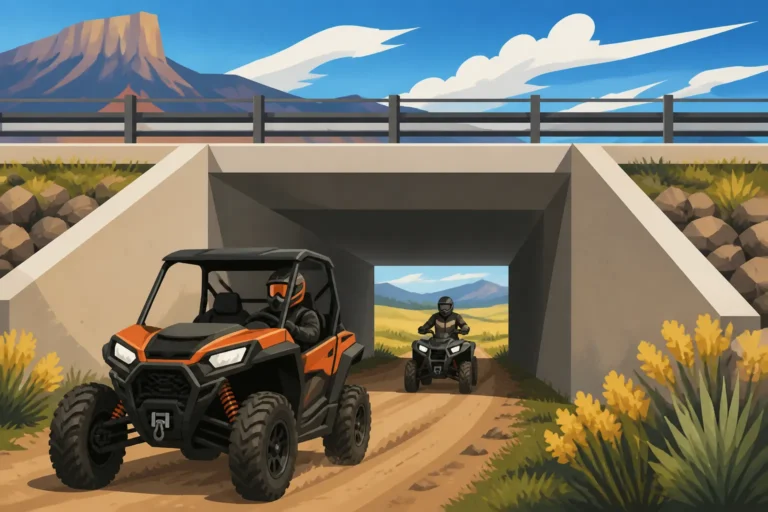
Now, about interstates: For all intents and purposes, interstates are a no-go zone for ATVs and UTVs, even if they are MPVs. The high speeds and heavy traffic found on Interstate 80 or Interstate 25 make them incredibly dangerous for "slow machines." While Wyoming has made some very specific, limited provisions for grade-separated crossings (where an MPV can cross under or over an interstate via an approved route), you cannot simply ride on the interstate itself. This is a critical distinction, and attempting to ride an MPV on an interstate for anything more than an approved crossing will almost certainly result in serious legal trouble and extreme danger. Be sure to understand the severe restrictions by reading [Interstates Closed to MPVs and Dirt Bikes].
Driver Requirements and Rules of the Road
Getting your machine properly outfitted and knowing where to ride are huge steps, but the driver also has responsibilities. When you take your MPV onto public roads in Wyoming, you're expected to follow the same basic rules of the road as any other vehicle operator, with a few specific considerations for MPVs. This includes having the correct driver's license and proof of insurance.
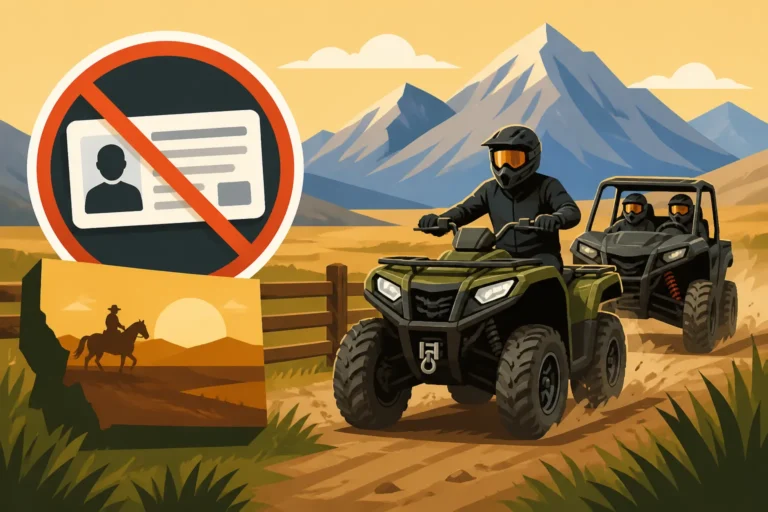
First off, you'll need a valid driver's license. For operating an MPV on public roads, Wyoming typically requires a Class C driver's license with an "M" (motorcycle) endorsement, or an "MR" (motorcycle restricted) endorsement for those who only ride two- or three-wheeled vehicles. It's not just your standard car license that cuts it. You can explore the specifics of what's needed for your license by looking into [Wyoming Driver's License Rules for ORVs]. Furthermore, just like with a car, you are legally required to carry proof of liability insurance. This protects you and others in the event of an accident. [Wyoming ATV Insurance Requirement] provides more detail on this crucial requirement.
Helmet laws also apply, especially for younger riders. In Wyoming, all riders and passengers under the age of 18 are required to wear a DOT-approved helmet when operating an ORV or MPV on public roads. Even if you're over 18, wearing a helmet is always a wise safety choice, particularly on a "slow machine" interacting with faster traffic. For the exact age cutoffs and regulations, check out [Wyoming Helmet Law for ATV Riders]. Beyond these specifics, general traffic laws apply: yield to the right, use your signals, and observe all posted speed limits. For "slow machines," it’s often advisable to stay as far to the right side of the road as safely possible to allow faster traffic to pass, as detailed in [Keeping to the Right Edge in Wyoming]. Familiarize yourself with the specific regulations for various types of roads, such as [Wyoming Rules for Riding a County Road], [Wyoming Rules for Riding a Forest Road], and [Wyoming Rules for Riding a BLM Road].
Practical Considerations for "Slow" Road Travel
Now that we've covered the legal and equipment hurdles, let's talk about the practical realities of operating a "slow machine" on Wyoming's roads. Legal doesn't always mean safe or comfortable, especially when you're sharing the road with vehicles designed for much higher speeds. These considerations are about minimizing risk and ensuring your experience is as smooth as possible, even if you're moving at a more leisurely pace.
It's one thing to know you're legally allowed to be on a road, and another to actually navigate that road safely alongside cars, trucks, and even semis. Your "slow machine" will require more defensive driving and a heightened awareness of your surroundings. Planning your route to minimize exposure to high-traffic areas or high-speed roads is a smart strategy, even if those roads are technically "enrolled."
Visibility and Traffic Flow
This is perhaps the biggest practical challenge for a "slow machine" on public roads. Your ATV or UTV is smaller, lower to the ground, and often less conspicuous than a typical car or truck. When you combine this with a slower rate of speed, you create a recipe for potential danger if other drivers aren't paying attention or don't anticipate your presence. This is why all those lighting and reflector requirements we discussed earlier are so critical—they're your first line of defense.
To enhance your visibility even further, consider bright, reflective clothing, and even adding a tall safety flag to your machine, especially if you'll be riding in areas with hills or blind curves. Assume that drivers behind you might not see you, and be prepared to take evasive action if necessary. Use your signals well in advance of turns or lane changes. When possible, choose routes with lower speed limits or less traffic. Always ride defensively, being acutely aware of vehicles approaching from both the front and the rear. Remember, the road is a shared space, and while you have a right to be there as a legal MPV, your slower speed demands extra vigilance to ensure everyone's safety.
Maintaining Your Machine for Road Use
Off-road machines take a beating on the trails, but road use introduces a different kind of wear and tear, especially if your machine is a "slow machine" that might be working harder to maintain speed. Regular and thorough maintenance becomes even more critical when you're sharing the road with other vehicles. A breakdown on a remote trail is an inconvenience; a breakdown on a busy road can be a serious hazard.
This means regularly checking your tires for proper inflation and wear patterns suitable for road surfaces. Knobby off-road tires, while great for traction on dirt, can wear quickly and handle poorly on pavement. Consider a more road-friendly tire if you plan frequent road travel. Your braking system—pads, rotors, and fluid—needs to be in absolute top condition, as stopping effectively is paramount on the road. Steering and suspension components should also be inspected frequently for any looseness or wear that could compromise handling at speed. Don't neglect your lights and horn; test them before every road trip to ensure they're fully functional. Investing in high-quality parts from reputable brands like SuperATV for critical components like brakes, suspension, and even full service kits can help ensure your "slow machine" is reliable and safe for every road adventure. Staying on top of maintenance isn't just about extending the life of your machine; it's about ensuring your safety and the safety of others on the road.
Here's a quick comparison to help you visualize the key differences:
| Feature | Off-Road Vehicle (ORV) | Multipurpose Vehicle (MPV) – Road Legal |
|---|---|---|
| Primary Use | Trails, unpaved surfaces, private land | Designated public roads (paved/gravel), trails |
| Permit/Registration | Wyoming ORV Decal (annual) | Wyoming Title & Plate (like a car), plus ORV Decal |
| Road Legality | Generally NOT street legal | Street legal on enrolled roads |
| Required Equipment | Spark arrester, muffler, basic lights (sometimes) | Headlights (hi/lo), taillights, brake lights, turn signals, horn, left-side mirror, red rear reflector, often SMV emblem, possibly windshield |
| Driver's License | Not required for private land, no specific road license | Valid driver's license with M or MR endorsement |
| Insurance | Not typically required for trail use | Required for road use (liability) |
| Speed Consideration | Trail-specific speed limits | Must adhere to road speed limits, SMV emblem if slow |
| Interstate Access | No | Limited to designated grade-separated crossings ONLY |
Remember, getting your "slow machine" road legal in Wyoming involves a clear process of classification, equipping, and understanding where and how you can ride. It's a journey well worth taking for the increased access and adventure it brings.
Disclaimer
This article is for general informational purposes only and does not constitute professional advice. Laws, prices and regulations vary by location and change over time. Consult a qualified professional for guidance on your specific situation.