Wyoming Rules for Riding a Section Line
Navigating the vast and beautiful landscapes of Wyoming on your ATV or UTV is an incredible experience, but it can also come with its fair share of head-scratching moments, especially when you encounter what looks like a potential path but aren't sure if it's legal to ride. One of the trickiest areas of public access in the Cowboy State revolves around "section lines." This guide will cut through the confusion and help you understand what Wyoming's rules are for riding these often-misunderstood routes, ensuring your rides are both enjoyable and lawful.
Understanding Wyoming's Section Lines and Public Access
When you're out exploring Wyoming, you might come across old fences, faint two-tracks, or simply open country that seems to follow perfectly straight lines for miles. These are often indicators of section lines, and understanding them is key to unlocking more of Wyoming's backcountry riding.
What Exactly is a Section Line?
At its heart, a section line refers to the boundaries of a one-square-mile parcel of land (640 acres), known as a "section," which is part of the Public Land Survey System (PLSS). This system was established to help divvy up and organize land across much of the American West. Imagine a giant grid laid over the state, creating these neat squares. The lines forming the edges of these squares are the section lines.
Historically, these lines were intended to provide public access. In many western states, including Wyoming, there's a legal concept that dedicates a certain width (often 30 or 60 feet) along these section lines as a public right-of-way. This doesn't mean there's always a developed road or even a discernible trail, but rather a legal right for the public to traverse that strip of land. It's easy to assume that if you see a straight line on a map, it must be an open route, but that's not always the case in practice. You might be staring at a barbed-wire fence wondering if you have a right to cross, and that's exactly where the nuance of Wyoming law comes in.
The "Public Right-of-Way" Concept in Wyoming
Wyoming law recognizes that section lines can serve as public rights-of-way, meaning they are available for public use. However, this is where many riders get tripped up. The existence of a legal public right-of-way along a section line does not automatically translate into a well-maintained or even physically passable ATV or UTV trail. Many of these section lines cross private property, undeveloped federal land, or simply terrain that hasn't seen a wheel in decades.
The intention behind the law was to ensure that landlocked public lands could still be accessed, and to provide general public passage. This can be a huge benefit for riders seeking to connect different public land areas or explore new routes. However, it's crucial to understand that simply because it's a "public right-of-way" doesn't mean it's designated or maintained for motorized use. In fact, many are not. It implies a right of passage, not necessarily a right to drive a vehicle on an unmarked, unmaintained path. Before you head out, you'll need to know [Wyoming Rules for Riding Federal Land] and [Wyoming Rules for Riding a BLM Road] and [Wyoming Rules for Riding a Forest Road].
The Challenge of Identifying a Public Section Line
One of the biggest frustrations for riders is figuring out which section lines are actually usable. It's not always as simple as looking at a map and seeing a straight line. Many section lines exist only on paper or are marked by subtle features like fence lines that might appear and disappear. Others might have a faint two-track that eventually vanishes into sagebrush or a farmer's field.
The public right-of-way status often varies depending on the specific county, the type of land it crosses (federal, state, private), and whether that specific segment has been officially opened or closed by local authorities. You might find a section line that's a perfectly good gravel road for a few miles, then suddenly hits a locked gate on private property, or becomes impassable marshland. Without proper research and up-to-date information, it's incredibly easy to inadvertently trespass or find yourself in a challenging situation. This is why local knowledge, detailed maps, and sometimes even a call to the relevant county or land management office are absolutely invaluable.
Navigating Access: Legalities and Landowner Relations
Riding section lines in Wyoming isn't just about knowing where the lines are on a map; it's about understanding the legal nuances and, perhaps even more importantly, respecting the relationships with landowners whose property these lines often traverse.
Trespass vs. Legal Access on Section Lines
This is perhaps the most critical point for any ATV or UTV rider exploring Wyoming's section lines. While many section lines are legally designated as public rights-of-way, the practical reality of access can be far more complex, especially when these lines cross private land. Imagine you're riding along what appears to be a section line. You've checked your maps, and it looks like public access. Suddenly, you're confronted by a landowner who insists you're trespassing. This scenario highlights the core conflict.
The public right to traverse a section line doesn't give you the right to deviate from that narrow public easement onto private land, even for a moment. It doesn't give you the right to drive through a landowner's crops, disturb their livestock, or cross their property outside of the specific right-of-way. If the section line isn't clearly marked or physically distinguishable from the surrounding private land, you could easily find yourself on the wrong side of the law without intending to. Always remember, the burden of knowing where you are and whether you have legal access falls squarely on you, the rider. When in doubt, it’s always best to turn around. [Wyoming Trespass Rules for Riders] are serious, and ignorance of the line is no excuse.
The Importance of Gates and Fences
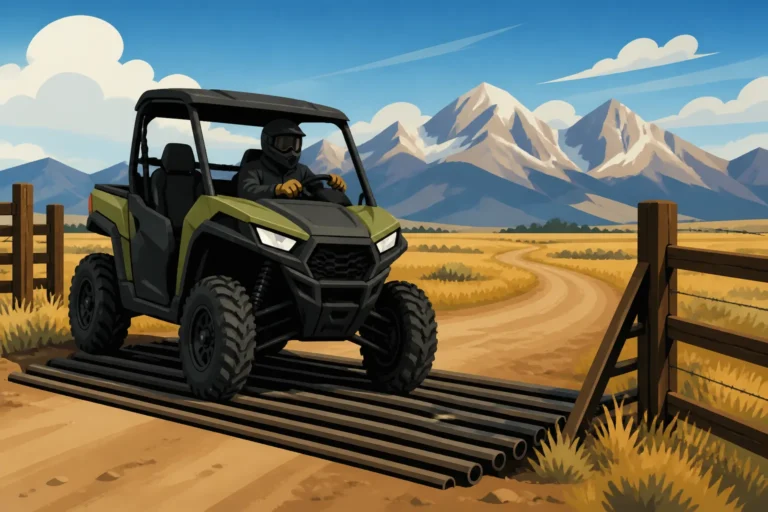
Fences and gates along section lines are a common sight in Wyoming. Ranchers and landowners rely on these to manage their livestock, mark boundaries, and maintain their operations. Even if you are on a legally recognized public section line, you are legally obligated to respect these barriers. If you encounter a gate, the cardinal rule is simple: leave it as you found it. If it's closed, close it behind you. If it's open, leave it open. Never, ever cut a fence or try to force your way through a locked gate. That's a surefire way to get into legal trouble and damage relations with local landowners.
Sometimes, you might encounter a gate with a "private" sign on it, even if your map indicates a public section line. This often means the landowner disputes the public nature of that specific segment or is trying to prevent vehicle traffic through their property. In such cases, it’s prudent to avoid conflict and seek an alternative route rather than challenging the sign. Remember, a good relationship with local ranchers ensures continued access for everyone. Be sure to understand [Wyoming Rules for Opening a Gate] and [Wyoming Rules for Riding Near Livestock].
Respecting Private Property Even on Public Access
Even when you're confident you're on a legal public section line, maintaining a respectful attitude toward surrounding private property is paramount. Imagine a rancher sees you riding what they view as their property, even if legally it's a section line. Their perspective is that you're riding through their livelihood. Showing respect goes a long way.
This means staying strictly within the visible or mapped boundaries of the section line, keeping your speed down when near homes or livestock, and minimizing noise. Avoid littering, disturbing wildlife, or causing any unnecessary impact. It also means being prepared for the unexpected. A robust winch from a company like SuperATV can be a lifesaver if you get stuck on an undeveloped section line, preventing you from having to call a landowner for help or, worse, damaging their property trying to get unstuck. Your actions reflect on the entire riding community, and responsible behavior helps ensure that these public access points remain open for future generations.
Practical Tips for Riding Section Lines on Your ATV/UTV
Successfully and responsibly riding Wyoming's section lines requires more than just knowing the law; it demands careful preparation, the right gear, and a solid understanding of trail etiquette.
Research and Planning Your Route
Before you even load your machine, thorough research is your best friend when it comes to section lines. Don't rely solely on general navigation apps. Instead, seek out detailed maps that clearly show land ownership and public access easements. Bureau of Land Management (BLM) and Forest Service Motor Vehicle Use Maps (MVUMs) are invaluable for federal lands, as they designate roads and trails open to motorized use. However, for section lines primarily crossing private or state land, you might need to consult county plat maps or GIS (Geographic Information System) resources, which can often be found on county websites.
Sometimes, the best information comes from local sources. Contacting county commissioners, the county planner, or even local BLM or Forest Service field offices can provide crucial, up-to-date details on the status of specific section lines in the area you plan to ride. They might be able to tell you if a section line has been officially "vacated" (meaning the public right-of-way has been relinquished) or if there are known disputes or closures. This proactive approach helps prevent unwelcome surprises and ensures you're riding where you're legally permitted. Remember to understand the [Wyoming Rules for Riding a County Road] and [Wyoming Rules for Riding a State Trust Land] if your route includes those.
Essential Gear and Machine Preparedness
Riding undeveloped section lines can be an adventurous undertaking, often leading you into remote areas with minimal services. This means your machine needs to be in top shape, and you need to be self-sufficient. Ensure your ATV or UTV is well-maintained, with properly inflated tires suitable for varied terrain, and a full tank of fuel.
Beyond machine prep, your personal gear is crucial. Always carry a detailed paper map, a GPS device with pre-loaded routes and waypoints, and a compass – and know how to use them! Cell service is notoriously unreliable in much of Wyoming's backcountry, so a satellite messenger or satellite phone is a wise investment for emergencies. Pack plenty of water, extra food, a first-aid kit, and appropriate clothing for rapidly changing weather conditions. For those less-traveled section lines, consider upgrades to your machine that enhance capability and safety. Heavy-duty tires, skid plates, and a reliable winch from a company like SuperATV can make a huge difference if you encounter rough terrain, deep mud, or need to clear fallen obstacles. And, of course, wherever you ride on public land, remember your [Wyoming ORV Permit and Insurance].
Riding Etiquette and Best Practices
When riding section lines, your behavior directly impacts public perception and future access. Here are some best practices to ensure a positive experience for everyone:
- Stay on the Line: If there's a discernible two-track or path, stick to it. If not, try to adhere as closely as possible to the mapped section line without damaging vegetation or creating new trails.
- Leave No Trace: Pack out everything you pack in. This includes trash, food scraps, and any machine parts that might come loose.
- Yield to Others: Section lines might be used by hikers, equestrians, mountain bikers, or even ranch vehicles. Slow down, be courteous, and yield the right-of-way. Remember [Wyoming Rules for Riding Near Livestock] and give animals a wide berth.
- Minimize Disturbance: Avoid excessive noise, especially near homes, cabins, or livestock. If you encounter livestock, slow to a crawl or stop, and pass quietly so as not to spook them.
- Report Issues: If you find a gate damaged, a fence cut, or other problems, report them to the nearest land management office or county authorities. This helps maintain good relationships and keeps access open.
- Be Prepared for Gates: As mentioned, always leave gates as you found them. If it's closed, close it. If it's open, leave it open. Don't assume you can leave an open gate closed, or vice versa.
When a Section Line is Not an Open Route
It's vital to understand that the concept of a "public section line" isn't a blanket invitation to ride anywhere you see a straight line on a map. There are many reasons why a section line might not be a viable or legal route for your ATV or UTV.
Undeveloped Section Lines and What That Means
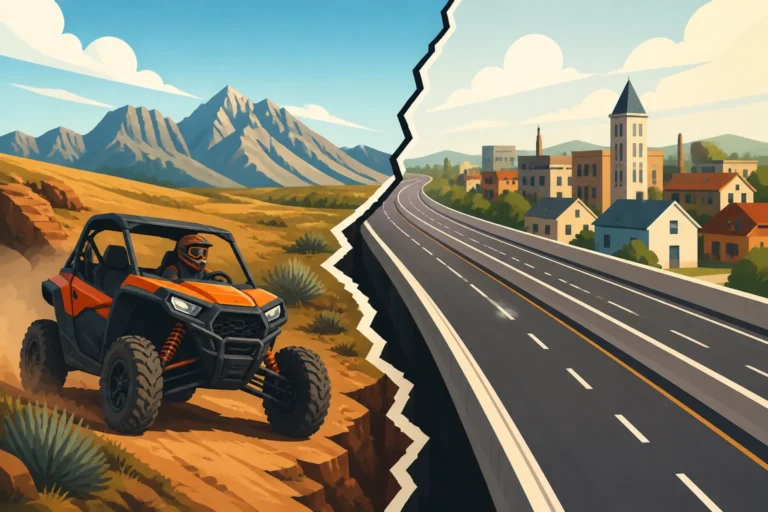
One of the biggest misconceptions about section lines is that they are all maintained roads or trails. In reality, a significant number of these public rights-of-way are completely undeveloped. This means they could be overgrown with thick sagebrush, dotted with large rocks, traversed by steep washes, or simply impassable due to natural features like rivers, cliffs, or dense timber. A "public right-of-way" simply means the legal right of passage exists; it does not guarantee a motor vehicle can actually physically pass.
Trying to force your machine through an undeveloped section line can lead to damage to your ATV or UTV, environmental harm, and potentially getting hopelessly stuck in a remote area. It's easy to look at a map, see a straight line connecting two points, and think it's a shortcut. The reality on the ground, however, can be a completely different story. It's crucial to distinguish between a theoretical right-of-way and a practical, rideable route.
Local Ordinances and Closures
Even if a section line has historically been used for public access, local ordinances and land management decisions can impact its current status. County commissioners, for example, have the authority to "vacate" section lines within their jurisdiction, meaning they can officially abandon the public right-of-way and return full control to the adjacent landowners. This is often done if a section line serves no practical public purpose or if maintaining it is a burden.
Similarly, federal agencies like the BLM or Forest Service might close certain section lines or segments for resource protection, wildlife management, or safety reasons. These closures might be seasonal, temporary, or permanent. It's imperative to check for current closure orders, particularly through MVUMs for federal lands. Ignoring a closure sign, even if you believe the section line should be open, can result in hefty fines and penalties. Always consult local regulations and signs on the ground. Be sure you know [Wyoming Rules for Riding a County Road] and [Wyoming Rules for Riding a State Trust Land].
The Difference Between Public Land and Public Access
This is a critical distinction for riding section lines. Many section lines cross private property. While the narrow strip of the section line itself might be a public right-of-way, the vast majority of the land on either side of it is private. This means you have no right to leave that narrow public corridor.
If a section line runs through a private ranch, and there are no clear markings or fences delineating the public right-of-way, it can be incredibly difficult to stay within legal bounds. Moreover, some landowners may not recognize or may actively dispute the public nature of a section line crossing their property, leading to potential confrontations. If you encounter a situation where access is unclear, disputed, or requires you to open and close numerous gates across active ranch land, it's often best to err on the side of caution. Explicit permission from the landowner is always the safest and most respectful way to traverse private property, even if you believe a section line offers a public easement.
Section Line Riding vs. Designated Trail Riding
To help clarify the differences, here's a quick comparison:
| Feature | Section Line (Public Right-of-Way) | Designated ORV Trail (e.g., Forest Service, BLM Enrolled) |
|---|---|---|
| Legal Status | Public right of passage exists by statute, often 30-60 ft wide. | Explicitly designated and marked for motorized recreation. |
| Physical Condition | Often undeveloped, overgrown, faint two-track, or impassable. | Maintained, signed, and usually suitable for specific ORV types. |
| Mapping | Found on county plat maps, GIS, some older federal maps. | Clearly marked on MVUMs, trail maps, and often on the ground. |
| Land Ownership | Can cross private, state, or federal lands. | Primarily on public (federal, state) lands. |
| Signage | Rarely signed for ORV use; may have fences/gates. | Clear trail markers, regulatory signs (e.g., width limits). |
| Maintenance | Generally not maintained for vehicle travel. | Regularly maintained by land management agencies or volunteers. |
| Required Equipment | GPS, paper maps, satellite comms, recovery gear (SuperATV winch). | Basic safety gear, relevant permits; may require spark arrester. |
| Risk of Trespass | High if deviating from the line or crossing disputed areas. | Low if staying on the marked trail. |
| Interaction with Locals | Higher chance of encountering landowners; respect is paramount. | Less interaction with private landowners. |
Disclaimer
This article is for general informational purposes only and does not constitute professional advice. Laws, prices and regulations vary by location and change over time. Consult a qualified professional for guidance on your specific situation.