Wind and an Exposed Ridge Road
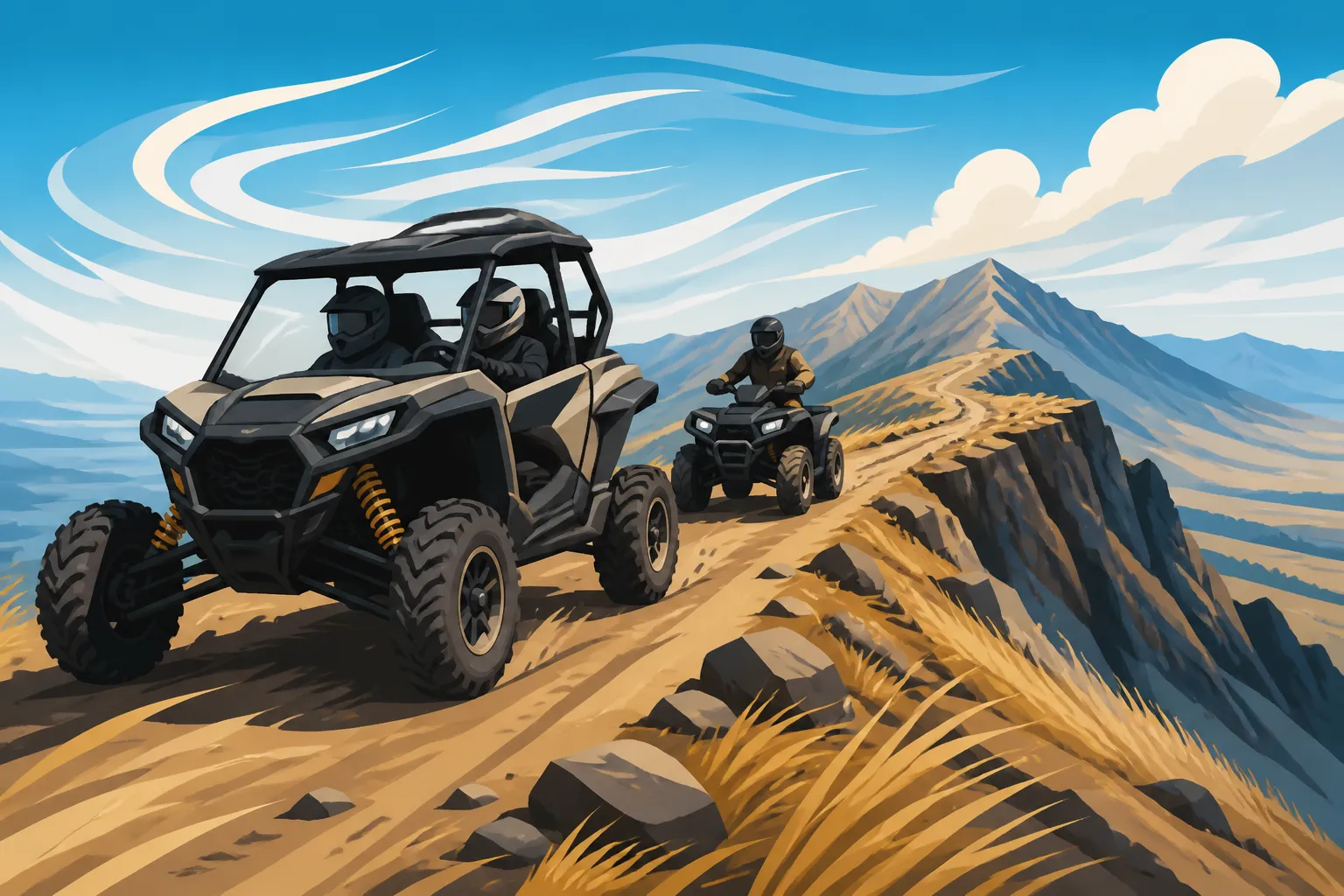
There's nothing quite like the expansive, breathtaking views you get from a high ridge road in Wyoming, especially when you're taking it all in from the seat of your ATV or side-by-side. But as any seasoned rider knows, those spectacular vistas often come hand-in-hand with an equally spectacular challenge: the wind. Riding an exposed ridge road in Wyoming means confronting gusty conditions, often at elevation, that can significantly impact your machine's handling and your own comfort and safety. This guide will walk you through what to expect, how to prepare, and how to stay safe when Wyoming's legendary winds try to turn your ride into a wild adventure.
Understanding Wyoming's High Country and Open Roads
Wyoming is famous for its wide-open spaces, which means many of our most scenic routes are also incredibly exposed. When you're heading out to explore, especially on designated roads where ATVs and UTVs are permitted, you need to understand the unique challenges these environments present. It's not just about the beauty; it's about being prepared for the raw power of nature.
The Unpredictable Nature of Wyoming Wind
If you've spent any time in Wyoming, you've experienced "the wind." It's not just a gentle breeze; it's a force that can sweep across vast plains and whip over mountain passes with incredible intensity. For ATV and UTV riders, this means more than just a bad hair day. A strong crosswind can catch the side of your machine, especially a taller side-by-side, and push it sideways, making it difficult to stay in your lane or on the trail. Gusts can come out of nowhere, forcing you to constantly correct your steering and putting a strain on your arms and core.
Imagine cresting a hill on a gravel road, feeling great, when suddenly a 40 mph gust hits you broadside. Your machine might lurch, and you could momentarily lose traction or control. This isn't just uncomfortable; it can be genuinely dangerous, especially if you're close to a drop-off or another vehicle. Riders often underestimate how exhausting it is to constantly fight the wind, which can lead to fatigue and reduced reaction times over a long day. It also kicks up dust, reducing visibility for everyone.
Elevation and Exposure on Ridge Roads
Wyoming's ridge roads are often exactly what they sound like: roads that run along the top of a ridge or mountain, offering panoramic views. The trade-off for these views is often a lack of tree cover, leaving you completely exposed to the elements. This exposure means that there's nothing to break the wind, and nothing to provide shade from the intense high-altitude sun. The air at these elevations is also thinner, which can affect both your machine's performance and your own physical well-being.
Your engine might run a little richer or feel slightly less powerful at 9,000 feet compared to sea level, a minor but noticeable difference on long climbs. More importantly for you, the rider, is the impact of altitude. Dehydration happens faster, and sunburn can be severe if you're not careful. Weather can also change drastically and quickly at elevation. A clear, sunny morning can turn into a cold, windy, even snowy afternoon with little warning. Being miles from the nearest shelter on an exposed ridge means you need to be self-sufficient and ready for anything.
Legal Considerations for Riding Wyoming's Enrolled Roads
Before you even think about tackling those windy ridge roads, you need to know where you're legally allowed to ride. Wyoming has a specific framework for where ATVs and UTVs can operate, particularly when it comes to roads versus traditional trails. Understanding this is crucial for a hassle-free and legal ride.
Distinguishing ORV Trails from Enrolled Roads
In Wyoming, not all roads are created equal for off-road vehicles. While there are thousands of miles of designated ORV trails across public lands, there are also "enrolled" roads that permit ATV and UTV use. An ORV trail is typically a purpose-built or designated path specifically for off-road vehicles, often narrower and more rugged. An enrolled road, however, might be a county road, a Forest Service road, or a BLM road that has been specifically designated and approved for shared use by off-road vehicles and traditional vehicles. You'll need a current [Wyoming ORV Permit] displayed on your machine no matter what type of public land you're riding on.
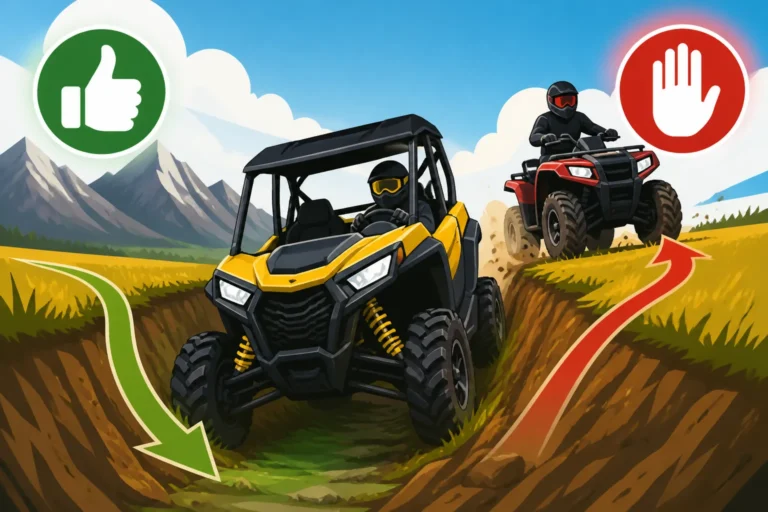
Riding your side-by-side or quad on a county road that hasn't been "enrolled" can land you in hot water. The process for a road to become enrolled involves coordination between the county or land management agency and the Wyoming State Parks, Historic Sites and Trails division. Always check current maps, like Motor Vehicle Use Maps (MVUMs) for Forest Service lands, to confirm the status of any road or trail you plan to ride. Riding on an enrolled road often means you'll encounter traditional vehicles, so exercising extra caution, especially in windy, exposed areas, is paramount. [Wyoming's Enrolled Roads and Trails] are clearly marked on maps provided by the state.
Equipment and Safety Gear for Road Use
If you plan to ride your ATV or UTV on any enrolled road in Wyoming, your machine needs to meet specific street-legal requirements, often qualifying it as a Multipurpose Vehicle (MPV). This isn't just a suggestion; it's a legal necessity that goes beyond what you might need for just trail riding. These requirements are in place to ensure your safety and the safety of others when sharing the road, especially on those exposed, high-traffic sections where visibility and stability can be compromised by wind.
Your machine will likely need working headlights, taillights, brake lights, and a horn. Turn signals are often required, as are appropriate mirrors – often at least one on the left side. Don't forget a proper muffler and spark arrester for noise and fire prevention. Many riders turn to aftermarket suppliers like SuperATV for street-legal kits that provide these essential components, ensuring their machines meet all the necessary specifications. Beyond the machine, you as the rider also have responsibilities. A helmet is required for all riders and passengers under the age of 18 in Wyoming, and always a good idea for everyone on those windy, exposed roads. [Wyoming MPV Street Legal Requirements] covers the full list. Having [Wyoming ATV Insurance Requirement] for road use is also a smart move, even if it's not always explicitly required for MPVs everywhere.
Preparing Your Machine and Yourself for Exposed Conditions
When you know you're heading into conditions where wind and exposure will be factors, preparation becomes even more critical. It's not just about having the right gear; it's about making sure your machine is ready and that you're mentally and physically prepared for the challenges ahead.
Machine Maintenance and Wind Stability
Before any ride, a thorough check of your machine is always wise, but it's essential when planning to tackle exposed, windy roads. Pay close attention to your tires. Proper tire pressure is crucial for stability and handling. Under-inflated tires can feel mushy and unstable, especially in crosswinds, while over-inflated tires can reduce traction and make for a harsher ride. Check your suspension; ensure it's in good working order and possibly adjust it for your weight and riding style. Some riders, particularly those with taller side-by-sides, consider adding a slight amount of weight low in the chassis to improve stability, though this is a more advanced modification.
Wind can act like an invisible hand, pushing and pulling at your machine. Taller, wider side-by-sides will generally be more affected by crosswinds than lower-profile ATVs. If your machine feels squirrely in strong gusts, it might be a sign to slow down or even pull over. You can also explore accessories from companies like SuperATV, which offers things like wider fender flares that might help deflect some crosswind, or heavier-duty A-arms that contribute to overall chassis rigidity, which can be beneficial when fighting heavy gusts. Make sure all your lights, especially turn signals and brake lights, are clean and fully functional, as visibility can decrease rapidly in dusty, windy conditions. [Wyoming Lighting Requirements for ORVs] are key here.
Rider Preparedness: Clothing, Gear, and Mindset
Your personal preparedness is just as important as your machine's. The variability of Wyoming weather, especially at altitude on exposed roads, means layering is your best friend. Start with moisture-wicking base layers, add insulating mid-layers, and top it off with a windproof and water-resistant outer shell. Even on a sunny day, a strong wind can make 60 degrees feel like 40, leading to hypothermia if you're not properly dressed. Don't forget gloves, a neck gaiter or balaclava for wind protection, and eye protection that can keep out dust and debris.
Carry plenty of water and snacks, as the physical exertion of fighting the wind combined with higher altitudes can be dehydrating and draining. Sunscreen is a must, even on cloudy days, as UV radiation is stronger at elevation. Always check the weather forecast for your specific riding area before you head out, and be prepared for it to change without warning. Tell someone your route and estimated return time. A positive, cautious mindset, always aware of the conditions, will serve you well. Being willing to turn back or find shelter if the weather becomes too severe is a sign of a smart rider, not a weak one. And remember, [Wyoming Helmet Law for ATV Riders] isn't just for kids – protecting your head is always wise.
Navigating Exposed Ridge Roads Safely
Once you're out there, facing the wind head-on, good riding techniques and an awareness of your surroundings are your best tools for a safe and enjoyable experience. These roads are often shared, so your actions affect not only your safety but also that of others.
Driving Techniques in High Wind
When the wind really picks up, especially on an exposed ridge, your driving technique needs to adapt. The most important rule is to reduce your speed. High speeds amplify the effect of crosswinds, making your machine harder to control. Slowing down gives you more time to react to gusts and helps keep your tires firmly planted. If you're riding a side-by-side, be aware that the taller profile can act like a sail. Anticipate gusts by watching for visual cues like bending trees or swirling dust if possible, though on truly exposed ridges, there might be nothing to give you a heads-up.
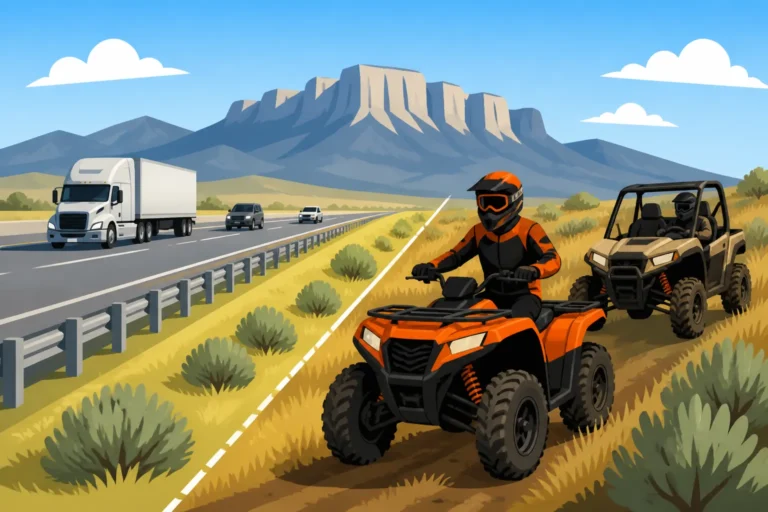
Maintain a firm, but relaxed, grip on the handlebars or steering wheel, ready to counter-steer into a gust. Avoid sudden movements. If you're riding in a group, increase your following distance to give everyone more room to maneuver if hit by an unexpected crosswind. When passing or being passed by larger vehicles, be prepared for the sudden push of wind as they approach and the pull as they pass – known as "bow wave" and "stern wave" effects. These can be surprisingly strong and unsettling on a lightweight ATV or UTV.
What to Do When Weather Turns Bad
Wyoming's weather can shift from beautiful to brutal in a heartbeat, especially at higher elevations. If you find yourself in deteriorating conditions – increasing winds, heavy rain, or even unexpected snow – you need a plan. The first step is to assess the situation honestly. Can you safely continue? Is there shelter nearby? Sometimes, the safest option is to find a protected spot off the road, perhaps behind a rock outcrop or in a small dip in the terrain, and wait for the worst of it to pass.
Always carry emergency supplies: extra layers, a first-aid kit, a small tool kit, and enough water and food to last longer than you expect. A charged cell phone is a good idea, but signal can be spotty in remote Wyoming, so consider a satellite messenger for true backcountry travel. These devices allow you to send emergency messages even when there's no cell service. If a fire restriction is in place, especially during [Wyoming Fire Season and Trail Access], reconsider your ride entirely, as high winds combined with dry conditions create extreme fire danger. Remember, getting caught out after dark in bad weather can quickly turn a difficult situation into a dangerous one, so plan your rides to ensure you return with plenty of daylight, referencing [Wyoming Rules for Riding After Dark].
Disclaimer
This article is for general informational purposes only and does not constitute professional advice. Laws, prices and regulations vary by location and change over time. Consult a qualified professional for guidance on your specific situation.