Blaze Orange During Rifle Season
Riding an ATV or UTV during Wyoming’s rifle season can put you near hunters, even if you are not hunting. The main question is whether blaze orange is legally required for riders or simply a smart safety choice. The answer depends on what you are doing and which hunting season applies. A few clothing and route checks can make a fall ride safer without confusing visibility gear with access rules.
Who must wear blaze orange during rifle season
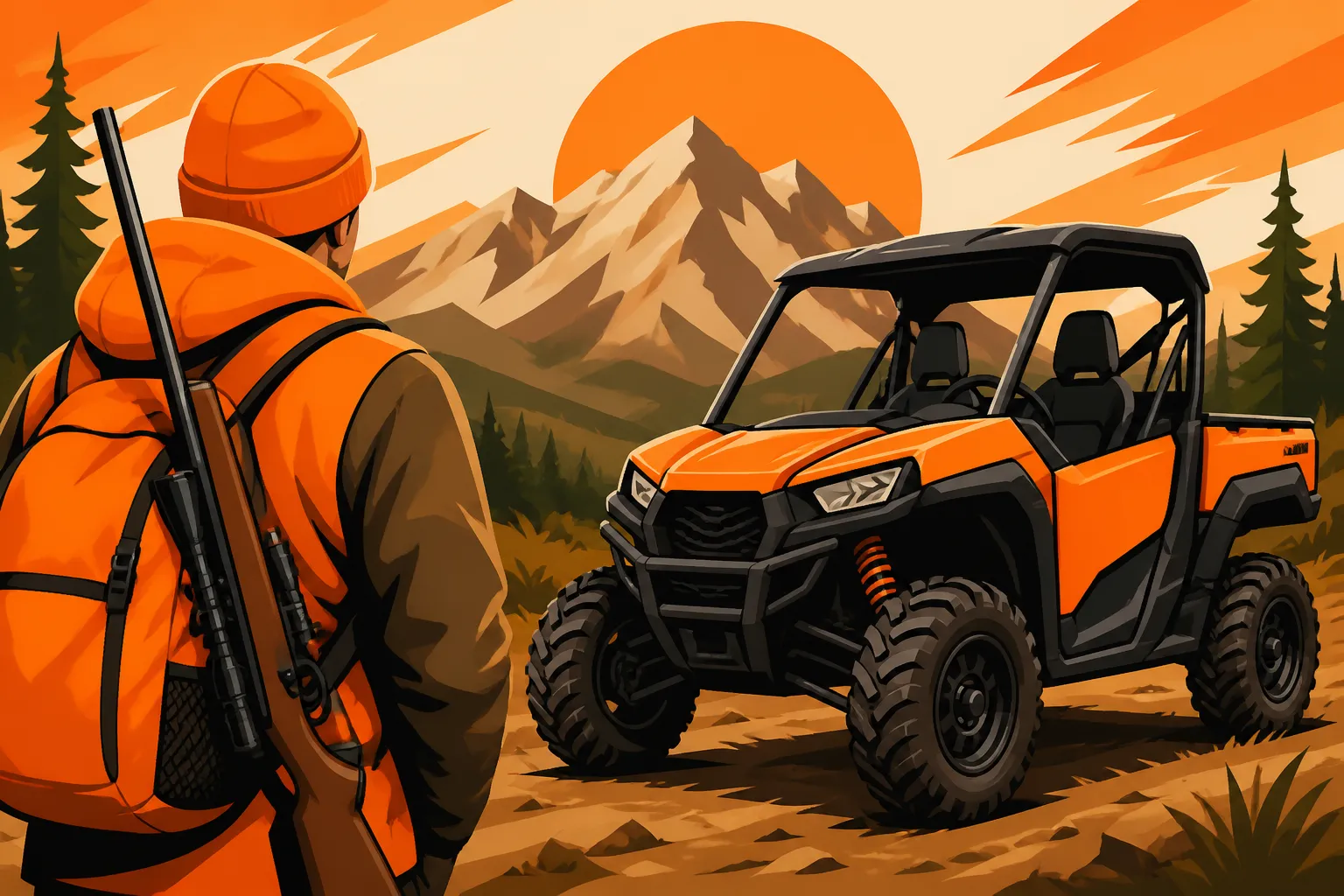
Wyoming’s big-game hunting regulations generally require hunters in applicable firearm seasons to wear fluorescent orange or fluorescent pink clothing visible from all directions. The exact rule and any exceptions depend on the species and season, so check the current Wyoming Game and Fish regulations for the hunt you are in or near.
That requirement is about hunting. A person riding an ATV or UTV does not automatically become subject to a hunter’s clothing rule just by traveling through an area during rifle season. A passenger who is also hunting, however, should follow the rules that apply to that hunt. If you are riding with hunters, ask what season they are participating in and confirm the requirements before heading out.
It helps to keep three situations separate:
| Situation | What to consider |
|---|---|
| You are hunting big game during a firearm season | Check the current regulations for the species and hunt area, including the required color and visibility. |
| You are riding but not hunting | Blaze orange may not be required by the hunting clothing rule, but it can help other people see you. |
| You are riding with someone who is hunting | The hunter must follow the rules for their hunt. The whole group should plan clothing and travel with visibility in mind. |
Do not assume that every fall hunt has the same clothing rule, or that an orange item automatically satisfies it. Requirements can differ by season type, and a garment that is mostly camouflage or covered by a jacket may not provide the visibility the rule calls for. Read the applicable regulation rather than relying on a general statement from another rider.
For broader riding considerations during hunting season, see Wyoming Rules for Riding During Hunting Season. If your plan includes hunting from an ATV or UTV, that is a separate activity with its own restrictions; Wyoming Rules for Hunting From a Machine is a useful place to start.
Why blaze orange is still a sensible choice for riders
Even where a rider is not legally required to wear hunter orange, visibility matters. Hunters may be watching for game, not expecting a machine to appear around a bend. A rider can also be difficult to pick out against autumn grass, shrubs, timber, and shadows, especially when wearing earth-tone riding gear.
A fluorescent orange or pink vest, jacket, or other visible garment gives people a stronger visual cue than ordinary brown, green, or muted orange clothing. It does not guarantee that someone will see you, and it cannot replace careful riding. It can, however, help distinguish a person from the surrounding landscape.
Visibility is most important when you are:
- Traveling on a route used by hunters and other public-land visitors.
- Stopping beside a road or trail to check a map, repair a machine, or take a break.
- Walking away from your machine to open a gate or move equipment.
- Riding in changing light, such as early morning, late afternoon, or under heavy cloud.
- Traveling with children or passengers who may be less visible than the driver.
A vest is easy to add over riding layers, but it should fit securely and stay in place while you move. A loose garment can flap, snag, or interfere with controls. If your regular riding jacket is already bright, check whether its color is genuinely fluorescent and remains visible from different angles. Ordinary orange fabric may look vivid in a shop but blend into fall vegetation at a distance.
For a group ride, agree on a simple visibility plan before leaving. That could mean every rider wears a bright outer layer, passengers carry a visible vest, and the group stops in a safe place rather than spreading out across a junction. If one person needs to leave the machine, let the others know first. A bright vest is more useful when the group also rides predictably and communicates clearly.
Blaze orange does not give you permission to ride wherever you like, and it does not make a closed route safe or legal to use. Check the route designation and any seasonal closure information before setting out. Wyoming Trail Closures to Check First and Wyoming’s Enrolled Roads and Trails can help you understand why checking the route matters.
Choosing clothing that stays visible and practical
The best garment is one you can wear comfortably over your riding gear and keep visible throughout the trip. For hunters, it must also meet the requirements for the specific season. Before buying anything, compare the current regulation with the garment’s description and construction.
When shopping locally or through Amazon, look for a clearly described fluorescent orange or fluorescent pink garment rather than relying on a product photo or a vague “high visibility” label. Check how much of the garment is colored, where it covers the body, whether it can be seen from the sides and back, and whether it will fit over your jacket. For a hunter, confirm that the item matches the applicable regulation rather than assuming any orange accessory will do.
Practical options include:
- A vest: Lightweight and easy to layer over riding clothing. Make sure it closes securely and does not obstruct a backpack or harness.
- A jacket or outer shell: Provides more coverage and may be useful in cold or windy weather. Check that other layers will not cover its bright panels.
- A hat or other small accessory: Adds visibility around the head but may not be enough by itself for a hunter if the applicable rule calls for more visible clothing.
- A pack cover or machine panel: Can make equipment easier to spot, but it does not replace clothing where a hunter is required to wear it.
A bright helmet or machine can help make a group easier to notice, but it is not a substitute for wearing required clothing. The rider’s body may be partly hidden by the machine, and a vehicle color can be obscured by dust, vegetation, or a viewing angle. If you are unsure whether an item satisfies a hunting rule, use a garment that plainly meets the written requirement and confirm with the current regulation.
Keep the garment clean and in good condition. Dust, mud, faded fabric, and a dark pack worn over the back can reduce visibility. After a muddy ride, check whether the material still stands out. Carrying a spare vest for a passenger or a layer that becomes wet is a simple precaution.
Blaze orange is not protective equipment. It does not replace a helmet, eye protection, gloves, sturdy footwear, or clothing suited to the weather. Fall conditions can change quickly, and a rider who stops to walk around may need warmer layers than someone who stays seated. Keep bright clothing on the outside of those layers where it remains visible.
Plan the ride around hunters, routes, and changing conditions
Before riding, identify the land manager and verify that the road or trail is open to your machine. A two-track that looks established is not automatically an open public route. Maps, signs, seasonal restrictions, and land access rules matter more than the presence of tire tracks. If you are uncertain, choose a clearly designated route or contact the relevant land manager.
This is especially important when crossing private ground or traveling near working ranches. Visibility clothing does not change property boundaries or give a rider permission to cross land. Review Wyoming Rules for Crossing Private Ground and Wyoming Rules for Riding Near Livestock if your route passes ranch roads, gates, or grazing areas.
Use these habits to reduce surprises:
- Check the hunt and route information. Confirm whether a hunting season is active in the area and whether your planned route is open to your type of machine.
- Wear visible outer clothing. Use fluorescent orange or pink if you are hunting and it is required; consider it for everyone in the riding group as a safety measure.
- Stay on the designated route. Do not leave a road or trail to get around a vehicle, reach a viewpoint, or make room for another group unless the route rules allow it.
- Slow down where sightlines are limited. Approach bends, junctions, and trailheads at a speed that gives you time to react to people, animals, or stopped vehicles.
- Make your presence clear. If you see hunters, stop in a safe place, avoid crowding them, and communicate calmly before passing when practical.
- Leave a safe stopping area. Do not park around a blind corner or where a person stepping away from a machine would be exposed to traffic.
Hunters and riders share many public areas, but they may be focused on different things. A hunter may be watching a slope or listening for movement, while a rider may be concentrating on rocks, ruts, or a passenger. Slow, predictable travel gives both groups more time to notice one another. Avoid sudden stops in the route, unnecessary acceleration near people or wildlife, and riding off the designated track.
If you are packing out game, use the rules that apply to hunting and retrieval rather than assuming an ATV makes off-route travel acceptable. Wyoming Rules for Packing Out Game explains why recovery plans should be considered before a hunt. Likewise, riding a machine on a public route involves requirements beyond clothing. Check Wyoming ORV Permits Explained for the permit question and confirm the route itself is open.
The practical answer is straightforward: hunters should follow the clothing rule for their specific Wyoming hunt, while riders who are not hunting should treat blaze orange as a visibility tool, not a universal legal requirement. Wear it when it helps others see you, keep it visible over your riding layers, and verify current regulations and route access before leaving.
Disclaimer
This article is for general informational purposes only and does not constitute professional advice. Laws, prices and regulations vary by location and change over time. Consult a qualified professional for guidance on your specific situation.